
Views: 0 Author: Site Editor Publish Time: 2026-10-09 Origin: Site


A single failed seal in a plumbing or mechanical system carries a disproportionate impact. One improperly specified washer triggers catastrophic leaks, unexpected system downtime, and severe water or gas damage. Specifying the correct seal involves significant technical complexity. Defaulting to generic, off-the-shelf elastomers without evaluating fluid dynamics, thermal cycling, and mechanical load guarantees premature joint failure.
This guide serves as a comprehensive framework for mechanical engineers, plumbers, and procurement specialists. It provides actionable criteria to evaluate, select, and specify rubber sealing washers for plumbing applications based on empirical performance data and industry standards. You will learn how to match elastomer compounds to fluid types, determine the correct structural profile for your pressure requirements, and implement installation protocols that prevent mechanical extrusion.
Material Compatibility is Paramount: The choice of elastomer (e.g., EPDM, Nitrile, Silicone) must strictly align with the fluid type (liquid vs. gas), temperature range, and chemical exposure of the plumbing system.
Structural Design Dictates Pressure Limits: Flat rubber washers suffice for low-pressure residential connections, whereas bonded sealing washers (rubber bonded to stainless steel) are required for high-pressure or industrial flange applications.
Dimensional Accuracy Prevents Extrusion: Precise matching of Inner Diameter (ID), Outer Diameter (OD), and thickness to the mating hardware is critical to prevent seal extrusion under torque.
Regulatory Compliance is Non-Negotiable: Systems handling drinking water require specific certifications (e.g., NSF/ANSI 61) to ensure the rubber compound does not leach toxins.
Table of Contents
Elastomeric sealing relies on fundamental physics. Under compressive load, rubber acts as an incompressible, highly viscous fluid. When you tighten a fitting, the compressive force pushes the elastomer into the microscopic surface imperfections of the mating flanges, pipelines, or valve bodies. This physical displacement creates an impermeable barrier. It blocks the migration pathways of both liquids and gases. The effectiveness of this barrier depends entirely on the polymer's ability to maintain upward force against the mating surfaces over time.
Different plumbing connections demand different compressive forces. A garden hose relies on manual torque to compress a flat washer against a brass seat. Industrial flanged pipes require calibrated torque wrenches to compress high-durometer seals evenly across a wide surface area. Understanding this mechanical relationship helps you specify the correct washer thickness and hardness for the available clamping force. If the clamping force exceeds the material's yield strength, the seal will rupture.
A successful plumbing connection meets three non-negotiable baseline requirements. First, it must achieve zero leakage under the system's maximum operating pressure, including temporary pressure spikes or water hammer events. Second, the material must resist compression set. Compression set refers to the permanent deformation of the elastomer. If a washer loses its elasticity, it cannot maintain the necessary upward force against the flange, leading to spontaneous leaks during thermal contraction. Third, the seal's longevity must match the expected lifecycle of the surrounding pipework and fittings. Replacing a degraded washer often requires shutting down entire building zones, making premature failure unacceptable.
Understanding why washers fail allows you to engineer better connections. Field inspections reveal several recurring issues that destroy elastomeric seals before their expected lifespan ends.
Mechanical Over-torquing: Applying excessive rotational force crushes the polymer matrix. The material extrudes outward, splitting the washer and creating immediate leak paths. Installers often over-tighten fittings to compensate for selecting a washer with the wrong durometer.
Chemical Degradation: Municipal water supplies utilize chloramines and chlorine for disinfection. These chemicals aggressively attack standard rubber compounds, causing them to swell, soften, and eventually disintegrate into the water stream.
Thermal Hardening: Washers operating beyond their rated temperature limits suffer rapid degradation. Continuous exposure to extreme heat bakes the plasticizers out of the elastomer. The washer hardens, cracks, and loses all sealing capability.
Ozone and UV Cracking: Washers stored improperly or installed in exposed outdoor environments degrade from ultraviolet light and ozone exposure, leading to surface cracking and eventual structural failure.
EPDM dominates the plumbing industry for water-handling applications. It provides superior resistance to hot and cold water, steam, and prolonged UV exposure. Its molecular structure withstands the degrading effects of chloramines found in municipal water supplies. This makes EPDM the standard choice for showerheads, supply lines, and outdoor irrigation systems. EPDM has a strict limitation. It degrades rapidly when exposed to petroleum-based oils, fuels, or hydrocarbon solvents. Installing an EPDM washer in a gas line or lubricating it with petroleum jelly guarantees rapid material breakdown. The rubber will swell to twice its size and lose all tensile strength.
Nitrile serves as the optimal elastomer for systems handling hydrocarbons. Its chemical composition resists swelling and degradation when exposed to oils, lubricants, natural gas, and propane. Plumbers rely on Nitrile for gas line unions, fuel oil piping, and mechanical systems requiring petroleum-based lubricants. While exceptional for oils, Nitrile offers lower resistance to extreme heat, ozone, and UV light compared to EPDM. It is generally unsuitable for outdoor applications exposed to direct sunlight or high-temperature steam lines.
Neoprene functions as a versatile, general-purpose elastomer. It bridges the gap between EPDM and Nitrile. It offers moderate resistance to both water and oils, making it suitable for mixed-use industrial environments. Engineers specify Neoprene when a plumbing system might encounter occasional oil splashing or mild chemical exposure. It performs well in wastewater treatment facilities and commercial garages. While it does not excel in any single extreme category, its balanced profile makes it a reliable choice for unpredictable environments where multiple fluid types are present.
Silicone delivers exceptional performance across extreme temperature ranges. It remains flexible in sub-zero conditions and maintains structural integrity at temperatures exceeding 400°F (204°C). This thermal stability makes silicone ideal for specialized hot water fixtures, solar water heating systems, and commercial steam applications. High-purity silicone compounds easily achieve potable water certifications. They do not impart taste or odor to drinking water. Silicone possesses low tear strength. It requires careful installation to prevent mechanical damage from sharp flange edges or excessive torque.
Highly aggressive fluid handling requires hybrid solutions. PTFE-coated rubber combines the best properties of two distinct materials. An inner elastomeric core provides the necessary compressibility and memory to maintain a tight seal. An outer envelope of PTFE (Polytetrafluoroethylene) provides absolute chemical inertness. This design prevents harsh industrial chemicals, concentrated acids, or aggressive solvents from reaching the vulnerable rubber core. These specialized Rubber Sealing Washers are mandatory in chemical processing plants and specialized laboratory plumbing.
Elastomer Material | Temperature Range | Best Applications | Primary Vulnerability |
|---|---|---|---|
EPDM | -40°F to 300°F | Potable water, steam, outdoor irrigation. | Petroleum oils, hydrocarbon fuels. |
Nitrile (Buna-N) | -30°F to 212°F | Natural gas, propane, fuel lines, oil systems. | Ozone, UV light, extreme heat. |
Neoprene | -35°F to 250°F | Wastewater, mixed-use industrial piping. | Strong oxidizing acids. |
Silicone | -80°F to 400°F | Extreme temperature water, solar heating. | Physical tearing, abrasion. |
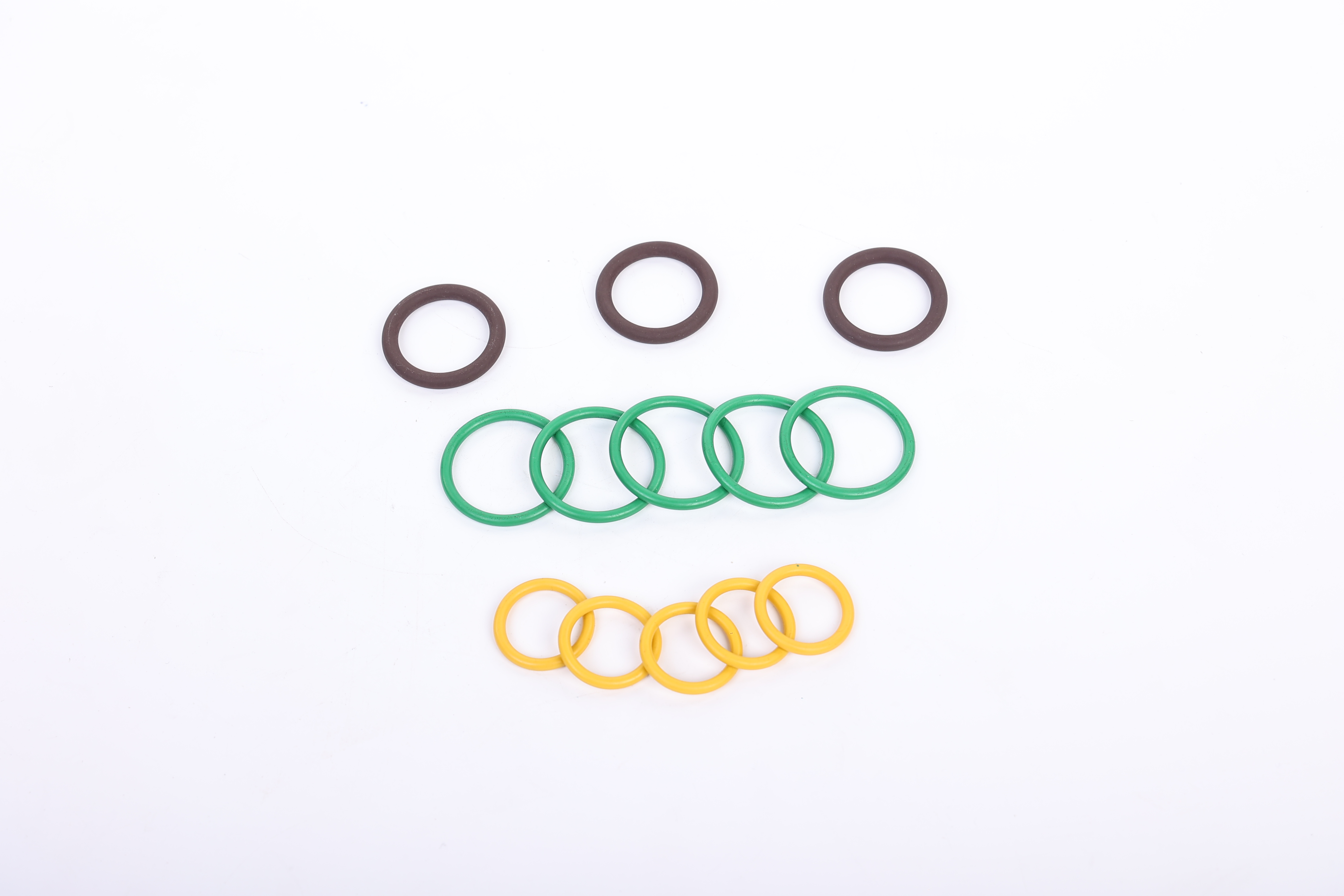
Flat rubber washers feature a simple, uniform profile. They are the most common seal used in basic plumbing tasks, including faucet repairs, garden hose connections, and standard pipe unions. Their flat surface provides a wide contact area against mating flanges. They are easy to install and highly effective for low-pressure containment. Their simple geometry limits their use in high-pressure systems. Without external support, a flat washer will deform and extrude outward when subjected to high fluid pressure or excessive bolt torque. You must restrict flat washers to applications where the clamping force is low and the fluid pressure remains under 100 PSI.

Bonded sealing washers solve the extrusion problem inherent in flat designs. These engineered components feature an elastomer ring permanently bonded to a corrosion-resistant metal backing, typically 18-8 stainless steel or galvanized steel. The metal ring serves multiple functions. It cushions bolt and screw heads, distributing the compressive load evenly across the elastomer. The rigid metal perimeter physically prevents the rubber from extruding outward under high pressure. This structural reinforcement allows bonded washers to seal high-pressure joints, HVAC connections, and industrial fluid lines effectively. When installing bonded washers, the rubber face must always point toward the fluid source to create the primary seal.
Standard flat seals fail when mating surfaces are irregular or recessed. Beveled and conical washers feature angled profiles designed to seat deeply into specific joint geometries. They are heavily utilized in compression fittings, slip-joint connections under sinks, and recessed valve bodies. The angled face wedges into the gap between the pipe and the fitting. As the retaining nut tightens, the conical shape forces the rubber inward against the pipe wall, creating a watertight seal even if the pipe alignment is slightly off-center. You must match the bevel angle exactly to the fitting's internal geometry to prevent point-loading the rubber.
Internal valve mechanisms require highly specific washer profiles. Commercial faucets, flushometers, and gate valves rely on proprietary shapes to control water flow. These specialty washers often feature stepped edges, integrated retaining pins, or reinforced fabric layers. When performing maintenance on commercial plumbing fixtures, identifying and sourcing the exact OEM washer style is mandatory. Substituting a generic flat washer into a precision valve seat alters the flow dynamics, prevents complete shutoff, and accelerates wear on the brass components. Always consult the fixture's exploded parts diagram before specifying replacement internal seals.
Specifying a washer requires matching its physical limits to the system's operational extremes. You must evaluate the peak system pressure rather than just the average operating pressure. Water hammer events generate pressure spikes three to four times higher than normal flow. The washer's structural type dictates its pressure rating. You must map the thermal expansion cycles. A hot water line continuously expands and contracts. The chosen elastomer must possess sufficient memory to maintain contact during the contraction phase. If the operating temperature exceeds the elastomer's rating, it will harden and fail.
Dimensional accuracy dictates the mechanical success of the seal. You must specify the exact Inner Diameter (ID), Outer Diameter (OD), and thickness. An oversized OD creates interference with the surrounding fitting housing, preventing the joint from closing fully. An oversized ID creates a loose fit around the bolt or pipe, establishing a direct leak path along the threads. Thickness determines the compression allowance. If a washer is too thin, the metal flanges will bottom out before the rubber compresses sufficiently. If it is too thick, the joint becomes unstable and prone to lateral shifting under vibration.
Maintenance professionals face unique challenges when replacing failed seals. Old washers undergo severe deformation, making direct measurement difficult. To ensure the replacement seal correctly matches standard pipe and flange sizes, follow strict measurement guidelines. Use digital calipers to measure the ID of the mating hardware, not the stretched ID of the old washer. Measure the OD of the recessed seating area on the flange. When determining thickness, factor in the compression set of the old washer. A heavily flattened washer originally possessed a much thicker profile. Consult standard plumbing dimension charts to match your hardware measurements to the correct nominal washer size.
The Shore A hardness scale measures an elastomer's resistance to indentation. Selecting the correct durometer involves a direct trade-off between surface conformity and pressure resistance. Softer washers conform easily to rough, pitted, or scratched flange surfaces. They require very little torque to create a seal, making them ideal for plastic fittings or fragile ceramic fixtures. Soft materials extrude easily under high pressure. Harder washers resist extrusion and withstand massive fluid pressures. They are required for high-pressure industrial flanges but demand significant bolt torque to compress. They require perfectly smooth mating surfaces to seal effectively.
Shore A Durometer | Relative Hardness | Primary Plumbing Application | Mating Surface Requirement |
|---|---|---|---|
50A - 60A | Soft (Pencil Eraser) | Plastic fittings, fragile fixtures, low-pressure drains. | Can seal rough or pitted surfaces. |
70A | Medium (Car Tire Tread) | Standard residential water lines, general pipe unions. | Requires standard machined surfaces. |
80A - 90A | Hard (Shoe Heel) | High-pressure industrial flanges, bonded sealing washers. | Requires perfectly smooth, rigid flanges. |
Plumbing systems handling drinking water carry strict regulatory burdens. You cannot specify standard industrial elastomers for potable water lines. The rubber compound must not leach toxic chemicals, heavy metals, or volatile organic compounds into the water supply. It must resist harboring bacterial growth. You must verify specific certifications before procurement. In North America, NSF/ANSI 61 certification is mandatory for drinking water system components. In the UK, WRAS approval is required. The FDA maintains strict guidelines for elastomers used in food and beverage processing lines. Installing non-certified washers in a potable water system exposes engineers and contractors to severe legal and health liabilities.
Large-scale construction projects require thousands of plumbing connections. Inconsistent washer quality across different batches leads to localized failures throughout a building. Procurement specialists must source from manufacturers that provide strict material traceability. This ensures the elastomer compound remains identical from the first batch to the last. Reliable bulk availability is critical to maintain project timelines. Partnering with established seal distributors guarantees access to technical data sheets, material test reports, and consistent inventory levels, mitigating the risk of project delays caused by component shortages.
Audit your current fluid systems to identify the exact chemical exposures and peak operating temperatures before selecting an elastomer base.
Measure your mating hardware with digital calipers to specify the exact Inner Diameter, Outer Diameter, and thickness required for a zero-interference fit.
Upgrade to bonded sealing washers for any connections experiencing high fluid pressure or requiring heavy bolt torque.
Verify and document NSF/ANSI 61 certifications for all washers designated for potable water lines to ensure regulatory compliance.
Implement strict field installation protocols, mandating the use of silicone-based lubricants and calibrated torque wrenches to eliminate mechanical crushing.
A: EPDM and Silicone are the superior choices for hot water applications. EPDM offers excellent thermal stability and resists degradation from water and steam up to 300°F. Silicone provides even higher temperature resistance and remains flexible in extreme conditions, making both ideal for hot water lines and steam systems.
A: No. Hoses relying on mechanical compression fittings, such as standard garden hoses and washing machine supply lines, require rubber washers to create a seal. Tapered thread connections rely on thread sealants or Teflon tape to block leak paths, not rubber washers.
A: Yes, specific gas connections, including those on 20lb propane tanks and natural gas unions, require gas-rated rubber sealing washers. You must use Nitrile (Buna-N) washers, as they resist chemical degradation from petroleum and hydrocarbon gases, preventing hazardous leaks.
A: Measure the Inner Diameter (ID) to match the bolt shaft or pipe exterior. Measure the Outer Diameter (OD) to fit within the flange housing without interference. Measure the thickness to ensure adequate compression allowance. When measuring old washers, account for permanent flattening.
A: A flat rubber washer is a simple elastomer ring used for low-pressure applications. A bonded sealing washer features an elastomer permanently bonded to a corrosion-resistant metal backing. This metal ring cushions screw heads and physically prevents the rubber from extruding under high torque and pressure.
A: You should never reuse rubber sealing washers. Once installed and compressed, elastomers suffer from compression set, which is a permanent deformation of the material. A used washer loses its elasticity and memory, meaning it cannot provide the upward force required to seal a joint effectively.
A: Rubber washers degrade due to chemical attack from municipal water additives like chloramines and chlorine. They also fail from continuous thermal cycling, ozone exposure, and mechanical crushing caused by over-tightening during installation. These factors cause the polymer to harden, crack, or disintegrate.


