
Views: 0 Author: Site Editor Publish Time: 2026-10-09 Origin: Site


Enclosure ingress failures cause severe operational disruptions across industrial and commercial sectors. Water or dust penetrating a protective housing destroys sensitive electronic components rapidly. Telecommunication nodes, smart grid controls, and traffic management systems rely entirely on their external seals. Gasket material misapplication remains a primary culprit behind these catastrophic field failures. Engineers face a strict and unforgiving challenge. You must balance harsh environmental exposure against precise mechanical sealing requirements. Ultraviolet radiation, atmospheric ozone, and continuous thermal cycling degrade elastomers relentlessly. At the same time, the seal must maintain its compression set and strict IP rating over a multi-year lifespan. Over-engineering the seal inflates unit expenses unnecessarily. Under-engineering leads to immediate warranty claims and system downtime. We need a reliable, data-driven evaluation framework. This guide examines whether polychloroprene serves as the optimal elastomer for your specific application. We analyze its physical properties, material limitations, and practical implementation realities.
Optimal Use Case: Neoprene gaskets for outdoor enclosures offer a balanced, mid-range sealing solution ideal for environments requiring moderate weatherability combined with incidental oil, chemical, or flame exposure.
Ingress Protection (IP): Properly designed neoprene gaskets can reliably achieve IP65, IP66, and IP67 ratings, contingent on precise compression control and groove design to block both moisture and fine dust.
Primary Limitations: Neoprene exhibits faster degradation under extreme, prolonged UV exposure and extreme low temperatures compared to silicone or EPDM.
Cost Efficiency: Provides lower lifecycle expenses for general industrial outdoor enclosures, plumbing applications, and lighting fixtures where the premium performance of fluorosilicone or pure silicone is unnecessary.
Table of Contents
UV radiation, ozone, temperature fluctuations, and moisture can affect rubber gasket durability and sealing performance. Thermal expansion differences between enclosure materials and rubber may cause stress and adhesive failure. Outdoor gaskets must withstand rain, humidity, salt spray, and extreme weather conditions to maintain long-term protection against water ingress.
Rubber gaskets help enclosures achieve IP65, IP66, and IP67 protection against dust and water. IP65 protects against water jets, IP66 against powerful water jets, and IP67 against temporary immersion. Proper gasket compression, flexibility, and vibration resistance are essential for maintaining reliable sealing under mechanical and environmental stress.
Chemical exposure can cause rubber gaskets to swell, soften, or lose sealing strength. Oils, fuels, hydraulic fluids, and industrial chemicals require careful material compatibility checks. Neoprene (polychloroprene) offers moderate resistance to certain oils and hydrocarbons but is unsuitable for some aggressive solvents. Selecting the appropriate elastomer helps prevent chemical degradation and premature seal failure.
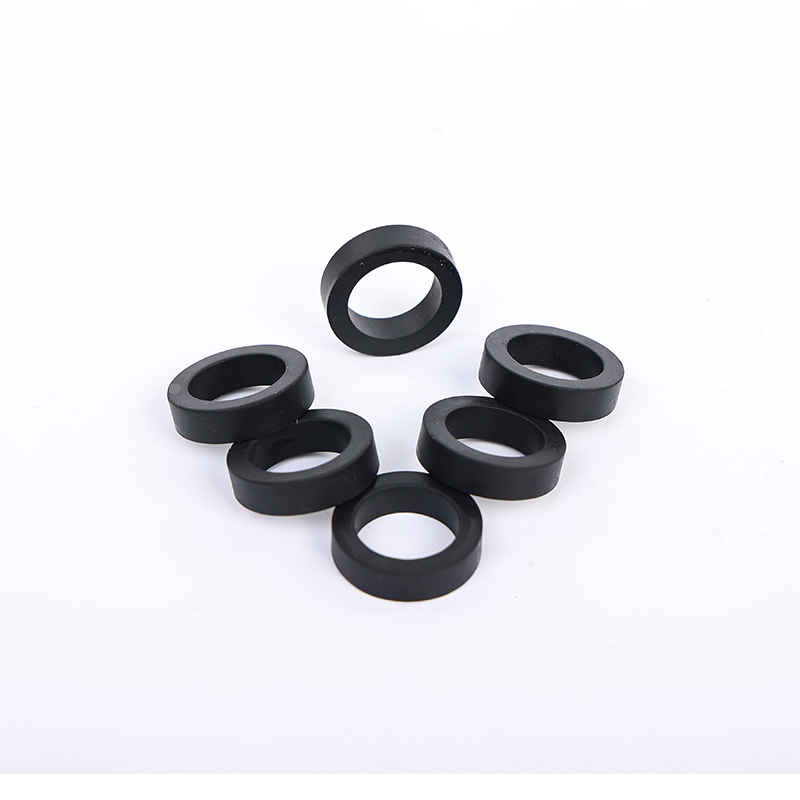
Polychloroprene offers highly versatile mechanical properties for engineering applications. Standard durometer ranges fall between 30 and 90 Shore A for solid formats. Sponge and foam variants utilize different cellular densities for lighter compression requirements. High tensile strength, typically ranging from 1000 to 3000 PSI, and excellent elongation allow the material to conform to complex geometries easily. It acts as a highly effective barrier for lining gaps, structural joints, and tight crevices.
Manufacturers typically formulate it as a carbon-black filled rubber. This specific black rubber composition enhances baseline UV resistance significantly by absorbing and dissipating ultraviolet energy. However, the dark color naturally increases thermal absorption when placed in direct sunlight, raising the surface temperature of the seal. Standard Technical Data Sheet (TDS) metrics show a reliable operating temperature range of -40°C to 121°C. Neoprene Gaskets provide a balanced mix of tensile strength, abrasion resistance, and moderate chemical tolerance.
Polychloroprene provides inherent, moderate resistance to ozone and UV light. It performs adequately for most standard outdoor applications. However, it is not completely impervious to long-term weathering. Prolonged direct sunlight eventually causes surface degradation and chalking. The thermal performance curve dictates its safe operational limits. The material maintains excellent flexibility across its standard mid-range temperatures.
Sub-zero environments present specific, unavoidable risks. Temperatures approaching -40°C cause the polymer chains to undergo crystallization. The rubber loses its flexibility and becomes rigid. This rigidity compromises the seal during thermal contraction, creating microscopic gaps where moisture enters. If the enclosure door is opened and closed during these freezing conditions, the rigid rubber can fracture or fail to rebound, destroying the ingress protection rating entirely.
Compression set resistance defines the ultimate longevity of the seal. It measures the ability of the rubber to return to its original thickness after prolonged compression. A lower percentage indicates better structural memory. Standard ASTM D395 testing evaluates this by compressing the rubber at elevated temperatures for 22 hours. neoprene gaskets for outdoor enclosures maintain reliable compression sets over a 5-to-10-year lifecycle in typical conditions.
Severe environments and high heat accelerate compression loss significantly. Once the material loses its rebound, moisture ingress becomes inevitable. Solid polychloroprene offers vastly different compression characteristics than closed-cell sponge. Solid formats handle higher clamping forces and heavier cast metal doors. Closed-cell sponge requires much less closure force to achieve a watertight seal on lightweight plastic or sheet metal housings, making it ideal for NEMA 3R or NEMA 4 applications where heavy bolting is impractical.
Neoprene (polychloroprene) is better suited than EPDM for applications involving occasional exposure to petroleum-based oils, lubricants, and cutting fluids. It also offers good mechanical durability and inherent flame resistance. EPDM provides superior UV, ozone, and weather resistance but performs poorly with petroleum oils. Choose neoprene for industrial enclosures where moderate oil exposure and flame resistance are important.

Silicone rubber offers excellent flexibility in extreme temperatures, typically from -55°C to 200°C, along with outstanding UV and weather resistance. It is ideal for aerospace, outdoor electronics, and equipment exposed to severe temperature fluctuations. Neoprene provides better abrasion and tear resistance at a lower cost, making it more practical for general industrial applications.
Neoprene cork gaskets combine rubber flexibility with cork's vibration-damping and sound-absorbing properties. They are commonly used in automotive components, motors, pumps, and industrial equipment. These composites provide effective sealing with limited lateral expansion but require controlled compression to prevent permanent deformation and material damage.
Elastomer Type | UV & Ozone Resistance | Oil & Hydrocarbon Resistance | Standard Temperature Range | Primary Application Strength |
|---|---|---|---|---|
Polychloroprene | Moderate to Good | Good | -40°C to 121°C | General outdoor use with incidental oil exposure. |
EPDM | Excellent | Poor | -50°C to 150°C | Direct sunlight exposure with zero oil contact. |
Silicone | Excellent | Fair | -60°C to 230°C | Extreme high or low temperature environments. |
Nitrile (Buna-N) | Poor | Excellent | -35°C to 120°C | Heavy, continuous oil immersion indoors. |
Proper groove design ensures reliable gasket compression and prevents extrusion or damage. Groove dimensions must allow sufficient space for rubber expansion during compression. Incorporating physical compression stops helps prevent over-compression, maintain consistent sealing pressure, and protect the enclosure's IP performance.
Pressure-sensitive adhesives (PSAs) simplify gasket installation and improve assembly efficiency. Acrylic-based adhesives generally offer good resistance to UV exposure, moisture, and temperature changes, making them suitable for many outdoor applications. Proper surface cleaning and adhesive compatibility are essential for long-term bonding reliability.
Rubber gaskets must be compatible with enclosure materials such as aluminum, stainless steel, and fiberglass. Extruded rubber strips suit continuous channels, while custom die-cut gaskets accommodate complex shapes and corners. Proper drainage, suitable coatings, and material selection help prevent corrosion and maintain sealing performance.
Gasket manufacturing methods affect production cost, design flexibility, and scalability. Die-cutting is cost-effective for flat gaskets, extrusion suits continuous sealing profiles, and molding supports complex three-dimensional designs. The best method depends on gasket geometry, production volume, and tooling budget.
Long-term gasket performance depends on material quality, environmental exposure, and maintenance practices. Regularly inspect seals for cracking, hardening, loss of elasticity, and adhesive failure. Replace damaged gaskets promptly and establish inspection intervals based on operating conditions to reduce leakage risks, maintenance costs, and equipment downtime.
Consult a sealing engineer to review your specific CAD geometries, groove dimensions, and fill ratios.
Request physical material samples to conduct in-house compression, deflection, and thermal cycling testing.
Verify UL 94 flame retardance and NEMA compliance data for your selected material grade before finalizing the BOM.
Establish clear compression stop dimensions in your manufacturing drawings to prevent field technicians from crushing the seal.
Specify acrylic-based pressure-sensitive adhesives for all outdoor assembly requirements to prevent delamination.
A: Properly designed seals can achieve IP65, IP66, and IP67 ratings reliably. Success depends entirely on precise compression control, optimal groove design, and selecting the correct durometer to block both moisture and fine dust effectively under pressure.
A: They typically last 5 to 10 years in direct sunlight. Carbon-black filled formulations resist UV degradation much better than lighter colors. However, prolonged exposure eventually causes surface chalking, micro-cracking, and a gradual loss of flexibility.
A: Use closed-cell sponge for lightweight plastic or sheet metal housings requiring low closure force. Specify solid rubber for heavy-duty, rigid metal housings that can apply high clamping pressure without deflecting or warping the door.
A: Yes, it contracts as ambient temperatures drop. Approaching -40°C, the material risks severe crystallization. It becomes rigid and loses its ability to maintain active outward pressure against the mating surfaces, risking moisture ingress.
A: EPDM provides superior, long-lasting resistance to UV rays and atmospheric ozone. Polychloroprene offers moderate weatherability but adds crucial resistance to petroleum-based oils, fuels, and incidental chemicals that would rapidly swell and destroy EPDM.
A: Yes. Compression stops prevent technicians from over-tightening the housing door. Over-compression crushes the polymer chains permanently. This physical damage ruins the compression set and destroys the seal's ability to block water and dust.


