
Views: 0 Author: Site Editor Publish Time: 2026-10-08 Origin: Site


Flange joint failures cost industrial facilities heavily. Premature leaks, environmental hazards, and unplanned downtime frequently stem from improper specification rather than material failure. Engineers often default to standard sizes without evaluating specific flange conditions. This oversight leads to insufficient compressive load, bolt fatigue, or catastrophic blowout. When you ignore the physical realities of the flange face, you invite cold flow and loss of bolt tension. We see this constantly in the field where maintenance teams try to bridge massive pipe gaps with oversized elastomers.
Reliable long-term sealing requires a systematic approach. You must master proper rubber gasket thickness selection to ensure joint integrity. This process balances flange condition, bolt load capabilities, operating parameters, and international dimensional standards. Getting this right prevents leaks before they start, protects your maintenance budget, and keeps your fluid handling systems operating safely within their designed parameters.
The "Thinnest Possible" Principle: 1/16" (1.59mm) is the North American industry standard for machined, flat flanges; thicker profiles should only be deployed to solve specific mechanical deficits.
Surface Condition & Regional Standards Dictate Thickness: 1/8" (3.18mm) or 3mm profiles are strictly required when compensating for uneven, pitted, or warped flange surfaces, and serve as the baseline standard for European PN-10 and PN-16 flanges.
Compressive Load Limits: Thicker rubber gaskets demand careful torque calculations, as they are significantly more susceptible to creep relaxation and blowout under high pressure.
Design Constraints: Flange bending moments restrict maximum allowable thickness and dictate minimum gasket width; exceeding these limits causes flange distortion and joint failure.
Table of Contents
A successful flange joint achieves three specific outcomes. It maintains zero leakage under varying system pressures. It retains initial bolt load over the entire lifespan of the installation. It prevents system media contamination from environmental factors. The primary function of the seal is to fill microscopic voids between two imperfect flange faces. It does this under strict compressive load. The elastomer acts as a highly viscous fluid when compressed, flowing into the serrations of the metal face. The material must compress enough to block leak paths without extruding out of the joint. When field technicians install a seal that is too thick, they compromise the mechanical stability of the entire piping spool. The joint becomes spongy, and the bolts lose their stretch, leading directly to a leak.
Field engineers follow a foundational rule for joint assembly. Always choose the thinnest material that accommodates the flange's surface irregularities. Thicker is rarely better in fluid sealing. A thin profile minimizes the exposed surface area on the inside diameter. It reduces the volume of elastomer susceptible to compression set and cold flow. You only increase thickness when flange damage or specific equipment design dictates it. A 1/16-inch profile requires less compressive force to consolidate than a 1/8-inch profile. This means your bolts do not have to work as hard to maintain the seal. By keeping the profile thin, you maximize the structural metal-to-metal stability of the flange assembly while relying on the elastomer only to fill the microscopic gaps.

Thickness directly impacts the surface area exposed to internal system pressure. This internal pressure creates a radial force pushing against the inside edge of the seal. When you increase thickness, you increase this blowout force proportionally. Thickness, minimum gasket width, and Outside Diameter (OD) must scale together. If you increase thickness without adjusting the OD and width, you compromise seal integrity. The proportions must remain balanced to resist internal pressure.
Thickness Profile | Exposed Edge Area (Relative) | Blowout Risk Factor | Required Bolt Load Retention |
|---|---|---|---|
1/16" (1.59 mm) | Baseline (1x) | Low | Excellent |
1/8" (3.18 mm) | Double (2x) | Moderate | Fair (Requires Retorquing) |
1/4" (6.35 mm) | Quadruple (4x) | High | Poor (High Creep) |
The 1/16-inch profile serves as the default specification for pristine flanges. You use this thickness for newly machined or perfectly aligned joints under ASME B16.21 standards. It offers exceptional blowout resistance because the internal media has very little surface area to push against. It also exhibits minimal creep characteristics. The low volume of elastomer means the material stays in place under high bolt loads. This is your starting point for standard North American industrial piping, particularly on Class 150 and Class 300 steel flanges. When you have a phonographic serrated finish that meets the 125-250 AARH (Arithmetic Average Roughness Height) specification, the 1/16-inch material flows perfectly into the grooves to create a tight, long-lasting seal.
You specify 1/8-inch or 3mm profiles to compensate for mechanical deficits. Use them in older piping systems with pitted faces. They are also necessary for glass-lined or fiberglass reinforced plastic (FRP) flanges. These specialized flanges often have poor surface finishes and limited clamping force capacities. You cannot apply high torque to an FRP flange without cracking it, so you need a thicker, softer elastomer to achieve a seal at lower bolt loads. Furthermore, 3mm is the strict baseline standard for metric PN-10 and PN-16 flange measurements. European DIN standards rely heavily on this dimension for proper joint sealing. If you install a 1.5mm profile on a standard PN-16 water line, you will likely fail to bridge the standard machining tolerances of the metric flanges.
Ultra-thick applications are rare and highly specific. You might see 1/4-inch profiles used for severe misalignment in low-pressure water systems or large-diameter cooling tower headers. This approach carries inherent risks. Extreme thickness drastically lowers blowout resistance. It also guarantees high creep relaxation. You should only deploy these custom profiles when standard mechanical correction is impossible. They require constant monitoring and frequent retorquing. If a contractor tries to use a 1/4-inch profile to fix a pipe that was cut too short, you must reject the installation. The shear forces from the misaligned pipe will eventually tear the thick elastomer, resulting in a massive failure.
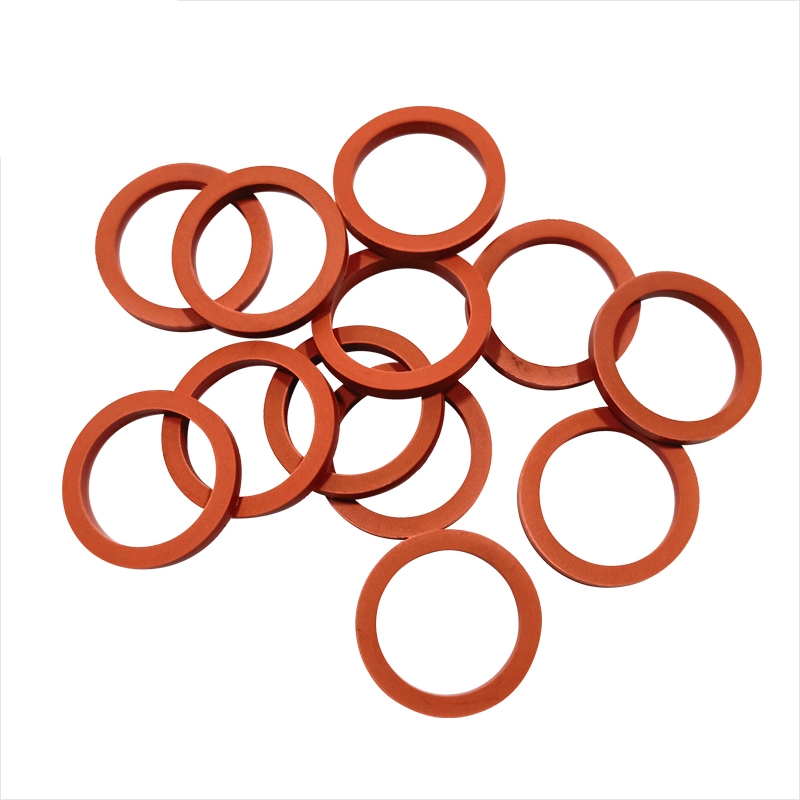
You must evaluate flange faces before selecting a profile. The surface finish, measured in micro-inches (Ra or AARH), dictates the required conformability. Smooth finishes require thin profiles. Rough or pitted finishes require thicker elastomers to fill the deeper voids. Evaluate pitting depth carefully using a pit gauge. If the pits are deeper than half the thickness of your chosen elastomer, the seal will fail.
Flange Surface Finish (AARH) | Flange Condition | Recommended Thickness |
|---|---|---|
125 - 250 micro-inches | Newly machined, pristine, standard phonographic finish | 1/16" (1.59 mm) |
250 - 500 micro-inches | Slightly worn, minor pitting, older cast iron | 1/8" (3.18 mm) or 3mm |
> 500 micro-inches | Severe pitting, warped, FRP, or glass-lined | 1/8" to 1/4" (Requires engineering review) |
Thickness directly alters the required bolt load. Thicker elastomers require more compression to consolidate and seal. This increased requirement may exceed the yield strength of standard bolting, such as ASTM A307 Grade B bolts commonly used on flat-face cast iron flanges. It can also exceed the structural limits of the flange itself. You must calculate torque requirements based on the specific elastomer volume. Never assume standard torque values apply uniformly across different thicknesses. A 1/8-inch profile will require a different torque value than a 1/16-inch profile to achieve the same seating stress. If you under-torque a thick profile, the system pressure will easily push it out of the joint.
The specific material type impacts your thickness limits. EPDM, Nitrile, and Neoprene possess different hardness ratings, measured on the Shore A durometer scale. Softer elastomers (40-50 Shore A) extrude easily under heavy bolt loads. If you use a soft durometer material, you often need a thinner profile to prevent excessive extrusion. Harder materials (70-80 Shore A) resist extrusion better but require higher compressive loads to seal. When specifying for a high-temperature environment, remember that heat softens the elastomer. A thick, soft profile in a hot environment will extrude rapidly, leaving the joint loose and prone to leakage.
Internal system pressure interacts directly with the exposed edge of the seal. The mathematical reality is unforgiving. Doubling the thickness doubles the area exposed to internal pressure. This effectively halves your blowout resistance. High-pressure systems demand the thinnest possible profile. You must calculate the radial force against the inside edge before approving thicker specifications. For example, a 150 PSI system exerts twice as much total force on a 1/8-inch edge as it does on a 1/16-inch edge. If the friction between the flange face and the elastomer is insufficient to hold that force, the material will blow out.
Flange design dictates your dimensional requirements. Full Face profiles cover the entire flange face and include bolt holes. You use them on flat-face flanges to prevent bending moments. Ring Type profiles sit inside the bolt circle. You use them on raised-face flanges. Specifying self-centering flat ring types is mandatory. A properly sized rubber gasket ensures proper alignment of the Inside Diameter (ID) with the pipe bore, preventing flow restriction. If the ID is too small, it protrudes into the flow stream, causing turbulence and premature erosion of the elastomer.
Engineers face a primary trade-off during specification. Thicker elastomers conform beautifully to damaged or uneven flanges. However, they suffer from significantly higher creep relaxation. Cold flow occurs as the thick elastomer slowly deforms under constant load. This causes the bolts to lose tension. You will require frequent bolt retorquing to prevent leaks over the system's lifespan. A 1/8-inch profile might lose 30% of its initial bolt load within the first 24 hours of operation, whereas a 1/16-inch profile might only lose 10%. You must account for this relaxation in your maintenance schedules.
Excessively thick profiles introduce structural risks to the flange. This is especially true on raised-face flanges. If you use a thick profile with an insufficient minimum gasket width or improper OD, it creates a pivot point. When you apply torque to the bolts, the flange bends over this pivot. This creates severe flange bending moments. It ultimately leads to permanent flange deformation, known as cupping, and joint failure. Once a flange is cupped, it will never seal properly again, regardless of what thickness you install. You will have to cut the flange off and weld a new one in place.
System media constantly interacts with the elastomer. Thicker profiles expose more material to potential chemical attack. If the media causes the elastomer to swell, a thicker profile will expand more aggressively. This increased volume leads to severe extrusion from the flange joint. You must match chemical compatibility with the thinnest viable profile to minimize this exposure. For instance, if you are pumping a mild hydrocarbon that causes a 10% volume swell in Nitrile, a 1/4-inch profile will swell significantly more in absolute terms than a 1/16-inch profile, pushing the material out past the outer diameter of the flange.
Follow this sequential decision checklist for every joint:
Audit the flange surface condition and measure pitting depth with a pit gauge.
Verify the governing flange standard (ASME vs. PN-10/16) to establish the baseline dimension.
Verify maximum allowable bolt load and calculate potential bending moments for the specific flange class.
Calculate internal pressure exposure to determine blowout risk based on the exposed edge area.
Select the minimum viable thickness that satisfies all mechanical and environmental constraints.
Take these actionable next steps to improve your sealing reliability:
Utilize torque calculation software to verify bolt load limits for specific elastomer volumes before installation.
Consult with manufacturers to obtain specific creep relaxation data for your chosen durometer to schedule accurate retorquing.
Establish strict, documented installation protocols for your maintenance teams regarding multi-pass torque sequencing.
Audit your current inventory and eliminate ultra-thick profiles used as misalignment band-aids by field crews.
A: The industry baseline for pristine, newly machined ASME flanges is 1/16" (1.59mm). For European metric systems, 3mm is the standard for PN-10 and PN-16 flanges. In North America, 1/8" (3.18mm) is commonly used to compensate for older, pitted, or uneven flange surfaces.
A: Thinner profiles offer superior blowout resistance because they expose less surface area to internal system pressure. They also exhibit lower creep relaxation, meaning they retain bolt load better over time. This results in a tighter, more reliable seal requiring less maintenance.
A: Choose 1/16 inch for pristine, flat, newly machined flanges with smooth surface finishes. Choose 1/8 inch when dealing with older, pitted flanges, warped surfaces, or specialized materials like fiberglass reinforced plastic (FRP) that require extra conformability to seal properly.
A: Minimum gasket width and OD must scale proportionally with thickness. If a thick profile lacks adequate width, it creates a pivot point on the flange face. Torquing the bolts then causes severe bending moments, leading to permanent flange distortion and joint failure.
A: Yes. Thicker elastomers have a larger volume that requires more compressive force to consolidate and seal microscopic voids. This increased compression requirement demands higher bolt torque, which must be carefully calculated to avoid exceeding the yield strength of the bolts or flange.
A: Excessively thick profiles suffer from high creep relaxation, causing bolts to lose tension rapidly. They also expose more area to internal pressure, drastically increasing the risk of catastrophic blowout. Additionally, they can cause severe flange distortion during the torquing process.
A: Flange surface finish dictates conformability needs. Smooth finishes (125-250 AARH) seal perfectly with thin 1/16" profiles. Rougher finishes or pitted surfaces require thicker materials (1/8" or 3mm) to effectively fill the deeper microscopic voids and prevent leak paths.


