
Views: 0 Author: Site Editor Publish Time: 2025-11-10 Origin: Site


You should select the right neoprene O-ring for your job. This helps you avoid problems like wearing out, swelling too much, or getting squished. These issues occur when the O-ring does not fit the place or the way it is used. Pay attention to factors such as material, size, how well it matches, pressure, temperature, durometer, and cost. If you know about these aspects, your seal will work better and last longer.
Pick the right neoprene O-ring by checking if it works with the chemicals in your system. This helps stop leaks and seal problems.
Know the temperature and pressure limits for neoprene O-rings. Make sure your O-ring can handle the heat and pressure in your system.
Choose the correct durometer for your O-ring. A durometer between 70 and 80 Shore A is good for most uses.
Measure the inside diameter and cross-section carefully. The right size helps make a good seal and stops leaks.
Ask suppliers for help with custom O-rings if regular ones do not work for you. They can help you pick the right materials and details.
You need to make sure the neoprene O-ring matches the chemicals in your system. Neoprene O-rings work with many common substances. Some chemicals can hurt them. Check the compatibility chart below to see which chemicals are safe and which ones are not.
| Compatibility Status | Substances |
|---|---|
| Compatible | Paraffin based mineral oil with low DPI |
| Silicone oil and grease | |
| Water and water solvents at low temperatures | |
| Refrigerants | |
| Ammonia | |
| Carbon dioxide | |
| Improved ozone, weathering and aging resistance | |
| Not Compatible | Aromatic hydrocarbons (benzene) |
| Chlorinated hydrocarbons (trichloroethylene) | |
| Polar solvents (ketones, esters) |
Tip: Always check the chemicals in your system before you pick the right neoprene O-ring. Using the wrong material can cause leaks or make the seal break.
You need to know the temperature and pressure limits before you pick the right neoprene O-ring. Neoprene O-rings can handle many temperatures. Extreme heat or cold can make them hard or break easily. The table below shows the usual temperature limits for neoprene O-rings.
| Material | Minimum Temperature | Maximum Temperature |
|---|---|---|
| Neoprene | -35°F (-37°C) | 225°F (107°C) |
If your system gets hotter or colder than these limits, you should use a different material. Pressure is important too. High pressure can squeeze the O-ring too much and make it fail. Always check the pressure rating for your seal and make sure it fits your needs.
Durometer tells you how hard or soft the O-ring is. When you pick the right neoprene O-ring, you need to choose the right durometer for your job. Most neoprene O-rings have a durometer range from 40 to 90 Shore A. For most jobs, a durometer of 70 to 80 Shore A works best. If you pick a durometer of 90 or higher, the O-ring may leak in moving parts. If you pick a durometer of 50, the O-ring may wear out or squeeze out of place fast.
Neoprene O-rings usually come in a durometer range of 40 to 90 Shore A.
A durometer of 70 to 80 Shore A is best for most jobs.
Harder O-rings (90 Shore A) may leak in moving parts.
Softer O-rings (50 Shore A) may wear out or squeeze out of place.
Compression ratio matters too. When you press an O-ring, it should go back to its shape. If it does not, the seal can stop working over time. O-rings with a high compression set do not recover well and lose their sealing power. O-rings with a low compression set keep their shape and seal better for a long time.
Note: Heat and oxygen can make O-rings get old and lose their sealing force. You should always pick a neoprene O-ring with a low compression set for better long-term use.
Cost is important when you pick the right neoprene O-ring, especially for big projects. Standard neoprene O-rings cost less and work for most jobs. Special materials or big sizes can cost more. Custom molds also cost more and take longer to make.
| Material Type | Cost Implication |
|---|---|
| Standard Materials | Inexpensive |
| Specialized Materials | Can sharply increase costs |
| Larger Sizes | Contributes to higher expenses |
| Custom Molds | Increases price and project timeframe |
Picking the wrong material means you may need to replace O-rings often.
More replacements mean higher maintenance costs and more downtime.
You should balance cost and how long the O-ring will last for your needs.
A smart plan looks at both price and how long the O-ring will last. If you only look at the lowest price, you may pay more later for repairs and replacements. When you pick the right neoprene O-ring, you save money and keep your equipment working longer.
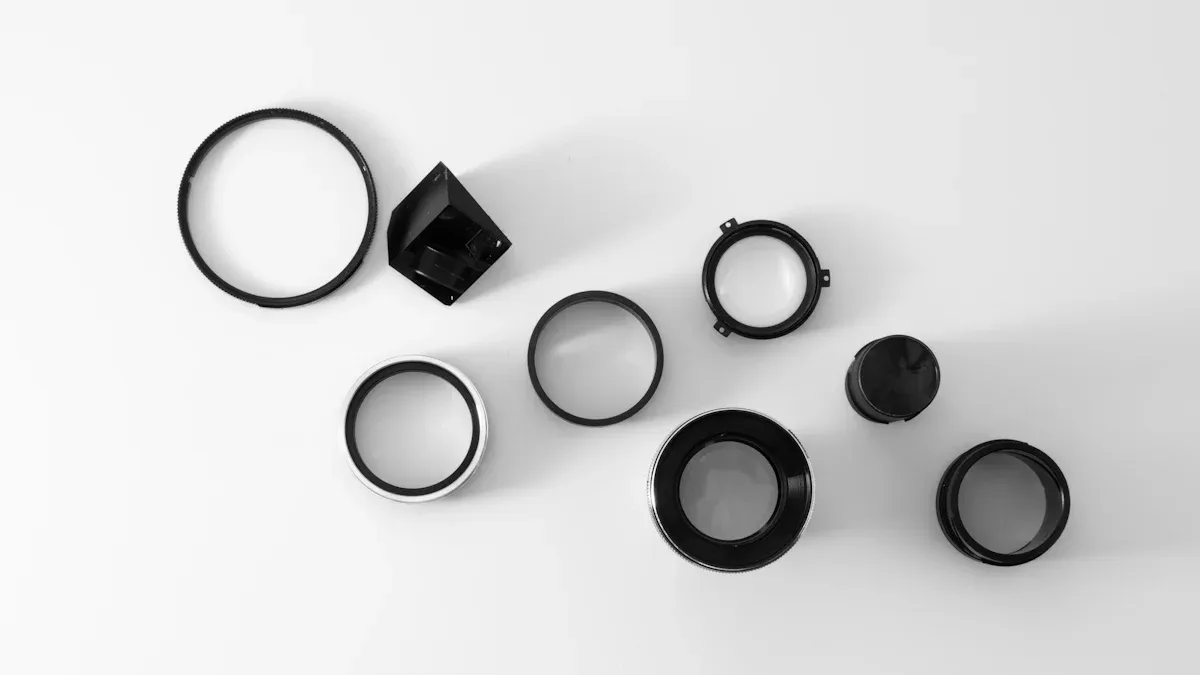
Image Source: pexels
You must measure the inside diameter (ID) and cross-section (CS) before picking a new O-ring. Getting the size right helps the seal work well and last longer. Here are the steps to measure ID: First, put the O-ring flat on a clean table. Next, measure straight across the center from one inner edge to the other. Do not pull or stretch the O-ring while you do this. For big or bendy O-rings, measure in two spots and find the average. If the O-ring is bent, use a special tool like a Pi Tape or O-Sizer. To check the cross-section, put the O-ring between a caliper or micrometer with smooth jaws. Press very gently so you do not squish the rubber. Measure in a few places to see if it is worn or flat. Use a micrometer for small CS sizes to get the best reading.
Getting the O-ring size right is very important. If the O-ring is too small or too big, it can leak, wear out fast, or break under pressure.
The AS568 size chart helps you pick the right O-ring size. This chart uses dash numbers to group O-rings by their inside diameter and cross-section in inches. You can use the chart to match O-ring sizes to your machine. Many neoprene O-rings use dash numbers from the AS568 standard. This system is used in the U.S. and helps you find O-rings for machines with imperial sizes.
The AS568 chart uses dash numbers for ID and CS.
Most neoprene O-ring sizes are in this standard.
The chart makes it easier to pick the right O-ring.
Fit and tolerance are important for a good seal. Tolerances show how much the O-ring size can change. Even small changes can cause leaks or damage. You should know the tolerance level you need:
| Tolerance Level | Description |
|---|---|
| A1 | High Precision - each O-ring is checked and has the tightest size limits. |
| A2 | Precision - better than general purpose, works for most O-rings. |
| A3 | Commercial - general size limits for many rubber parts. |
| A4 | Non Critical - used when exact size is not needed. |
Changes in fit and tolerance affect how well the O-ring seals. Good tolerances help the O-ring fill the groove just right. If the O-ring is too loose or too tight, it can leak or break early.
In cars, O-rings seal engine and fuel parts. The right size keeps fluids in and helps the car run well. In planes, O-rings need very exact sizes for high pressure and heat. These often use the AS568 standard for best results. ISO standards also help with material, size, and tolerance so O-rings work well in many places.
Image Source: unsplash
You need to know if your seal stays still or moves. Static seals do not move at all. Dynamic seals move or slide against other parts. Each type needs different O-ring features. Static seals can use softer O-rings. Dynamic seals need O-rings that are strong and last longer. The table below shows the main differences:
| Feature | Static Seals | Dynamic Seals |
|---|---|---|
| Material Selection | Lower-hardness materials can be used for low-pressure sealing. | High wear resistance and strength materials are required due to movement. |
| Maintenance Requirements | Longer service life with appropriate material selection. | Shorter service life requiring more frequent maintenance due to movement. |
| Gland Design | Higher compression levels tolerated (10%-40%). | Critical gland design needed to prevent wear; lower compression (10%-30%). |
| Tolerance of Deviation | Higher tolerance for misalignment without affecting sealing. | Tight tolerances are critical to prevent wear and potential seal failure. |
| Heat Generation | Minimal heat generation due to lack of movement. | Continuous movement causes heat accumulation, requiring effective heat dissipation. |
If your O-ring moves, pick one that is tough and does not wear out fast. For a seal that does not move, you can use a softer O-ring and press it more.
You need to check how much pressure your system has. Neoprene O-rings work well in many machines and pipes. Most neoprene O-rings can handle up to 1,500 psi. If your system has higher pressure, use a tighter O-ring fit. This helps keep the O-ring in place.
Neoprene O-rings can seal up to 1,500 psi.
Use a tighter fit for higher pressure.
Check the pressure rating for your equipment.
Always match the O-ring’s pressure rating to your system. If you use an O-ring with a lower rating, it might leak or break.
You should think about where you use the O-ring. Outdoor and tough places can hurt neoprene. The table below lists things that can damage neoprene O-rings:
| Environmental Factor | Effect on Neoprene O-Rings |
|---|---|
| Temperature Extremes | Cold temperatures can make neoprene stiff and brittle, leading to cracking and failure under stress. |
| Humidity and Moisture | High humidity can cause neoprene to swell, compromising the seal and leading to potential leaks. |
| UV Radiation | Exposure to UV can cause surface cracking and material degradation, affecting the integrity of neoprene. |
| Ozone Exposure | Ozone can lead to surface cracks in neoprene, compromising its structural integrity. |
| Environmental Contaminants | Pollutants can chemically degrade neoprene, causing loss of elasticity and brittleness, leading to failure. |
UV light can break down neoprene O-rings. This makes them crack and lose their stretch.
Neoprene gets stiff and breaks if it sits in sunlight too long.
Ozone and dirty air can also make neoprene weak and easy to break.
If you use neoprene O-rings outside, pick ones with extra UV and ozone protection. Keep O-rings away from sunlight and chemicals to help them last longer.
Sometimes, picking the right neoprene O-ring is hard. Suppliers can help you choose the best one. This is important if your job has special needs. You should ask for help if you use strange chemicals. High pressure or very hot or cold places also need advice. Suppliers know which materials work for each job. They can help if you need O-rings for food, medicine, or chemicals.
Here are some reasons to ask a supplier:
The temperature can change how long your O-ring lasts.
Pressure can affect which seal you need.
Chemicals can hurt some O-ring materials.
Things like ozone or UV matter for outdoor use.
Suppliers often suggest different materials for different jobs. The table below shows which material is good for each use:
| Material | Recommended Application |
|---|---|
| NBR | Hydraulic Systems |
| EPDM | Food Industry |
| FKM | Chemical Environments |
| PTFE | Extreme Chemical Environments |
| Silicone | Food, Medical, Electronics |
Tip: If your system uses strong chemicals or faces tough weather, ask your supplier for advice before you buy.
Standard neoprene O-rings do not always fit your needs. You can order custom O-rings for special jobs. Custom O-rings are used in cars, planes, plumbing, oil and gas, chemical plants, food factories, and medical devices. You can pick the size, color, durometer, and even special materials like FDA-approved rubber. Some O-rings have coatings for high heat or pressure, like PTFE for chemical resistance.
You have many choices for custom O-rings:
Custom molds for sizes that are not standard, good for bigger orders.
Rubber cords joined together for small orders, which saves money.
Silicone for cold places and FFKM for hot places.
Special coatings for extra protection.
How long it takes to get custom O-rings can change. Standard sizes ship fast. Small custom orders may take two days. Big custom orders can take one to two weeks. Some jobs need four to six weeks, and re-orders take three to four weeks.
| Type | Lead Time |
|---|---|
| Standard | Immediate |
| Custom (small) | Within 48 hours |
| Custom (large) | 1-2 weeks |
| Custom | 4-6 weeks |
| Re-orders | 3-4 weeks |
Note: Custom O-rings fix hard problems but may take longer to arrive. Plan ahead so your project does not get delayed.
You can pick the right neoprene O-ring by checking each key property. Look at how well it stands up to weather, what temperatures it can handle, and if it works with the chemicals you use. The table below tells you what to check:
| Property | Description |
|---|---|
| Weather Resistance | Stays strong against UV rays, ozone, and air. |
| Operational Temperature Range | Works from -35 to 250° F. |
| Resistance | Handles refrigerants, oils, lubricants, and acids well. |
| Application | Great for air conditioning and cooling systems. |
Make sure to measure the size, check the right standards, and ask for help if you are not sure. Use sizing charts or talk to suppliers if you need a special O-ring.
Check every property before you buy one.
Sizing charts help you get the right fit.
Ask suppliers for help if you need it.
Store neoprene O-rings in a cool, dry place. Keep them away from sunlight, heat, and chemicals. Use sealed bags or containers to protect them from dust and ozone.
Check a chemical compatibility chart before you choose. Match your fluid with neoprene on the chart. If you see “not compatible,” pick a different material.
You should not reuse neoprene O-rings. Removing them can stretch or damage the rubber. Always use a new O-ring for the best seal.
Use a caliper or micrometer for cross-section.
Use a ruler or O-ring sizing cone for inside diameter.
Measure gently to avoid squishing the O-ring.
Durometer shows how hard or soft the O-ring is. A softer O-ring seals better in low pressure. A harder O-ring lasts longer in moving parts. Pick the right durometer for your job.


