
Views: 0 Author: Site Editor Publish Time: 2026-11-02 Origin: Site


Can you reuse a rubber gasket after opening a joint? Usually, replacement is the more reliable choice for a gasket that has been in service. Reuse should only be considered when the equipment or seal manufacturer permits it and the gasket meets the specified inspection criteria.
An intact appearance does not establish that a used gasket will seal again. Compression, temperature, fluid exposure, and removal damage can change its dimensions and sealing behavior.
This guide explains when replacement is appropriate, what to inspect, and how maintenance teams can specify a suitable replacement.
Table of Contents
A rubber gasket seals when the joint compresses it sufficiently to maintain contact with the mating surfaces. Its material and geometry must suit the joint’s available clamping load.
During service, the rubber may retain part of its compressed shape after the load is removed. This is called compression set. Stress relaxation is a related but different behavior: the force maintained by the rubber decreases while it remains compressed.
Both can affect sealing performance. However, visible flattening alone does not quantify the remaining sealing capability, and a gasket that feels flexible may still be unsuitable for reuse.
Heat, exposure time, and the surrounding medium can change an elastomer’s properties. Depending on the compound and conditions, it may harden, soften, swell, shrink, or crack.
A single heat cycle does not automatically make every rubber gasket unusable. Equally, a short operating period does not prove that it remains suitable. The assessment needs the actual material, service conditions, and manufacturer’s instructions.
Material names such as NBR, EPDM, FKM, and silicone identify broad elastomer families. They do not establish a universal temperature limit, chemical compatibility, or permitted number of reuse cycles.
A gasket may tear where it sticks to a flange or stretch while being pulled from a groove. Scraping tools can cut sealing edges or damage locating features.
Once removed, the gasket may also fail to sit naturally in its original position. Forcing a stretched or swollen seal into place can create folds, pinched sections, and uneven contact.
If removal damages the gasket, replace it rather than attempting to restore its shape.
Check the equipment manual, gasket installation instructions, and applicable maintenance procedure before inspecting for reuse.
If replacement is required whenever the joint is opened, install a new gasket. If reuse is explicitly permitted, follow the stated limits, inspection method, and reassembly procedure.
A molded profile, silicone material, or metal carrier does not independently prove that a gasket is reusable. Reusability belongs to the specific seal and joint design.
Replacement is appropriate when the gasket has visible damage, no longer fits correctly, has an unknown material identity, or has an uncertain service history that prevents a reliable assessment.
For pressure-containing or other critical joints, use the approved maintenance procedure. Do not treat an informal visual check as authorization to reuse a seal where leakage could injure personnel, contaminate a process, or damage equipment.
Low pressure alone does not make a joint unimportant. A cover gasket may control moisture ingress, cleanliness, or protection of electrical components.
A gasket installed only for a fit check may have experienced less exposure than one used in operation. Nevertheless, compression and handling can still affect it.
Before using it for final assembly, confirm that the instructions allow this practice. Check for indentation, cuts, contamination, and dimensional changes.
For repeated production fit checks, consider a dedicated trial gasket or fixture so the final service seal remains protected.
Inspect the gasket under suitable lighting without aggressively bending or stretching it.
Observation | Possible concern | Recommended action |
|---|---|---|
Cuts, tears, or damaged sealing lips | Interrupted sealing contact | Replace |
Extruded, rolled, or pinched sections | Distorted profile or installation damage | Replace and investigate the cause |
Swelling, waviness, or poor groove fit | Fluid interaction or dimensional change | Replace and review compatibility |
Hardening, cracking, or unusual softness | Material deterioration | Replace and assess service conditions |
Bond separation or carrier damage | Loss of structural integrity | Replace |
Heavy or uneven permanent indentation | Uneven compression or loss of profile | Assess against the manufacturer’s criteria |
A gasket that passes these checks is not automatically approved for reuse. Inspection is only one part of the decision.
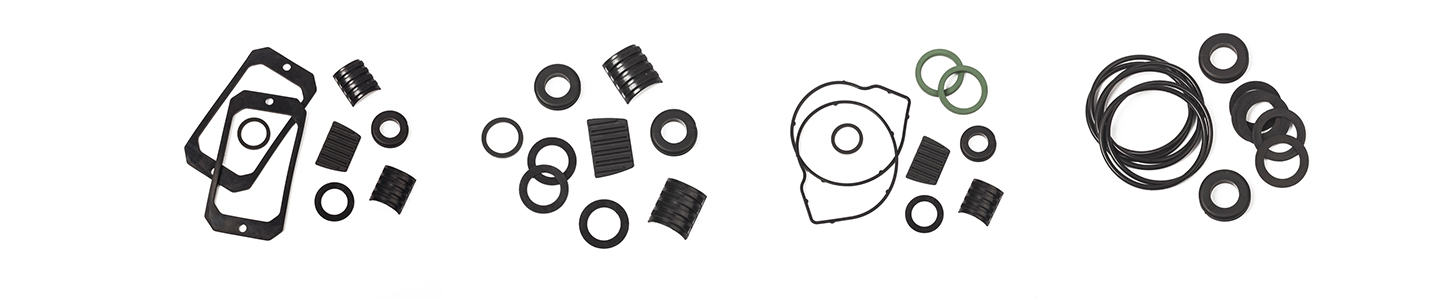
Compare dimensions with the drawing or approved inspection specification where required. Use a measurement method suitable for soft rubber, since excessive measuring force can distort the result.
There is no universal “10% thickness loss” rule that determines whether all rubber gaskets can be reused. A used gasket’s thickness measurement is also not equivalent to a standardized compression-set test.
A fingernail indentation or hand-flexing check cannot establish compound hardness, compression set, or remaining service life. These observations may reveal obvious deterioration, but they cannot certify sealing performance.
Check mating surfaces, grooves, fasteners, compression stops, and any sealing washers or bolt grommets fitted to the assembly.
Look for corrosion, scratches crossing the sealing path, flange distortion, damaged threads, and debris that prevents proper seating.
Companion rubber parts may also deteriorate, but they do not necessarily age at the same rate as the main gasket. Follow the specified replacement criteria for each component.
A new gasket cannot reliably compensate for a damaged flange or incorrect joint assembly.
Start with the approved part number or drawing. For a custom gasket, provide the supplier with:
Joint type and gasket dimensions.
Cross-sectional profile and thickness tolerances.
Medium, concentration, and cleaning chemicals.
Operating temperature and pressure conditions.
Required compound and hardness, if specified.
Groove, flange, and compression-stop details.
Required documentation and inspection criteria.
Lixu Rubber’s rubber gaskets and seals include several material and product options. Confirm the exact compound and dimensions for your application.
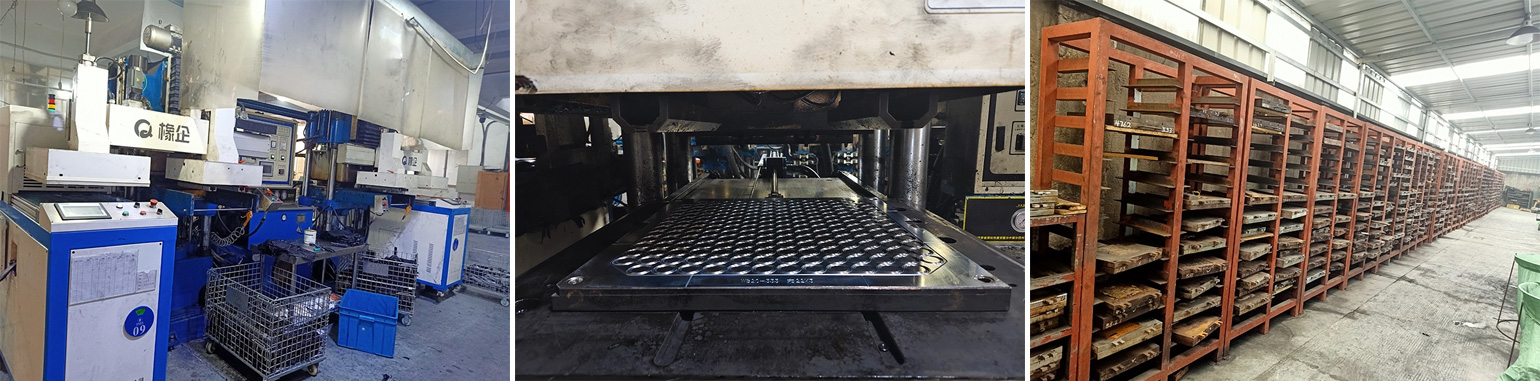
Avoid selecting a different material solely because it has a higher quoted temperature rating. The replacement must also suit the medium, joint geometry, and mechanical requirements.
Do not coat an old gasket with RTV to compensate for damage or permanent deformation.
Some joints require a specified sealant at corners, stepped joints, or other defined locations. Other preformed gaskets are installed clean and dry.
Follow the instructions for sealant type, placement, quantity, and curing time. Unspecified sealant can affect seating, and excess material may enter the equipment.
Use the specified gasket thickness and profile. Stacking gaskets or fitting a thicker seal changes the joint geometry and compression conditions.
For flange applications, Lixu Rubber’s guide to choosing rubber gasket thickness provides related background. Final selection should follow the requirements of the actual joint.
Clean the mating surfaces using an approved method. Reassemble with the specified fastener condition, tightening sequence, stages, and torque or other controlled loading method. Do not increase tightening force to make a damaged gasket seal.
Complete the prescribed inspection and leak test before returning the equipment to service. A successful initial test does not establish an unlimited future reuse life.
For recurring maintenance, record the gasket specification, replacement history, and reasons for failure. Keeping identified replacement seals available can reduce pressure to reinstall an uncertain part.
To discuss replacements, contact Lixu Rubber with your drawing, material requirements, operating conditions, and quantity. Include photographs of the removed seal and mating surfaces when investigating a recurring leak.
Operating time alone is insufficient. Check the manufacturer’s instructions, compression history, temperature and fluid exposure, and removal condition. A short service period does not guarantee suitability.
Appearance cannot confirm that the gasket retains the required dimensions and sealing behavior. Follow the specified reuse criteria. If there is no approved reuse procedure, replacement is the more reliable maintenance choice.
RTV should not be used to repair a deteriorated gasket. Some assemblies require sealant at specific locations, but its use must follow the installation instructions.
Some specific seal designs permit reuse under defined conditions. Silicone material or an O-ring shape alone does not establish this. Check the instructions for the exact seal and application.
Cleaning may remove contamination when an approved method is used. It does not reliably reverse aging, damage, or permanent deformation. Do not use unapproved solvents, oils, or heat treatments to alter the seal’s dimensions.


