
Views: 0 Author: Site Editor Publish Time: 2026-08-24 Origin: Site


Standard AS568 or metric seals cover most industrial applications. Relying on off-the-shelf options for edge-case environments guarantees premature failure. Extreme temperatures, aggressive chemicals, and non-standard groove dimensions destroy standard elastomers rapidly. This leads to catastrophic system downtime. Engineers and procurement teams face a complex matrix when sourcing non-standard seals. Specifying a Custom O-Ring requires aligning material science, specialized production methods, and tooling requirements. You must balance these factors without compromising lead times or regulatory compliance. This guide breaks down the technical evaluation criteria for custom seal production. We compare specialized manufacturing techniques, material trade-offs, and vendor qualification frameworks. You will learn how to ensure reliable, leak-free performance in unique applications.

Manufacturing Method Dictates ROI: The choice between vulcanized splicing, compression molding, CNC machining, and casting depends strictly on production volume, cross-section complexity, and required tolerances.
Material Science Trumps Geometry: Even a perfectly dimensioned custom O-ring will fail if the elastomer compound (e.g., FFKM, FKM, specialized Silicone) is not precisely matched to the application's thermal and chemical environment.
Tooling and Lead Time Trade-offs: High-volume molding requires upfront tooling investments and longer lead times, whereas spliced, cast, or machined seals offer rapid deployment for low-volume or oversized requirements.
Compliance is Non-Negotiable: Specialized manufacturing must include rigorous Quality Assurance (QA), custom compounding traceability, and industry-specific certifications (aerospace, USP Class VI, FDA).
Table of Contents
Standard seals forced into unique applications exhibit predictable failure modes. Compression set occurs when the elastomer loses its memory under continuous load. The polymer chains permanently deform, causing the seal to flatten and lose sealing force entirely. Extrusion happens in high-pressure environments. The material pushes into the clearance gap between hardware components, eventually shearing off. Nibbling tears the edges of the seal over time as pressure fluctuates and the hardware expands or contracts. Chemical degradation swells, shrinks, or hardens the polymer structure. These failures happen when standard materials face incompatible fluids or extreme heat.
Altering hardware designs simply to accommodate standard sizes introduces massive risks. Changing groove dimensions can weaken structural integrity or alter fluid dynamics within the system. Designing a custom seal ensures long-term reliability. It matches the seal to the hardware rather than forcing the hardware to fit the seal. Engineers must evaluate the operating environment before modifying metal components.
Compression Set: Permanent deformation leading to loss of contact pressure.
Extrusion and Nibbling: Physical shearing of the elastomer into hardware clearance gaps.
Explosive Decompression: Gas expansion within the polymer causing internal ruptures.
Chemical Attack: Volume swell, embrittlement, or dissolution of the base polymer.
A custom requirement begins with a strict technical baseline. You might need non-standard inner diameters (ID) or unique cross-sections (CS). Proprietary hardware geometries often demand specific seal profiles to prevent fluid bypass. Extreme environmental exposure requires advanced polymer blends tailored to the exact chemical makeup of the system. Sometimes you need a standard size paired with a custom material. You might use standard AS568 dimensions but require specialized manufacturing. This produces the seal in a proprietary, high-performance elastomer blend.
Success metrics include strict leak rate thresholds and lifecycle longevity. You must evaluate how long the seal maintains integrity over the equipment's lifespan. Reliable performance dictates the entire engineering approach. Maintenance intervals depend heavily on the seal's ability to withstand thermal cycling and pressure spikes. A properly engineered custom seal extends the mean time between failures (MTBF) for the entire assembly.
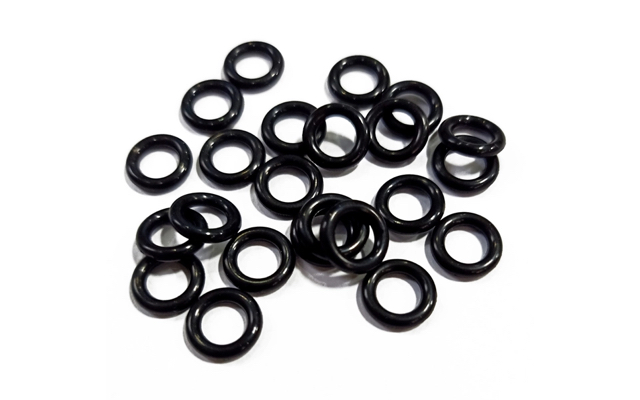
This process starts by extruding raw elastomer cord stock through a die. Operators cut the cured cord to a precise length based on the required inner diameter. They use either a straight butt cut or an angled scarf cut to increase the bonding surface area. They bond the ends using a specialized vulcanizing agent and targeted heat application in a splicing die. This method works best for large-diameter seals. Tooling a massive mold for a large diameter requires massive steel plates and oversized presses. Splicing handles low-volume runs efficiently and rapidly.
However, it presents specific engineering trade-offs. The joint has lower tensile strength compared to fully molded rings. You should avoid spliced seals in high-pressure dynamic applications where stretching occurs. Spliced seals perform exceptionally well in static face seal applications, such as large enclosure lids or vacuum chamber doors.
Compression molding involves placing pre-weighed elastomer preforms into a heated mold cavity. The hydraulic press applies immense pressure to form the part. The heat initiates the cross-linking process, curing the rubber into its final shape. Transfer molding forces the uncured material through a sprue system into the closed cavity. This remains the industry standard for high-volume production of custom sizes. It offers excellent structural integrity and exceptionally tight dimensional tolerances.
The primary trade-off involves upfront tooling investments. You also face longer initial lead times while machinists cut the steel molds. Once the tool is verified, production scales efficiently. Manufacturers use cryogenic deflashing to remove excess flash from the molded parts, ensuring a clean parting line. This method produces seals capable of handling extreme dynamic loads.
Injection molding injects heated, pre-mixed elastomer directly into a closed mold. The machine uses a mechanical screw mechanism to feed the material rapidly and consistently. This method is ideal for exceptionally high volumes. It excels at producing micro-miniature seals or complex custom cross-sections. You achieve the highest precision available in elastomer manufacturing. The automated nature of the process reduces cycle times significantly.
The drawback is the highest tooling investment of any method. Complex runner systems and precision cavities require expensive machining. This process becomes economically viable only at massive scale. Engineers often utilize cold-runner blocks to minimize material waste during the injection process. This proves highly beneficial when molding expensive compounds like fluorosilicone or perfluoroelastomers.
This subtractive manufacturing process cuts seals directly from a solid tube or billet. Machinists use elastomers or rigid thermoplastics like PTFE, PEEK, and Polyurethane. It provides excellent results for rapid prototyping and design iteration. You can produce ultra-low volumes quickly without waiting for mold fabrication. It works perfectly for materials that resist traditional molding techniques.
Trade-offs include a higher per-unit resource allocation and significant material waste. You also face limitations when machining certain soft durometer elastomers which deflect away from the cutting tool. Machinists often use cryogenic cooling to freeze soft rubber billets before turning them on the lathe. This ensures a smooth surface finish and accurate dimensions.
Liquid casting involves pouring liquid elastomers into open or closed molds. Manufacturers often utilize low-cost or 3D-printed tooling for this specific process. It proves highly effective for experimental prototyping. You can achieve ultra-soft durometers easily with cast urethanes. It works exceptionally well for specialized applications requiring high abrasion resistance, such as material handling equipment.
The process has slower cycle times due to curing requirements. You risk air entrapment if you do not vacuum degas the liquid material thoroughly before pouring. It remains limited to specific material families like silicones and polyurethanes. Post-curing ovens are often required to achieve the final mechanical properties of the cast seal.
Manufacturing Method | Ideal Application Profile | Primary Engineering Advantage | Technical Limitation |
|---|---|---|---|
Vulcanized Splicing | Large static face seals, enclosures | Rapid deployment, no mold required | Weakened tensile strength at the joint |
Compression Molding | Standard custom sizes, dynamic seals | Uniform density, high structural integrity | Requires steel tooling fabrication |
Injection Molding | Micro-seals, massive production runs | Fastest cycle times, tightest tolerances | Complex tooling requirements |
CNC Machining | PTFE seals, rapid prototyping | Zero tooling, immediate iteration | High material waste, soft rubber deflection |
Liquid Casting | Ultra-soft seals, high abrasion areas | Economical tooling, unique durometers | Potential for air entrapment, slow curing |
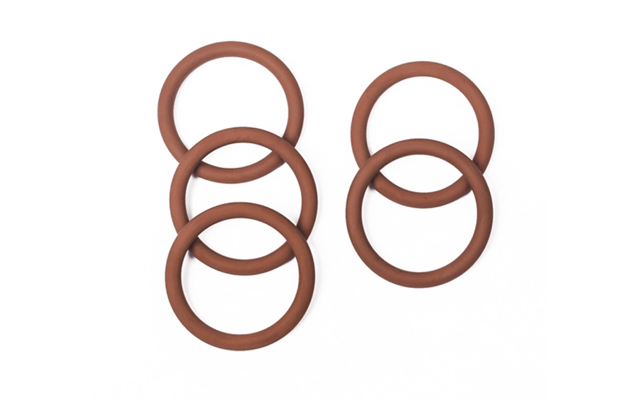
Specialized manufacturing begins long before molding. It starts with custom mixing raw elastomer ingredients. Chemists combine base polymers with specific curing agents, carbon black, or mineral fillers. This achieves exact performance profiles required by the application. Custom compounding solves unique industry challenges. Off-the-shelf polymer blends cannot address extreme chemical exposure or rapid thermal cycling. Tailoring the mix ensures the final product survives its intended environment.
The mixing process requires strict environmental controls to prevent contamination. Engineers use two-roll mills or internal mixers to disperse the fillers evenly throughout the polymer matrix. The choice between peroxide curing and bisphenol curing drastically alters the final chemical resistance of the seal. Proper compounding dictates the success of the entire sealing system.
High-performance materials dominate specialized applications. FFKM (Perfluoroelastomers) provide extreme chemical and heat resistance. They survive environments that destroy standard rubber instantly, handling temperatures up to 327°C. Specialized FKM blends handle aggressive automotive and aerospace fluids. Extreme-temperature Silicones remain flexible in cryogenic conditions down to -100°C while resisting high heat.
Standard NBR (Nitrile) and EPDM have severe limitations in unique applications. They degrade rapidly when exposed to incompatible media. NBR swells in ozone or UV light, while EPDM dissolves in petroleum-based oils. You must match the polymer backbone directly to the fluid and temperature profile. Material selection requires analyzing the system's continuous operating temperature, not just the intermittent spikes.
Custom manufacturing allows for precise durometer tuning on the Shore A scale. You can balance flexibility with resistance to high-pressure extrusion. A harder seal (e.g., 90 Shore A) resists extrusion but requires more compressive force to seal properly. A softer seal (e.g., 60 Shore A) conforms easily to hardware imperfections but risks blowing out under pressure. Engineers often pair custom seals with PTFE backup rings to bridge the gap between flexibility and extrusion resistance.
Compression set testing evaluates custom formulations under load. It ensures the seal maintains its memory over time. A high compression set means the seal flattens permanently and fails to maintain contact pressure. Testing according to ASTM D395 standards verifies the compound's ability to rebound after prolonged compression at elevated temperatures.
Specialized applications require rigorous documentation and material purity. Food and beverage industries demand FDA compliance (21 CFR 177.2600) for all wetted surfaces. Medical and pharmaceutical sectors require USP Class VI certification to ensure biological reactivity standards are met. Oil and gas operations rely on NORSOK M-710 standards for rapid gas decompression resistance.
The manufacturer must provide material test reports (MTRs) for every batch. They must ensure batch traceability from the initial mixing stage to the final product. This guarantees the material installed matches the material specified. Traceability prevents catastrophic failures caused by counterfeit or contaminated raw materials entering the supply chain.

A specialized manufacturing partner must offer more than just production capacity. They should provide a collaborative engineering development process. Engineers utilize FEA to simulate seal performance before cutting any steel. This software models groove fill, thermal expansion, and stress distribution under load. They use hyperelastic material models, such as Mooney-Rivlin or Ogden, to predict how the rubber will behave.
Simulating these variables prevents costly tooling mistakes. It ensures the custom profile functions correctly under real-world pressures. Partnering with a manufacturer who offers FEA reduces iteration cycles significantly. You can visualize installation stretch and compression forces digitally, optimizing the hardware dimensions alongside the seal geometry.
Evaluating total project economics requires a clear framework. You must compare the high upfront tooling of molding against zero-tooling methods. Molding offers high efficiency at large volumes. Splicing or machining requires zero tooling but carries a consistently higher unit resource allocation. A break-even analysis helps determine the right path.
Low-volume runs favor machining or splicing. Long-term production justifies mold investments. Transparency in tooling ownership and maintenance is critical when selecting a vendor. Multi-cavity tools increase initial fabrication time but drastically reduce cycle times during full-scale production. Engineers must weigh the immediate need for parts against the long-term production scale.
Rigorous QA frameworks separate premium manufacturers from standard suppliers. You must verify their inspection capabilities before approving production.
First Article Inspection (FAI) verifies the initial production run meets all dimensional requirements using optical comparators.
The Production Part Approval Process (PPAP) ensures a reliable, repeatable manufacturing process through statistical process control.
Automated optical inspection (AOI) detects microscopic defects, flash, or short shots in custom batches rapidly.
Material batch testing confirms specific gravity, durometer, and tensile strength via rheometry before molding begins.
These protocols guarantee every seal performs exactly as engineered. Skipping QA steps leads to batch failures, system leaks, and compromised equipment.
Industrial applications cannot rely on DIY or hobbyist methods. Super-glue splicing might work for PC fluid distribution plates, but it fails instantly in hydraulic systems. Experimental SLA 3D printed molds fail under industrial pressures and temperatures. The surface finish of printed molds often transfers to the seal, creating leak paths. These shortcuts lead to catastrophic leaks in critical systems.
We recommend a phased, professional approach. Use CNC machined prototypes for initial fit-testing. Vacuum-degassed cast models verify geometry in static applications. Complete these steps before investing in multi-cavity production molds. Professional prototyping validates the design parameters and ensures the final molded part will function as intended.
Custom tooling requires realistic lead times. Cutting and validating a new mold often takes four to eight weeks. You must mitigate operational delays proactively. Establish blanket orders to secure production capacity well in advance. Negotiate safety stock agreements to maintain inventory buffers at the manufacturer's facility.
Consider the balance between domestic and international sourcing. Domestic suppliers offer faster iterations and easier communication during the prototyping phase. International vendors might provide scale advantages once the design is locked and validated. Dual-sourcing critical custom seals prevents assembly line shutdowns if one facility experiences unexpected delays.
Gather your exact hardware dimensions and environmental parameters including continuous temperature, maximum pressure, and chemical media exposure.
Shortlist specialized manufacturing partners based on their in-house engineering capabilities, FEA simulation offerings, and transparent tooling structures.
Request material test reports and verify rigorous quality certifications for your specific industry requirements before approving any compounds.
Order CNC machined prototypes to validate fit and function before committing to high-volume steel molds.
Initiate a technical consultation with an applications engineer to lock in your custom compounding requirements and establish a production timeline.
For businesses seeking dependable sealing solutions, Cixi Lixu Rubber Products Co., Ltd specializes in rubber sealing products and supports customers with solutions for diverse industrial applications. By combining product expertise with manufacturing capabilities, the company can help customers identify suitable O-ring materials, specifications, and sealing solutions based on their specific application requirements.
A: A spliced O-ring consists of extruded cord stock cut to length and bonded using heat and vulcanizing agents. A molded O-ring is formed in a heated cavity under immense pressure. Molded seals offer superior structural integrity and uniform tensile strength. Spliced seals have lower tensile strength at the joint but require no tooling investments, making them ideal for large diameters.
A: Yes. Many applications require standard AS568 dimensions but need extreme chemical or thermal resistance. Manufacturers use standard molds to press proprietary, high-performance elastomer blends like FFKM or specialized Silicone. This provides advanced performance without new tooling investments. You simply specify the standard dash number alongside the custom compound requirements.
A: Lead times depend heavily on the chosen method. CNC machining or vulcanized splicing yields parts in a few days. Custom compression or injection molding requires cutting steel tools. This typically takes four to eight weeks. The timeline includes tool fabrication, First Article Inspection, and material batch testing before full production begins.
A: Failures usually stem from incorrect durometer selection or excessive clearance gaps. If the elastomer is too soft, high pressure extrudes the material into the hardware gap. Custom compounding allows engineers to increase the durometer. You can also design the groove to accommodate PEEK or PTFE backup rings to prevent extrusion.
A: No. CNC machining is a subtractive process that creates significant material waste and requires longer cycle times per part. It serves as an excellent method for rapid prototyping or ultra-low volumes. For high-volume production, compression or injection molding provides far greater efficiency and consistency across large batches.
A: Compression set measures an elastomer's inability to return to its original shape after prolonged compression. A high compression set means the seal flattens permanently and loses contact pressure against the hardware. Custom compounding minimizes compression set by optimizing the curing agents and cross-linking density for your specific operating temperature.


