
Views: 0 Author: Site Editor Publish Time: 2026-07-21 Origin: Site


Seal failure in mission-critical environments poses severe operational and financial risks. When a simple component ruptures under pressure, entire production lines grind to an abrupt halt. Standard catalog O-rings frequently fall short in these demanding scenarios. They struggle when facing non-standard hardware configurations or aggressive chemical media. Extreme pressure and temperature cycles also destroy standard components quickly. Simply swapping a broken part for an identical replacement rarely solves the underlying design flaws. Instead, transitioning to an engineered Custom O-Ring represents a vital system upgrade. This shift requires precise material science application. It also demands highly application-specific geometry. In this article, we explore exactly when off-the-shelf options fail. You will learn the core evaluation dimensions for specifying high-performance elastomers. We will guide you through prototyping realities, tooling costs, and lead times. Finally, we provide actionable logic for evaluating and selecting a capable manufacturing partner.
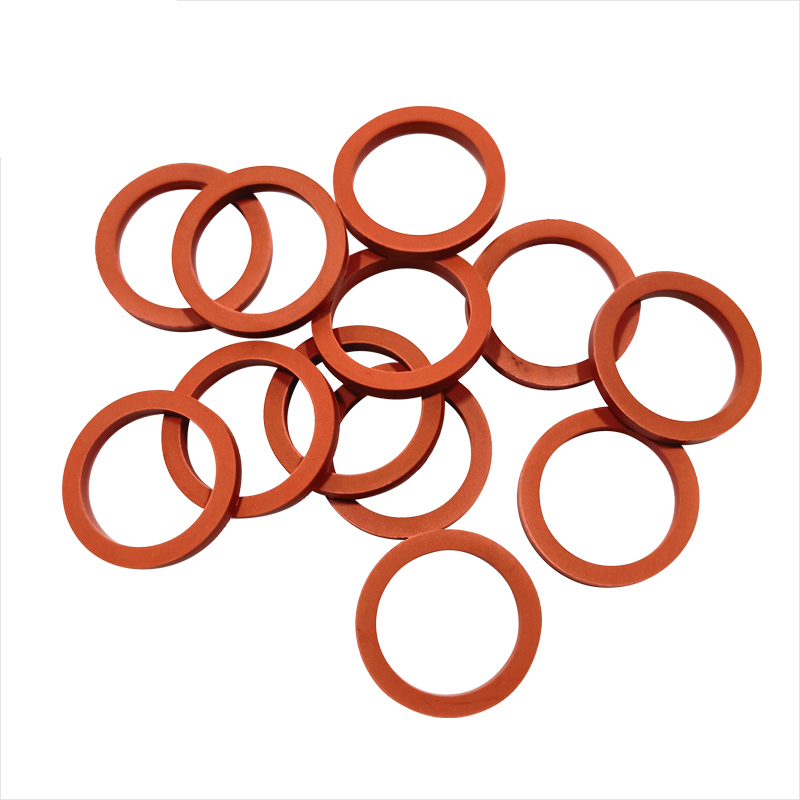
Standard O-rings fail when application demands exceed standard tolerances, highlighting the need for custom compounding or unique cross-sections.
Evaluating a specialty seal requires analyzing three core dimensions: material compatibility, dimensional precision, and regulatory compliance.
Prototyping, FEA testing, and transparent tooling costs are non-negotiable steps to mitigate risk before full-scale production.
Selecting a manufacturing partner hinges on their in-house engineering capabilities, lot traceability, and quality certifications (e.g., ISO, AS9100).
Standard AS568 sizing works perfectly for conventional applications. However, it becomes useless when engineers retrofit legacy machinery. Non-standard gland sizes routinely require you to seek alternative sealing methods. Proprietary groove designs often reject standard dimensions entirely. If you force a standard size into a custom groove, extrusion usually follows. Premature wear occurs rapidly. These hardware constraints form the primary driver for engineered sealing solutions. You cannot compromise system integrity by squeezing the wrong part into a critical void.
Environmental extremes also dictate a clear move away from basic catalogs. Standard elastomers degrade rapidly under harsh operating conditions. Cryogenic temperatures cause standard rubber to lose elasticity completely. The material becomes highly brittle and shatters under dynamic stress. Explosive decompression environments tear basic seals apart from the inside out. Gas permeates the rubber matrix under high system pressure. When pressure drops rapidly, expanding gas bubbles rupture the elastomer aggressively. Ultra-high vacuum environments demand exceptionally low outgassing properties. Basic compounds release volatile organics constantly. These organics contaminate sensitive optical or semiconductor equipment. Identifying these exact environmental thresholds determines your required material performance.
Testing for explosive decompression requires highly specialized laboratory equipment. Engineers place the elastomer inside a high-pressure chamber filled with specific gases. They saturate the rubber completely over several days. Then, they drop the chamber pressure instantly. Surviving this rigorous test proves the compound suits deep-sea oil extraction perfectly. Standard catalog items rarely survive this specific testing protocol.
Compliance mandates create strict boundaries for material selection. The medical industry requires FDA and USP Class VI certified trace-compounds. You must guarantee absolute non-toxicity and biocompatibility for human contact. The oil and gas sector demands strict adherence to Norsok M-710 standards. These standards verify resistance to sour gas and explosive decompression events. You cannot simply trust generic material data sheets for these applications. Meeting these industry-specific standards makes custom compounding absolutely necessary. Strict regulatory environments penalize non-compliance heavily. A certified specialty seal provides necessary legal and operational protection.
Moving beyond basic Buna-N or Viton™ unlocks superior performance capabilities. High-performance elastomers handle extreme environments effortlessly. Perfluoroelastomers (FFKM) offer near-universal chemical resistance. They withstand harsh acids, amines, and steam simultaneously. Fluorosilicone (FVMQ) provides excellent low-temperature flexibility alongside robust fuel resistance. Specifying the exact polymer backbone is critical for operational success. You must evaluate the exact chemical makeup of your system fluids thoroughly.
You must also balance durometer against compression set resistance. Durometer measures the physical hardness of the rubber compound. Dynamic applications involve constant mechanical motion and surface friction. Static applications only require the seal to fill a stationary void effectively. A harder compound might resist pressure extrusion perfectly. However, it might suffer from a terrible compression set over time. High compression set means the rubber forgets its original shape permanently. Finding the optimal balance defines a truly effective engineering solution.
Request fluid compatibility testing before finalizing any polymer choice.
Specify operating temperature ranges, noting both continuous limits and intermittent spikes.
Prioritize compression set resistance for long-term static sealing applications.
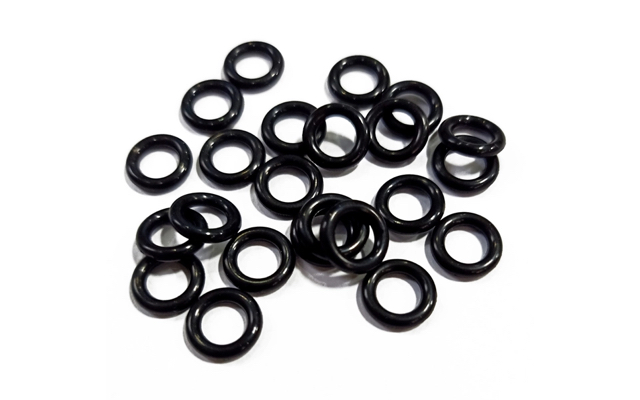
Standard round cross-sections fail to accommodate unusual gland spaces. You must justify shifting to molded shapes or micro-miniature profiles. Some oversized applications require custom-spliced rings instead of molded parts. Vulcanized rings offer a practical solution for enormous diameters. Splicing allows you to create massive seals without building enormous, expensive molds. Unique profiles, like X-rings or D-rings, prevent twisting entirely. They stop the seal from rolling inside the groove during dynamic cycling.
Tolerances and shrink rates heavily influence custom molding success. Custom compounds behave differently during the actual molding process. They rarely match theoretical CAD models perfectly right out of the press. High-performance polymers shrink at distinct rates. They contract noticeably as they cool down from molding temperatures. Engineers must factor these unique shrink rates into the mold design itself.
Elastomer Profile | Primary Advantage | Ideal Application Environment | Design Limitation |
|---|---|---|---|
Standard Round | Universal availability and low cost. | Basic static and slow dynamic hardware. | Prone to spiral failure in high-cycle dynamic uses. |
X-Ring (Quad) | Four sealing lips prevent twisting. | High-speed dynamic reciprocating cylinders. | Requires specific groove dimensions for optimal fit. |
D-Ring | Flat base eliminates rolling completely. | Heavy-duty dynamic rod and piston applications. | Higher tooling costs and directional installation required. |
Spliced/Vulcanized | Unlimited diameter possibilities. | Oversized static lids and massive enclosures. | Spliced joints present a weak point under high tension. |
Finite Element Analysis (FEA) mitigates catastrophic design failures effectively. We strongly recommend simulating seal behavior thoroughly. You should run these digital tests before cutting steel for molds. FEA highlights potential extrusion risks under peak operating pressures accurately. It reveals exactly where the rubber might deform inappropriately inside the gland. It also visualizes thermal expansion across your specified temperature range. Catching these mechanical flaws digitally saves immense amounts of time. It prevents wasting capital on useless prototype tooling.
Clear communication regarding upfront Non-Recurring Engineering (NRE) costs is essential. You need to clarify mold ownership immediately. Do this before paying for any custom tooling development. Prototype tooling usually involves a simple single-cavity mold design. It costs less upfront but yields parts very slowly. Production tooling utilizes complex multi-cavity molds. These molds offer high-volume production efficiency. Understanding this fundamental difference prevents budget surprises later on. Transparent manufacturers explain exactly what you are purchasing.
Setting realistic timelines keeps broader production schedules on track. Custom compounding requires rigorous mixing and material testing phases. Initial Article Inspection (FAI) ensures the first batch meets exact specifications. The FAI process documents dimensional accuracy and material integrity thoroughly. Scaling from a prototype to full production runs takes careful planning. You should expect several weeks for a fully custom-tooled molded option. Rush orders often compromise the critical curing and post-curing stages.
Define exact hardware dimensions and maximum allowable tolerance limits.
Execute FEA simulations using the proposed polymer material data accurately.
Approve a single-cavity prototype mold for initial physical testing.
Conduct field tests simulating peak pressure and sudden temperature spikes.
Authorize multi-cavity production tooling based on successful prototype performance.

Direct control over the mixing process yields massive quality benefits. In-house compounding ensures strict batch-to-batch consistency. Outsourcing this critical step introduces severe supply chain vulnerabilities. If a subcontractor changes their raw material source, your performance might drop unexpectedly. Manufacturers controlling their own chemistry adapt much faster. They customize formulations for unique chemical resistance requirements easily. They do not wait for third-party laboratories to approve minor adjustments.
Stringent documentation separates elite manufacturers from average commodity suppliers. Full lot traceability guarantees accountability for every single batch produced. Adherence to PPAP (Production Part Approval Process) levels validates manufacturing stability. The automotive and aerospace sectors demand strict PPAP compliance routinely. You should require comprehensive material test reports standardly. Request these reports before accepting any physical delivery. Proper certifications, like ISO 9001 or AS9100, prove operational maturity and reliability.
Accepting verbal material guarantees without requesting certified physical test reports.
Ignoring the manufacturer's historical performance in your specific industry niche.
Failing to clarify intellectual property ownership regarding custom polymer blends upfront.
Prioritize manufacturing partners offering robust Design for Manufacturability (DFM) feedback. Avoid manufacturers acting merely as passive order-takers. They simply print your CAD files without questioning potential design flaws. True engineering partners analyze your drawings for hidden molding issues carefully. They suggest minor geometry tweaks proactively. These small adjustments improve production yield and operational performance significantly. This collaborative engineering approach drastically reduces long-term failure risks.
DFM feedback prevents common manufacturing defects like flash and parting line mismatch. Flash occurs when excess rubber leaks outside the mold cavity. Too much flash requires expensive manual trimming operations subsequently. A poorly placed parting line might cross a critical sealing surface. This mistake guarantees fluid leakage during operational use. Expert partners design molds carefully to avoid these costly tooling errors.
Specifying a highly engineered sealing solution requires bridging multiple distinct disciplines. You must connect mechanical design limitations directly to advanced polymer chemistry. The right engineered profile decisively minimizes long-term operational failure risks. It handles extreme environmental conditions effortlessly. Achieving this reliability justifies the initial investment in thorough engineering. Standard catalog parts simply cannot match this level of tailored performance reliability.
Consider these action-oriented next steps:
Submit your detailed CAD drawings to an engineering team for a comprehensive review.
Map out your exact application parameters, isolating pressure and temperature extremes clearly.
Gather all necessary industry standard compliance requirements upfront to ensure accurate material selection.
Request a transparent breakdown of single-cavity prototype tooling versus multi-cavity production costs.
A: Minimum order quantities vary significantly based on the chosen manufacturing method. Machined prototypes or custom vulcanized rings often feature very low MOQs. They sometimes start at just one single piece. Conversely, custom-tooled molded production requires much higher MOQs. Molded options depend heavily on raw material yield. They also require extensive setup time to run the hydraulic presses efficiently.
A: Realistic prototyping timelines depend entirely on part complexity and the specific manufacturing process. Machined or custom-vulcanized options often turn around in just a few days. However, custom-tooled molded options require cutting actual steel molds. You should expect this comprehensive molding process to take several weeks. This timeline applies before you receive the first physical articles for formal inspection.
A: Yes, reputable manufacturers perform comprehensive reverse engineering on existing undocumented seals. This meticulous process involves material spectroscopy. Engineers use Fourier Transform Infrared (FTIR) analysis to identify the specific base polymer backbone. They then pair this precise chemical data with rigorous dimensional analysis. They use optical comparators to successfully and accurately recreate the original component.
A: It usually proves much cheaper to engineer a specific seal. You must calculate the upfront tooling and part costs against machining entire hardware assemblies. Redesigning proprietary grooves often requires retrofitting entire machinery lines. A precision-engineered elastomeric profile accommodates existing hardware constraints effortlessly. This approach saves significant capital compared to executing heavy mechanical overhauls.


