
Views: 0 Author: Site Editor Publish Time: 2026-10-09 Origin: Site


Premature valve failure in municipal, industrial, and commercial fluid systems causes severe operational disruptions. The root cause often traces back to improper elastomer specification. Engineers frequently treat water as a benign media. In reality, modern water systems involve complex variables. Aggressive chloramine dosing, extreme temperature fluctuations, and rapid pressure cycles continuously stress sealing materials.
Standard elastomers degrade quickly under these harsh conditions. Material breakdown leads to leaks, pressure drops, and potential contamination. You must verify exact service conditions before specifying EPDM gaskets for water valves. Evaluating temperature limits, chemical exposure, and system pressure ensures long-term, leak-free performance. Proper specification guarantees regulatory compliance and extends the lifecycle of your fluid control infrastructure.
EPDM is the industry standard for water and steam applications due to its excellent resistance to ozone, UV, and aging, operating effectively between -50°C and +150°C.
Peroxide-cured EPDM offers superior thermal stability and chemical resistance for water valves compared to sulfur-cured variants.
Strict avoidance of petroleum-based oils, fuels, and hydrocarbon solvents is mandatory, as these will cause rapid swelling and failure of EPDM gaskets.
Potable water applications require specific, certified grades of EPDM (e.g., NSF/ANSI 61) to meet health and safety regulations.
Table of Contents
Water valve seals must meet strict baseline requirements. They require zero leakage, a long lifecycle under continuous compression, and high resistance to environmental degradation. Elastomers used in these applications face constant mechanical stress. They must maintain their physical integrity while exposed to varying flow rates and chemical treatments. Ethylene Propylene Diene Monomer (EPDM) consistently meets these criteria. Its saturated polymer backbone provides inherent stability against oxidation. This makes it the default choice for water-handling infrastructure across multiple industries.
A seal functions by pushing back against the mating surfaces of a valve. This elastic memory is non-negotiable. Compression set measures how much an elastomer fails to return to its original thickness after prolonged compression. Industry standards like ASTM D395 evaluate this property under specific time and temperature parameters. EPDM exhibits exceptional compression set resistance. It maintains its elastic memory over years of service. This ensures a tight seal and easy recovery even after thousands of valve actuation cycles. In flanged joints or valve bodies that experience frequent movement, this recovery prevents slow weeping leaks. Inferior rubber compounds often flatten out over time, losing their sealing force and requiring frequent retorquing of flange bolts. EPDM eliminates this maintenance burden.
High-flow piping systems generate significant mechanical stress. Water hammer effects cause sudden, violent pressure spikes. These shockwaves travel through the fluid and impact every component in the line. EPDM absorbs system vibrations effectively. Its dynamic recovery allows it to flex and instantly reseal during rapid pressure changes. When a check valve slams shut, the gasket must absorb the kinetic energy without fracturing or permanently deforming. The polymer structure of EPDM dissipates this energy. It protects the rigid metal or plastic components of the valve assembly from mechanical shock. In municipal pumping stations, this vibration dampening extends the life of the entire piping network.
Valve installations are rarely housed in pristine, climate-controlled environments. Many municipal water valves sit exposed to the elements. Others are buried in damp, subterranean vaults. EPDM possesses inherent resistance to ozone, weathering, and ultraviolet light. Its saturated backbone prevents the oxidation that causes other rubbers to become brittle and crack. This environmental resilience makes it highly reliable for both indoor process lines and exposed outdoor valve installations. You can store EPDM components in maintenance warehouses for extended periods without worrying about dry rot or surface degradation.
Physical Property | Standard Value Range | Field Implication for Water Valves |
|---|---|---|
Tensile Strength | 10 - 20 MPa | Resists tearing under high flow rates and mechanical actuation. |
Elongation at Break | 200% - 600% | Allows stretching over flanges and valve stems without snapping. |
Compression Set | 15% - 30% | Maintains seal integrity over thousands of open/close cycles. |
Hardness (Shore A) | 40 - 90 | Adaptable to various valve seating mechanisms and torque limits. |
Specifying a seal requires mapping specific service conditions directly to the physical properties of the elastomer. Guesswork leads to system failure. You must evaluate the thermal, chemical, and mechanical environment of the valve before finalizing your material selection. Field engineers must gather precise operational data.
You must verify the continuous operating temperature of the fluid system. EPDM operates effectively within a broad thermal window. It handles temperatures from -50°C to +150°C. This range makes it suitable for chilled water lines, ambient municipal water distribution, and high-temperature steam applications. You must also account for thermal cycling. Rapid shifts from hot to cold cause expansion and contraction in the valve body. EPDM accommodates this movement. Sustained exposure near its maximum temperature limit requires specific curing methods to prevent premature hardening. Always measure the peak system temperature, not just the average operating temperature. In HVAC systems, winter heating and summer cooling cycles demand an elastomer that remains flexible across the entire spectrum.
Water is rarely pure. Municipal and industrial water systems utilize various chemical treatments to prevent bacterial growth and scaling. You must analyze the compatibility of the gasket with these treatments. EPDM provides excellent resistance to chlorine and chloramines. These chemicals are standard in municipal water disinfection. Chloramines aggressively attack many synthetic rubbers. They cause standard elastomers to swell, soften, and disintegrate. EPDM resists this chemical attack. Evaluate the presence of mild acids and alkalis. Wastewater and industrial process water often contain fluctuating pH levels. EPDM handles these mild corrosive agents without losing its tensile strength or sealing capabilities.
System pressure dictates the required physical hardness of the seal. Hardness is measured on the Shore A durometer scale. High-pressure valve bodies force the elastomer into the microscopic gaps between metal surfaces. If the gasket is too soft, the pressure will extrude the material out of the sealing groove. This leads to a catastrophic blowout. Assess the maximum line pressure and potential surge pressures. Higher pressures demand a higher durometer EPDM, typically 70 to 80 Shore A. Lower pressure systems or valves requiring lower closing torque benefit from a softer 60 Shore A compound. This ensures a positive seal without excessive mechanical force.
Follow these verification steps before finalizing your specification:
Document the absolute maximum and minimum fluid temperatures in the system.
Record the peak operating pressure and calculate potential surge pressures.
List all chemical additives, disinfectants, and cleaning agents used in the line.
Confirm the absolute absence of any hydrocarbon-based fluids or lubricants.
Determine the required compression force and available actuator torque for the specific valve.
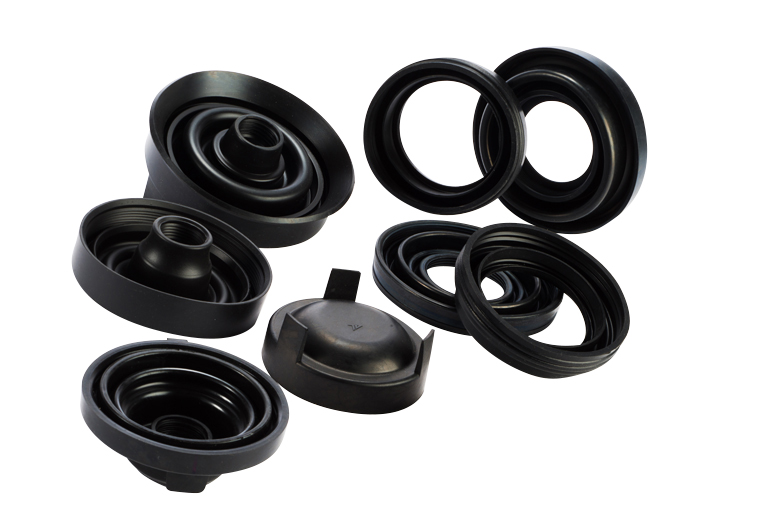
Despite its versatility in water applications, EPDM has strict limitations. Specifying this material in the wrong environment leads to catastrophic failure. Identifying these dealbreakers early in the design phase prevents costly downtime and hazardous leaks.
The most severe implementation risk is hydrocarbon exposure. EPDM is fundamentally incompatible with petroleum oils, mineral oils, fuels, and hydrocarbon-based solvents. Because EPDM is a non-polar elastomer, it readily absorbs non-polar fluids like oil. This absorption causes rapid and severe swelling. The gasket expands beyond its groove, loses all tensile strength, and turns into a soft, gummy paste. Even trace amounts of oil in a water line will destroy EPDM gaskets over time. You must explicitly state this limitation in your engineering specifications. Industrial environments where cutting fluids or hydraulic oils might contaminate the water supply require extreme caution.
Mitigating this risk requires strict control over system media and maintenance practices. Verify that the line media contains zero petroleum derivatives. Control the lubricants used during valve assembly and maintenance. Mechanics often apply grease to hold gaskets in place or lubricate O-rings during installation. If they use a standard lithium or petroleum-based grease, the seal will fail within days. Mandate the use of silicone-based lubricants or other greases explicitly certified as compatible with EPDM. Train maintenance personnel to recognize this vulnerability. A simple mistake during routine maintenance can compromise an entire municipal water sector.

When water systems are contaminated with oils, or when the application involves abrasive mixed media, you must select alternative elastomers. Use the following comparisons to guide your material selection.
Elastomer Type | Water & Steam Resistance | Hydrocarbon/Oil Resistance | Temperature Limit | Best Application |
|---|---|---|---|---|
EPDM | Excellent | Poor (Fails rapidly) | +150°C (+302°F) | Pure water, steam, chloramine-treated municipal water. |
NBR (Nitrile) | Good | Excellent | +100°C (+212°F) | Water systems with oil contamination, fuel lines. |
HNBR (Hydrogenated Nitrile) | Excellent | Excellent | +150°C (+302°F) | High-temp water systems requiring high abrasion and oil resistance. |
FKM (Viton™) | Good (Requires specific cure) | Outstanding | +200°C (+392°F) | Extreme temperatures, harsh chemicals, mixed industrial media. |
Not all EPDM is manufactured equally. The base polymer requires specific compounding and curing to match the physical demands of different valve architectures. Selecting the right grade ensures the seal performs correctly within the specific mechanical constraints of the valve.
The curing process cross-links the polymer chains. This gives the rubber its final physical properties. Sulfur-cured EPDM is cost-effective and provides standard mechanical properties. It works well for ambient temperature water applications and general plumbing. Sulfur cross-links break down at higher temperatures. Peroxide-cured EPDM creates stronger carbon-to-carbon bonds. This results in a higher temperature threshold, superior chemical resistance, and a significantly lower compression set. For steam valves, hot water systems, or applications requiring long-term reliability without maintenance, peroxide-cured EPDM is the mandatory choice.
Different valves require different seating mechanics. You must match the durometer to the valve type.
Butterfly Valves: These rely on resilient seats to provide a bubble-tight shutoff against a rotating disc. They typically require a softer durometer (60-70 Shore A). This allows the disc to compress into the seat without requiring excessive actuator torque.
Gate Valves: Resilient seated gate valves use a rubber-encapsulated wedge. This requires a tougher compound (75-85 Shore A) to resist tearing and abrasion as the wedge grinds against debris at the bottom of the valve body.
Check Valves: Swing and lift check valves need a balance of elasticity for rapid sealing and firmness to prevent extrusion under backpressure.
Press Fittings: O-rings in press fittings require highly precise durometers to compress predictably during the mechanical crimping process.
Globe Valves: These require high-density compounds to withstand the throttling action and high-velocity flow across the seating surface.
Specifying the correct gasket thickness prevents severe mechanical issues. Over-compression destroys the polymer structure. It causes the rubber to fracture and split. Under-compression results in immediate leakage. You must calculate the exact gland volume and specify dimensional tolerances that account for thermal expansion. A gasket that is too thick will extrude into the flow path. This creates turbulence and interferes with valve actuation mechanisms. Strict dimensional control during the molding or die-cutting process is non-negotiable for high-pressure systems. Flange gaskets must align perfectly with bolt holes to prevent uneven loading.
Standard sheet rubber does not fit every application. Many modern fluid control systems utilize proprietary valve geometries. Custom-molded gaskets provide exact fits for complex flange dimensions and internal valve grooves. Manufacturers can adjust the carbon black content, plasticizers, and curing agents to create custom formulations. These tailored compounds address specific challenges. You can engineer EPDM for extreme low-temperature flexibility or enhanced resistance to specific industrial cleaning chemicals.
Installing uncertified materials in municipal or commercial water systems carries massive legal and health risks. Regulatory bodies mandate strict testing to ensure elastomers do not leach harmful chemicals into the fluid stream. You must verify compliance before procurement.
Drinking water applications require absolute material purity. You must specify NSF/ANSI 61 certified EPDM for any valve contacting potable water. This standard rigorously tests the elastomer for the leaching of volatile organic compounds, heavy metals, and other toxic substances. The testing involves exposing the rubber to extraction water and analyzing the chemical runoff. NSF/ANSI 372 ensures the material meets low-lead requirements. Using non-certified industrial EPDM in a drinking water line violates health codes and endangers public safety. Always demand the certification documentation from your supplier.
Beyond North American standards, global projects require specific regional approvals. In the United Kingdom, the Water Regulations Advisory Scheme (WRAS) certification is mandatory. For food and beverage water lines, the elastomer must comply with FDA regulations regarding food contact materials. The American Water Works Association (AWWA) provides comprehensive guidelines for materials used in municipal water distribution. Aligning your material specifications with these industry-specific approvals ensures seamless integration and prevents regulatory rejections during facility inspections.
Gasket specification involves analyzing the financial implications of material selection over the lifespan of the equipment. Choosing the cheapest available rubber often leads to exponential costs down the line.
Standard commercial-grade, sulfur-cured EPDM carries a lower initial purchase price. For temporary installations or low-risk ambient water lines, this may suffice. Premium, certified, peroxide-cured EPDM offers vastly superior lifecycle longevity. The premium compound resists compression set and chemical degradation for decades. The initial cost difference is negligible compared to the expense of a single valve failure. Specifying the premium grade eliminates the need for early replacement and ensures the valve operates smoothly throughout its intended design life.
Valve repacking and gasket replacement require system shutdowns. Unplanned downtime halts production and incurs heavy labor costs. Specifying the correct grade of EPDM extends maintenance intervals significantly. A properly specified seal will often outlast the mechanical components of the valve itself. Preventing leaks mitigates the risk of environmental fines, water damage to surrounding infrastructure, and energy losses associated with pressure drops. Investing in the right elastomer upfront protects the entire operational budget.
EPDM remains the optimal choice for sealing water valves, provided the system is free of hydrocarbons and operates within the specified thermal limits. Its exceptional resistance to chloramines, ozone, and compression set ensures reliable, long-term performance in demanding fluid systems. Success depends entirely on verifying the exact service conditions prior to installation.
Take the following actions to secure your fluid systems:
Review your facility's chemical data sheets to confirm all water treatments and cleaning agents are compatible with EPDM.
Audit your maintenance protocols to ensure only silicone-based lubricants are used on valve seals.
Consult with a sealing engineer to calculate the exact durometer and thickness required for your specific valve architecture.
Request material test reports and certification documents from your supplier before authorizing procurement.
A: Standard sulfur-cured EPDM typically withstands up to 120°C (248°F). Premium peroxide-cured EPDM can operate continuously at temperatures up to 150°C (302°F), making it highly suitable for hot water and low-pressure steam applications.
A: Yes, but only if the specific EPDM compound is certified to NSF/ANSI 61 standards. This certification ensures the rubber does not leach harmful chemicals, heavy metals, or volatile organic compounds into the potable water supply.
A: The most common cause of failure is exposure to hydrocarbons. Trace amounts of petroleum oils, fuels, or the use of standard petroleum-based maintenance greases will cause EPDM to swell, lose tensile strength, and rapidly disintegrate.
A: EPDM offers the best resistance to ozone, UV, and chloramines but fails in oil. NBR handles oil well but degrades faster under UV and ozone. HNBR provides high temperature and oil resistance but comes at a significantly higher cost.
A: Incorrect thickness causes over-compression splitting or under-compression leaking. The durometer must match the system pressure. Softer compounds seal easily at low torque, while harder compounds resist extrusion under high pressure.
A: You must specify peroxide-cured EPDM for steam valves. Peroxide curing creates stronger carbon-carbon cross-links, providing superior thermal stability, better chemical resistance, and lower compression set at elevated temperatures compared to sulfur curing.
A: Yes. EPDM has a saturated polymer backbone, which provides excellent resistance to the oxidizing effects of chlorine and chloramines commonly used in municipal water disinfection, preventing the brittleness and cracking seen in other elastomers.


