
Views: 0 Author: Site Editor Publish Time: 2026-07-23 Origin: Site


A failed industrial seal in a hydraulic system carries a disproportionate financial and operational impact. Beyond simple fluid loss, an unexpected failure leads to catastrophic downtime, severe safety hazards, and secondary damage to expensive hydraulic components like pumps and cylinders. Specifying seals for modern hydraulic systems is a complex engineering challenge that goes far beyond matching a rubber ring to a metal groove. Selecting a Hydraulic O-Ring based solely on dimensional fit ignores critical variables such as fluid chemistry, pressure spikes, and thermal cycling.
To ensure long-term reliability and mitigate premature failure, engineers must apply a systematic evaluation framework. This guide outlines the essential criteria for evaluating and selecting the correct industrial seal for high-pressure hydraulic applications, moving past basic dimensions to address the chemical and mechanical realities of fluid power systems.
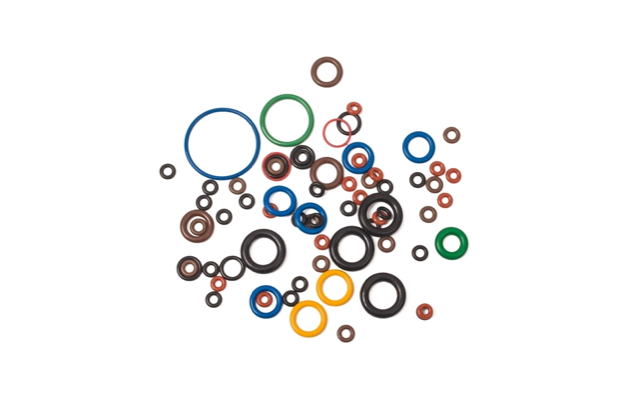
Material Compatibility Dictates Lifespan: Matching the elastomer to the specific hydraulic fluid (petroleum-based, water-glycol, or synthetic) is the non-negotiable first step in seal selection.
Pressure Requires Structural Defense: High-pressure hydraulic applications demand higher durometer (hardness) materials, precise gap control, and often necessitate backup rings to prevent extrusion.
Sizing is a Dynamic Calculation: Proper gland design requires precise calculations of stretch, squeeze, and gland fill to accommodate thermal expansion and fluid swell.
Installation and Storage are Critical: Even perfectly specified O-rings will fail if subjected to twisting, over-stretching, sharp-edge damage during assembly, or degradation due to improper shelf-life storage.
Table of Contents
A successful industrial seal in a hydraulic context must achieve zero leakage under dynamic pressure, resist chemical degradation, and maintain structural integrity over thousands of cycles. Understanding the operational environment is essential for defining these success criteria. When a system operates at 3,000 PSI or higher, the elastomer acts as a highly stressed structural component, not just a simple gasket.
Static applications, such as flanges, manifold blocks, and plugs, involve mating surfaces that do not move relative to one another. In these environments, the primary concern is maintaining a continuous barrier against fluid pressure. The seal is compressed once and remains in place. Dynamic applications, including piston seals and rod seals in hydraulic cylinders, involve continuous linear or rotary movement. This dynamic friction significantly alters material requirements, increasing the rate of wear and demanding higher abrasion resistance from the elastomer. Dynamic seals must also manage the microscopic film of hydraulic fluid that lubricates the moving shaft, balancing lubrication with leak prevention.
While traditional round-profile O-rings are ubiquitous, Quad-Rings (or X-Rings) offer distinct advantages in specific hydraulic applications. The multi-lobed design of Quad-Rings reduces friction and resists spiral twisting in dynamic applications. The four contact points provide redundant sealing surfaces, enhancing reliability in demanding environments.
Feature | Standard Round O-Ring | Quad-Ring (X-Ring) |
|---|---|---|
Friction Level | Moderate to High (depending on squeeze) | Low (requires less squeeze to seal) |
Spiral Twist Resistance | Low (prone to rolling in dynamic grooves) | High (square footprint prevents rolling) |
Lubrication Retention | Poor (wipes fluid completely) | Excellent (fluid pools between lobes) |
Application Suitability | Static and short-stroke dynamic | Long-stroke dynamic cylinders |
Recognizing how seals fail helps in selecting the right component. Extrusion and nibbling occur when high pressure forces the elastomer into clearance gaps between metal parts. You will see this as a chewed or frayed edge on the low-pressure side of the seal. Compression set is the loss of elastic memory due to prolonged high temperatures or excessive squeeze, causing the seal to flatten and leak. When you remove the seal, it looks like a flat band rather than a round ring. Spiral failure happens when dynamic rolling causes the O-ring to twist and shear within the gland, resulting in deep, spiral cuts around the circumference of the seal.
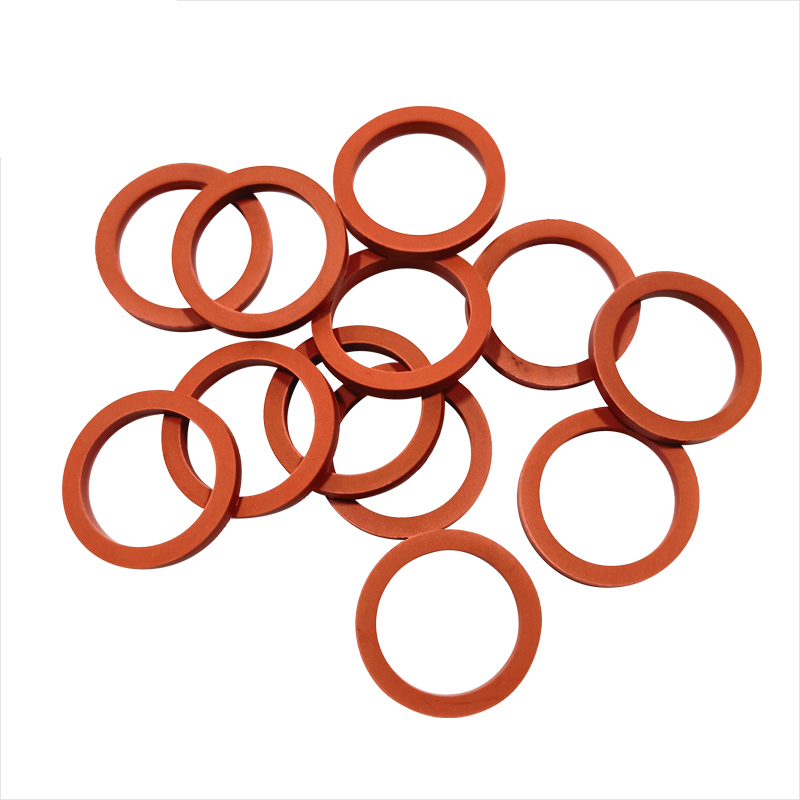
The triad of material selection involves evaluating fluid compatibility, temperature range, and abrasion resistance. Choosing the correct elastomer is critical for the longevity of the seal. A mismatch here guarantees failure, regardless of how well the gland is machined.
Nitrile is the most common material for hydraulic applications due to its excellent compatibility with standard petroleum-based hydraulic oils and mineral oils. It offers a good balance of tensile strength and abrasion resistance. However, it has temperature limitations, typically up to 212°F (100°C), and is vulnerable to degradation from ozone and UV exposure. If your equipment sits outside in direct sunlight, exposed NBR components will crack prematurely.
HNBR serves as an upgraded alternative to standard NBR. It offers superior thermal resistance, operating effectively up to 300°F (150°C). Additionally, HNBR provides enhanced physical strength and excellent retention of properties under high mechanical load, making it suitable for more demanding hydraulic systems where standard Nitrile would degrade or extrude.
For high-heat environments and synthetic hydraulic fluids, FKM is the preferred upgrade. It can withstand temperatures up to 400°F (204°C). FKM offers superior chemical and thermal resistance, handling aggressive fluid blends that would destroy NBR. While it comes with a higher upfront cost, the extended maintenance intervals in high-heat applications justify the expense.
Polyurethane exhibits superior mechanical toughness, making it ideal for heavy-duty dynamic hydraulic cylinders where abrasion and extrusion are major concerns. It can handle massive pressure spikes and rougher cylinder bores better than rubber elastomers. However, PU is susceptible to hydrolysis, meaning it can degrade rapidly in water-glycol fluids at elevated temperatures. It must be restricted to compatible petroleum or specific synthetic fluids.
EPDM is necessary for systems using phosphate-ester-based fire-resistant hydraulic fluids, such as Skydrol, commonly found in aviation and specific heavy industrial applications. It handles these aggressive fluids perfectly. Explicitly note that EPDM will rapidly swell, turn to mush, and fail if exposed to standard petroleum-based hydraulic fluids. Cross-contamination must be strictly avoided; even using a petroleum-based grease during installation will destroy an EPDM seal.
Sealing hydraulic systems that experience pressure spikes exceeding 3,000 to 5,000 PSI requires careful consideration of material hardness and gland design. Pressure forces the elastomer to flow like a highly viscous fluid, seeking the path of least resistance—which is always the clearance gap between the metal components.
A standard 70 Durometer elastomer is generally suitable for lower pressures and static seals. However, a 90 Durometer material is required for high-pressure hydraulic applications. Harder materials resist extrusion better but require more clamping force and perfectly machined surfaces to seal effectively. A 90 Durometer Hydraulic O-Ring will not conform to surface scratches as easily as a 70 Durometer ring, demanding tighter machining tolerances.
The clearance gap between mating metal parts must be evaluated relative to system pressure. As pressure increases, the allowable clearance gap decreases. If the gap is too large for the given pressure and material hardness, the seal will extrude and fail.
System Pressure (PSI) | Max Diametral Clearance (70 Durometer) | Max Diametral Clearance (90 Durometer) |
|---|---|---|
1,000 PSI | 0.010 inches | 0.015 inches |
2,000 PSI | 0.004 inches | 0.010 inches |
3,000 PSI | Not Recommended | 0.006 inches |
4,000+ PSI | Requires Backup Ring | Requires Backup Ring |
In some systems, high-pressure gas dissolved in hydraulic fluids can expand violently during sudden pressure drops, causing internal tearing of the elastomer. The gas permeates the rubber at high pressure, and when the pressure drops instantly, the gas expands faster than it can escape, blowing the seal apart from the inside. To withstand explosive decompression, specific material formulations, such as RGD-resistant NBR or FKM, are required. These compounds have a higher modulus and resist internal fracturing.
When system pressure exceeds approximately 1,500 PSI (depending on clearance), a hydraulic O-ring alone is often insufficient. PTFE or hard elastomer backup rings are used to prevent the primary industrial seal from extruding into the clearance gap. The backup ring sits on the low-pressure side of the groove. Under pressure, it deforms slightly to close the clearance gap entirely, providing a solid wall that the softer elastomer cannot push past.

Moving beyond basic dimensions, reliable sealing requires precise engineering calculations for gland design. Guessing sizes based on a stretched, used seal is a guaranteed path to failure.
Sizing involves understanding standard AS568 dimensions versus metric sizing. It is crucial to measure the hardware (gland depth, width, and bore/rod diameter) rather than measuring a used, deformed O-ring to determine the correct dimensions. A used seal has likely suffered compression set and fluid swell, making its current dimensions irrelevant to the original specification.
Squeeze is the compression of the O-ring cross-section. Baseline recommendations are typically 10-30% for dynamic seals and up to 40% for static seals. Under-squeeze can result in leakage at low pressure, as the seal lacks the initial compressive force to block fluid before system pressure engages. Over-squeeze leads to premature wear, excessive friction in dynamic applications, and rapid compression set.
The rule of thumb for maximum stretch is typically 5% for the inner diameter. Stretching a seal too much reduces its cross-section, which lowers the effective squeeze and causes leaks. Gland fill should not exceed 85-90%. This allows space for thermal expansion and fluid swell. Rubber is incompressible; if it swells and fills 100% of the gland, it will generate massive outward force, potentially rupturing the hardware or extruding the seal violently.
Surface roughness limits are critical for both static and dynamic glands. A dynamic mating surface must be smooth enough to minimize wear, yet retain microscopic pockets of hydraulic fluid for essential lubrication, typically requiring 8 to 16 micro-inches Ra. If the rod is too smooth (under 4 Ra), the seal wipes it completely dry, leading to friction heat and rapid failure. If it is too rough (over 20 Ra), the surface acts like sandpaper, shredding the elastomer.
Identifying operational realities that cause perfectly specified seals to fail in the field is essential for long-term success. The best engineering on paper means nothing if the seal is destroyed during assembly.
Use Installation Cones: Never drag a seal over bare threads or sharp splines. Use a bullet or installation cone to guide the seal into place.
Apply Compatible Lubrication: Dry installation tears rubber. Always lubricate the seal and the gland with the actual system hydraulic fluid or a strictly compatible assembly grease.
Avoid Twisting: When rolling a seal into a groove, ensure it sits flat. A twisted seal will fail immediately under dynamic cycling.
Check for Sharp Edges: Deburr all ports and cross-holes in the cylinder barrel. Passing a seal over a sharp port edge under pressure will slice it instantly.
It is important to differentiate roles: O-rings provide the fluid seal, while guide rings (wear rings) absorb side loads and prevent metal-to-metal contact in hydraulic cylinders. They work together but perform distinct functions. If a cylinder lacks proper guide rings, the side load will compress the O-ring unevenly, causing a massive extrusion gap on one side and immediate failure.
When utilizing proprietary or new hydraulic fluid blends, request material test reports (MTRs) and conduct immersion testing to verify compatibility and mitigate thermal degradation and chemical swell. Do not rely on generic compatibility charts for custom fluid blends, as additive packages can aggressively attack elastomers even if the base oil is compatible.
Pre-installation degradation is a significant risk. Best practices for storing spare hydraulic seals include controlling temperature and humidity, avoiding direct UV or sunlight exposure, and adhering to age-control standards established by Aerospace Recommended Practice (ARP) 5316. Keep seals in sealed, UV-blocking bags away from electric motors, which generate ozone that cracks rubber.
Choosing the right Hydraulic O-Ring is essential for ensuring reliable sealing performance in high-pressure hydraulic systems. By carefully matching the elastomer material, hardness, pressure rating, and gland design to the operating environment, engineers can reduce leakage, improve equipment reliability, and maximize service life.
Partnering with an experienced sealing manufacturer is equally important for long-term hydraulic system performance. Cixi Lixu specializes in manufacturing high-quality Hydraulic O-Rings, customized sealing solutions, and precision rubber components for hydraulic, pneumatic, automotive, and industrial applications. With advanced manufacturing technology, strict quality control, and extensive engineering expertise, the company helps customers achieve reliable sealing performance in demanding operating environments.
Audit your current hydraulic fluid specifications and cross-reference them against your existing seal materials to identify potential chemical incompatibilities.
Measure your hardware clearance gaps and compare them against system pressure to determine if backup rings are required for your application.
Consult with a specialized seal manufacturer for custom gland design verification before finalizing your cylinder or manifold blueprints.
Request physical prototypes for pressure testing and thermal cycling before moving to full-scale production.
A: NBR or HNBR are best for standard petroleum fluids. FKM is required for high heat applications, and Polyurethane (PU) is ideal for environments demanding high abrasion resistance.
A: Measure the gland and hardware dimensions (depth, width, bore) rather than an old, deformed O-ring. Use AS568 charts to match these hardware dimensions to the correct seal size.
A: Extrusion is caused by a combination of high system pressure, a soft elastomer durometer, and excessive clearance gaps between the mating metal parts.
A: A 70 durometer material is generally insufficient for high pressure without backup rings. A 90 durometer material is recommended to resist extrusion under high pressure.
A: O-rings create the actual fluid seal. Backup rings sit behind the O-ring to physically block the elastomer from extruding into clearance gaps under high pressure.
A: Quad-Rings feature four contact lobes that reduce friction and prevent spiral twisting, making them highly effective in dynamic hydraulic cylinders compared to standard round O-rings.
A: The top causes of failure include incorrect material-to-fluid matching, extrusion from excessive pressure, and physical damage during installation.


