
Views: 0 Author: Site Editor Publish Time: 2026-07-23 Origin: Site


Thermal degradation of seals routinely leads to catastrophic fluid leaks. These failures cause unplanned downtime and severe safety hazards across industrial applications. Selecting the right elastomer requires moving far beyond baseline specification sheets. You must understand continuous versus peak temperature limits. Engineers also need to evaluate thermal cycling impacts and fluid compatibility under intense heat.
This article provides engineers and procurement teams with an evidence-based framework. We will explore how to properly specify a High-temp O-Ring for demanding environments. You will learn actionable strategies to mitigate temperature-induced seal failures effectively. By aligning material science with mechanical realities, you can secure reliable system performance. Our goal is to equip you with the practical knowledge needed to navigate complex elastomer choices confidently.

Thermal boundaries dictate lifespan: Exceeding an elastomer’s thermal limits accelerates compression set, while dropping below its glass transition temperature (Tg) causes brittle failure.
Thermal cycling is a distinct risk: Rapid temperature fluctuations cause continuous expansion and contraction, accelerating mechanical fatigue faster than stable extreme heat.
Material selection requires a holistic lens: Specifying a heat-resistant seal requires evaluating maximum operating temperatures alongside chemical exposure, as heat aggressively accelerates chemical degradation.
Verification mitigates risk: Reliable procurement requires validation against industry standards (e.g., ASTM D395 for compression set) rather than relying solely on supplier marketing claims.
Understanding how temperature damages elastomers forms the foundation of proper material selection. Heat and cold attack molecular structures differently. Both extremes compromise the seal and create dangerous leak paths.
Excessive heat systematically breaks down polymer cross-linking. When operating temperatures exceed the material limits, the internal chemical bonds sever. You will notice distinct physical symptoms during maintenance checks. The elastomer hardens significantly and loses its inherent elasticity. Eventually, severe compression set takes over. The seal flattens into a rigid rectangular shape. It can no longer push back against the mating surfaces. This loss of deflection recovery ensures catastrophic leakage.
Cold environments present an equally destructive challenge. The Glass Transition Temperature (Tg) represents the exact point where a pliable elastomer turns into a rigid, glass-like state. Below this threshold, seals lose all flexibility. They fail to track the micro-imperfections of mating surfaces. Microscopic gaps open up, creating immediate leak paths. If pressure spikes occur while the elastomer remains below its Tg, the rigid material will simply shatter or crack.
Every elastomer possesses a specific coefficient of thermal expansion (CTE). Rubber expands significantly more than the surrounding metal hardware when heated. This creates a serious volumetric dilemma. If the gland design ignores this expansion, the heated elastomer will overfill the groove. The pressure forces the excess material into the clearance gap, causing destructive extrusion. Conversely, when the system cools, the material shrinks. It pulls away from the sealing surface and compromises the pressure boundary.
Real-world operations rarely maintain perfectly stable temperatures. Thermal cycling represents the operational reality for most industrial systems. Continuous shifting between intense heat and freezing cold constantly stresses the polymer matrix. Rapid heating and cooling cycles force the material to expand and contract endlessly. This repetitive motion accelerates premature fatigue. Mechanical failure happens much faster under cycling conditions compared to stable extreme heat.

Selecting an appropriate elastomer requires balancing thermal limits against environmental demands. No single material solves every engineering challenge. You must match the molecular strengths of the compound to your specific application requirements.
Elastomer Thermal Performance Comparison
Elastomer Type | Max Operating Temp | Key Strength | Primary Limitation |
|---|---|---|---|
FKM (Viton™) | ~400°F (204°C) | Excellent balance of heat and chemical resistance | Struggles in extreme low temperatures and steam |
VMQ (Silicone) | ~450°F (232°C) | Broadest overall temperature range | Poor abrasion resistance; degrades in petroleum |
FFKM (Kalrez®) | ~600°F (316°C) | Universal chemical resistance at extreme heat | Exceptionally high upfront procurement cost |
PTFE (Teflon™) | ~500°F (260°C) | Nearly zero chemical reactivity | Lacks natural elasticity; requires energized designs |
Engineers widely consider FKM the standard baseline for high-temperature applications. It reliably handles operational heat up to roughly 400°F (204°C). The material offers a highly advantageous balance of heat tolerance and strong chemical resistance. You will find it commonly deployed across automotive, aerospace, and general industrial sectors. It resists petroleum oils and fuels exceptionally well. However, standard FKM grades often struggle when exposed to hot steam or polar solvents.
Silicone serves applications requiring an exceptionally broad thermal range. It performs beautifully in extreme freezing environments and handles heat up to 450°F (232°C). Despite this impressive thermal bandwidth, Silicone carries notable limitations. It possesses very poor abrasion resistance and low tensile strength. We heavily discourage using it in dynamic applications where constant friction occurs. Furthermore, Silicone demonstrates severe vulnerability to steam and most petroleum fluids. It functions best in static, environmentally exposed applications.
When you face extreme environments, FFKM acts as the ultimate problem-solver. It withstands staggering temperatures up to 600°F (316°C). The molecular structure mirrors PTFE, providing near-universal chemical resistance while maintaining rubber-like elasticity. The high upfront cost often causes procurement hesitation. However, you can easily justify the investment in mission-critical applications. It prevents catastrophic failures in highly aggressive chemical processing and semiconductor manufacturing sectors.
PTFE represents a highly specialized heat-resistant seal option. It easily handles intense heat up to 500°F (260°C) and shrugs off virtually all industrial chemicals. Unlike FKM or Silicone, PTFE lacks inherent elasticity. It does not stretch easily and exhibits cold flow under pressure. To utilize PTFE successfully, you must implement specific gland designs. Engineers frequently utilize energized spring configurations to mechanically force the PTFE jacket against the sealing surfaces.
Temperature never acts alone. It constantly interacts with system fluids, atmospheric conditions, and system pressures. Evaluating these combined variables prevents unexpected early-stage failures.
Basic chemical compatibility charts deceive many engineers. Most suppliers test these material charts at standard ambient room temperatures. You cannot rely on them for high-heat environments. Elevated temperatures act as an aggressive catalyst. Heat exponentially increases the chemical aggressiveness of system fluids. A mild solvent at room temperature will aggressively attack and degrade an elastomer at 300°F. Always verify material compatibility at your maximum operating temperature.
External applications introduce a complex matrix of weather-related threats. Temperature extremes compound the damaging effects of ultraviolet (UV) light, atmospheric ozone, and high humidity. UV radiation aggressively breaks down molecular bonds in standard rubbers like Nitrile (NBR). When you combine harsh sunlight with high ambient heat, degradation accelerates rapidly. You must specify materials inherently resistant to weathering, such as EPDM or Silicone, for outdoor equipment.
Thermal limits directly influence mechanical strength. Elastomers soften significantly as they approach their upper temperature limits. This softening drastically reduces their inherent extrusion resistance. A seal performing flawlessly at 1000 PSI at room temperature may easily extrude into the clearance gap at 350°F. To combat this phenomenon, you must adjust your hardware. Incorporating protective backup rings prevents the softened elastomer from migrating. You might also need to tighten hardware clearances to reduce the extrusion gap.
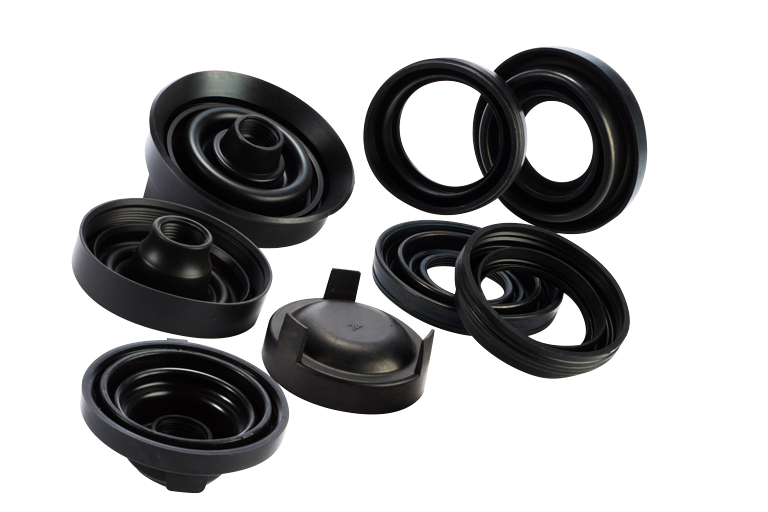
Procuring a reliable seal involves strict verification processes. You must align system data with rigorous material testing. Guesswork inevitably leads to system leaks.
You must clearly define the duration of thermal exposure. Clarify the vital distinction between the system’s baseline continuous operating temperature and transient thermal spikes. A system might run consistently at 250°F but experience brief surges to 350°F. Materials rated only for a peak temperature of 350°F will degrade rapidly if held there continuously. Guide buyers to specify elastomers based primarily on the sustained continuous baseline. You can then ensure the selected compound tolerates the intermittent spikes.
Proper gland design directly dictates seal success. You cannot simply drop a high-temperature elastomer into a standard groove and expect flawless performance. You must account for volumetric expansion.
Calculate the maximum gland fill percentage at your peak operating temperature.
Ensure the groove provides sufficient void space so the expanded rubber does not rupture the hardware.
Adjust your calculated squeeze ratios. High temperatures can cause excessive squeeze, leading to premature mechanical fatigue and splitting.
Never rely solely on generalized supplier marketing claims. Demand empirical evidence. We recommend requesting specific test data from potential suppliers. Following standardized verification protocols protects your systems.
Request ASTM D395 Data: This standard measures compression set under constant deflection. It proves how well the material recovers its shape after prolonged heat exposure.
Analyze ASTM D2240 Results: This test measures durometer hardness changes after heat aging. It reveals how severely the elastomer will stiffen over time.
Review Volume Swell Tests: Ensure the supplier provides data showing fluid interactions at elevated temperatures.
The manufacturing process matters as much as the raw material. Highlight the importance of partnering with capable manufacturers. Seek suppliers offering custom compounding. They can tweak base elastomers to prioritize specific thermal traits. Demand strict material traceability and ask for batch testing certificates. Furthermore, always conduct prototype validation. Testing physical samples within your actual operating environment catches fatal flaws before full-scale procurement begins.
Preventing temperature-induced seal failure requires a holistic engineering approach. You must meticulously align the specific elastomer formulation with both the exact thermal profile and the mechanical demands of the system. Ignoring variables like thermal cycling or heat-accelerated chemical attacks guarantees early leakage.
Always differentiate between continuous baselines and peak temperature spikes.
Account for thermal expansion coefficients to prevent gland overfilling and extrusion.
Demand specific ASTM testing data from suppliers rather than relying on generic datasheets.
Investing in the correct high-temperature sealing solution eliminates unexpected downtime and maximizes operational efficiency. Do not finalize your procurement based on standard ambient charts. We strongly encourage you to consult directly with applications engineering teams. Review your specific system parameters, including exact fluids, pressure ranges, and complex temperature curves, to receive tailored, fail-proof material recommendations.
A: Continuous operating temperature represents the sustained baseline heat a seal endures during normal functioning. Peak temperature refers to brief, transient thermal spikes. Materials rated only for specific peak temperatures will degrade rapidly if held there continuously. You must specify materials based on continuous heat while ensuring they tolerate short peak spikes.
A: High heat resistance does not guarantee low-temperature flexibility. Some materials excel at both extremes, like Silicone. However, standard FKM handles intense heat perfectly but frequently struggles in extreme cold. Always verify the Glass Transition Temperature (Tg) alongside upper thermal limits to ensure true dual-extreme performance.
A: Rapid heating and cooling cycles cause severe mechanical fatigue. This constant expansion and contraction stresses the polymer matrix. It aggressively accelerates the loss of compression set and shortens overall lifespan compared to stable temperatures. Repeated cycling demands highly resilient elastomers to maintain a consistent pressure boundary.
A: Several secondary factors trigger failure despite correct temperature ratings. Heat dramatically accelerates fluid incompatibility, breaking down materials much faster than ambient tests suggest. Additionally, excessive pressure causes high-temperature extrusion as elastomers soften. Poor gland design might also fail to accommodate thermal expansion, ultimately destroying the seal.


