
Views: 0 Author: Site Editor Publish Time: 2026-08-24 Origin: Site


A single seal failure in mission-critical applications carries massive financial and operational consequences. Offshore drilling rigs, chemical processing plants, aerospace vehicles, and subsea exploration equipment rely entirely on continuous seal integrity. Standard maintenance schedules fail rapidly when subjected to extreme temperatures, aggressive chemicals, or high-pressure abrasives. Generic handling procedures cannot withstand these extremes. This inevitable degradation leads to unplanned downtime, environmental leaks, and severe safety hazards.
Implementing a systematic framework for O-Ring maintenance,harsh conditions requires precision. You must adopt strict inspection criteria and environmental mitigation strategies. The intersection of daily maintenance practices and initial material selection determines system reliability. We will explore actionable protocols to protect seal integrity in unforgiving environments, shifting operations from reactive replacements to predictive reliability.

Material-Matched Maintenance: Lubricants and cleaning agents must be chemically compatible with both the specific elastomer and the operating environment to prevent accelerated degradation.
Proactive vs. Reactive Inspection: Harsh conditions require transitioning from time-based replacement to condition-based monitoring and adopting the "every-open" rule to identify micro-abrasions and compression set before catastrophic blowout.
Installation is Maintenance: Over 70% of premature seal failures in extreme environments originate from micro-tears, over-compression, or twisting during the initial installation or re-seating process.
The Limits of Maintenance: No maintenance protocol can compensate for an under-specified elastomer; evaluating failure modes is critical to knowing when to upgrade materials rather than increase maintenance frequency.
Table of Contents
Establish the baseline parameters that define a harsh environment. These parameters dictate the specific failure modes your seals face. A successful maintenance protocol actively prevents these exact failures. Success means zero unplanned pressure drops, zero chemical leaks, and zero blowout events between scheduled service windows. You achieve this by understanding how environmental stressors attack the polymer structure. In the field, a harsh environment might mean continuous exposure to 10,000 PSI in a hydraulic press, constant contact with sour gas in a pipeline, or thermal cycling from -40°C to 200°C in aerospace actuators. Each of these scenarios requires a distinct approach to inspection and replacement. You cannot treat a seal in a chemical dosing pump the same way you treat a seal in a standard water line.
High temperatures accelerate thermal degradation rapidly. Heat breaks down the cross-links within the elastomer. This causes the material to harden, lose elasticity, and take a permanent compression set. Once an O-ring flattens, it cannot maintain radial force against the gland walls. Leaks follow immediately. You will notice the seal taking the exact square shape of the groove upon removal. In steam lines or heavy oil processing, this thermal aging happens in a matter of weeks if the material is not rated for continuous high-heat exposure.
Cryogenic conditions present the opposite threat. Extreme cold causes rapid embrittlement. The elastomer drops below its glass transition temperature and transitions into a glass-like state, losing all flexibility. Any vibration or pressure spike will shatter the seal. Maintenance windows in cryogenic systems, such as liquid nitrogen handling facilities, require specific warming procedures before handling to prevent accidental fracturing. Technicians must allow the hardware to reach ambient temperature naturally before attempting to extract or inspect the seal.
Chemical attacks destroy seals at the molecular level. Volumetric swelling occurs when the elastomer absorbs the surrounding fluid. This increases friction in dynamic applications and forces the seal out of the gland, leading to extrusion. Conversely, chemical exposure can extract plasticizers from the O-ring. This extraction causes severe shrinkage and hardening. The chemical breakdown of the polymer chain ultimately destroys the physical integrity of the seal, turning it into a brittle or gummy residue. For example, exposing standard nitrile to methyl ethyl ketone results in immediate swelling and structural failure. Amine systems in refineries will similarly destroy fluorocarbon seals that are not specifically formulated for base resistance.
High-pressure systems force the elastomer into the microscopic clearance gaps between mating hardware. This causes extrusion and nibbling. The seal material literally chips away under pressure fluctuations. You will find small flakes of rubber downstream in the fluid lines. Abrasive environments compound this damage. Grit, sand, and particulates act like sandpaper in dynamic sealing applications. They score the surface of the O-ring and the metal gland, creating permanent leak paths.
To combat extrusion in high-pressure systems, follow these steps:
Measure the extrusion gap between the mating metal surfaces using feeler gauges to ensure it falls within the elastomer's tolerance.
Verify the system pressure does not exceed the elastomer's durometer rating.
Install backup rings made of PTFE or PEEK on the low-pressure side of the O-ring to block the clearance gap.
Inspect the gland for machining burrs that could catch the elastomer under pressure.
Upgrade to a higher durometer elastomer if the clearance gap cannot be reduced mechanically.
Subsea applications combine multiple harsh conditions simultaneously. Extreme hydrostatic pressure constantly attempts to extrude the seal. Saltwater induces galvanic corrosion in the surrounding metal gland, pitting the sealing surface. Fine silt and marine sand ingress further degrade the elastomer. Long-term seal integrity in marine environments demands maintenance protocols that address pressure, corrosion, and abrasion simultaneously. Technicians working on remotely operated vehicles or subsea tiebacks must inspect the metal glands for pitting just as rigorously as they inspect the rubber seals. Barnacle growth and biological fouling also introduce irregular mechanical stress on exposed dynamic seals, requiring aggressive external cleaning before any internal maintenance begins.
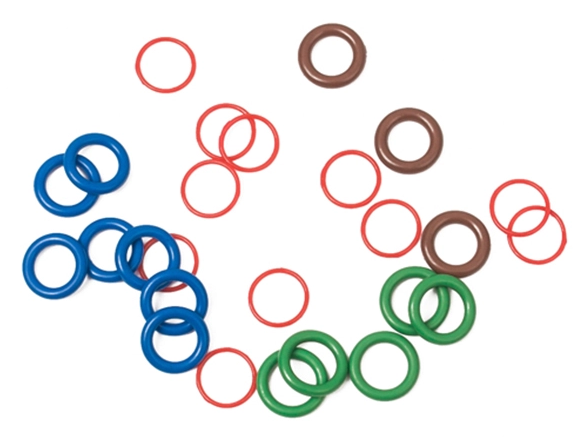
Maintaining seal integrity in unforgiving environments requires specific, actionable steps. You cannot rely on generic maintenance manuals. You must implement precision cleaning, strategic lubrication, active environmental control, and flawless installation practices. Field technicians must treat seal replacement as a precision assembly task, not a rough mechanical repair. The margin for error in a 5,000 PSI system is zero.
You must remove all grit, hair, lint, and sand from the O-ring and the gland prior to seating. Even a single strand of hair causes a leak path in high-pressure gas systems. Use lint-free wipes exclusively. Identify safe cleaning solvents that do not cause elastomer swelling. Never use petroleum-based cleaners on EPDM seals, as they will degrade immediately. Use mild soap and water or approved isopropyl alcohol blends, depending on the elastomer. For heavily contaminated metal glands, use ultrasonic cleaning baths to lift embedded particulates out of the micro-pores of the metal before installing the new seal. Do not use wire brushes on the sealing surfaces, as the resulting scratches will create permanent leak paths.
Lubrication prevents installation damage. It also reduces friction and wear in dynamic applications. You must select lubricants that withstand harsh conditions without cross-reacting with the O-ring material. Fluorinated greases perform exceptionally well in high heat and aggressive chemical environments. Always verify compatibility. Applying a silicone-based grease to a silicone O-ring will cause the seal to swell and fail.
Lubricant Type | Best Application Environment | Incompatible Elastomers |
|---|---|---|
Silicone Grease | General purpose, water, moderate heat | Silicone (VMQ), Fluorosilicone (FVMQ) |
PFPE (Fluorinated) | Extreme heat, aggressive chemicals, oxygen service | None (Universally compatible) |
Petroleum/Mineral Oil | Standard hydraulic systems, low cost | EPDM, Butyl, Natural Rubber |
Barium-Based Grease | High-vibration, heavy load dynamic seals | EPDM (depending on base oil) |
Regulating the operating environment acts as a primary form of maintenance. It directly reduces the mechanical stress on the elastomer. Install pressure dampeners to prevent hydraulic spikes. Use thermal jackets to shield seals from localized heat sources. By controlling the environment, you extend the functional lifespan of the seal and reduce the frequency of invasive maintenance. Implement barrier fluid systems in dual mechanical seals to buffer the primary O-ring from the harshest process chemicals. This creates a controlled micro-environment right at the sealing face.
Installation errors account for the majority of premature failures. Never stretch an O-ring beyond its yield point during installation. Avoid twisting the seal, which leads to spiral failure in dynamic applications. Use dedicated installation tools like sizing cones and protective sleeves. These tools protect the elastomer from sharp threads, splines, or rough gland edges during the seating process.
Follow these strict installation steps for harsh environments:
Verify the O-ring dimensions using a dedicated sizing cone, ensuring it matches the hardware specifications exactly.
Apply a thin, uniform film of compatible lubricant to the O-ring and the leading edge of the gland.
Slide the O-ring over the protective installation sleeve to bypass any machined threads or sharp ports.
Seat the seal into the groove using smooth, even pressure, avoiding any rolling or twisting motions.
Perform a visual inspection with a flashlight to confirm the seal sits flat and flush within the gland.
Assemble the mating hardware using a torque wrench to ensure even compression across the entire circumference of the seal.
Traditional time-based maintenance scheduling often falls short in extreme environments. You must compare these standard schedules against advanced monitoring tailored for your specific conditions. Predictive maintenance relies on actual component health rather than arbitrary calendar dates. Running a seal until it fails is not an option when dealing with hazardous chemicals or high-pressure gases. You need data-driven replacement intervals.
Harsh environments demand the "every-open" rule. Anytime a flange, housing, or transponder is opened for general service, the O-ring must undergo rigorous inspection. In most critical applications, automatic replacement is mandatory. This rule supersedes standard time-based intervals. Reusing a compromised seal in a high-pressure system introduces unacceptable risk. Once an elastomer takes a compression set inside a bolted flange, it will never reseat perfectly in the exact same position. The micro-deformations in the rubber will create immediate leak paths upon re-pressurization.
Calculate your inspection frequency based on environmental severity. Analyze your historical failure data. Review the manufacturer cycle-life ratings. High-vibration and high-temperature environments require exponentially shorter inspection intervals than static, ambient applications. Adjust your baseline continuously as you gather more operational data. If you discover compression set during a scheduled three-month inspection, reduce the interval to two months. Track the mean time between failures for every specific equipment tag in your facility.
Train your technicians to identify early warning signs of failure. Use this specific inspection checklist during every teardown:
Surface cracking: Indicates ozone, UV damage, or thermal degradation.
Flattening on one or both sides: Indicates compression set and loss of elasticity.
Blistering or surface pitting: Indicates explosive decompression from rapid gas expansion.
Missing material or frayed edges: Indicates extrusion and nibbling from high pressure.
Gummy or sticky texture: Indicates chemical degradation and polymer breakdown.
Hard, brittle texture: Indicates thermal aging or plasticizer extraction.
Spiral cuts: Indicates twisting during installation or dynamic operation.
Integrate sensor data to trigger condition-based maintenance interventions. Monitor your systems for minute pressure drops or sudden temperature spikes. These anomalies often precede a physical leak. By utilizing environmental monitoring, you can schedule maintenance before a catastrophic blowout occurs. Connect pressure transducers to your SCADA system to track micro-leaks over time, establishing a clear trend line that dictates exactly when the seal must be replaced. Flow meters on barrier fluid lines can also indicate when an internal seal has begun to bypass fluid.
Maintenance has hard limits. No amount of lubrication or careful cleaning will save a seal that is chemically incompatible with its environment. You must evaluate the operational benefits of upgrading materials versus increasing your maintenance frequency. Sometimes, engineering a new solution is the only viable path forward. If your technicians are replacing the same seal every week, the material is wrong. You must look past the immediate repair and address the root cause of the degradation.
Standard materials fail quickly outside their intended scope. You must match the elastomer to the specific harsh condition.
Elastomer Material | Optimal Harsh Environment | Primary Vulnerabilities |
|---|---|---|
Nitrile (Buna-N) | Petroleum oils, standard pressures | Ozone, UV, extreme heat, ketones |
HNBR | High-pressure sour gas, heavy wear | Chlorinated solvents, strong acids |
EPDM | Steam, hot water, caustic chemicals | Petroleum oils, mineral-based lubricants |
FKM (Viton) | High temperatures, aggressive fuels | Low-temperature embrittlement, hot amines |
Fluorosilicone | Aerospace fuels, extreme cold | Poor abrasion resistance, dynamic friction |
Evaluate the operational case for FFKM materials in extreme chemical and thermal environments. FFKM offers near-universal chemical resistance and withstands temperatures exceeding 300°C. When standard maintenance intervals become operationally unviable due to constant failure, upgrading to FFKM eliminates recurring downtime. It solves the root cause of the degradation. These elastomers perform in environments where standard rubber turns to ash or dissolves completely. They are essential for semiconductor manufacturing, deep-hole drilling, and aggressive pharmaceutical processing.
Analyze the true impact of your sealing strategy. Compare the upfront specification of high-grade seals against the ongoing labor, facility downtime, and safety risks of frequent replacement. A basic seal that requires weekly replacement drains significantly more labor hours and lost production than a premium seal that lasts a full year. Base your material decisions on long-term operational continuity and risk mitigation. Factor in the cost of environmental cleanup and safety reporting if a substandard seal blows out on a chemical line.
Executing maintenance protocols in the field introduces human error. You must identify common operational failures and engineer them out of your process. Standardizing your approach mitigates these risks effectively. A brilliant maintenance strategy fails if the technician on the night shift applies the wrong grease or uses a screwdriver to pry an O-ring out of a gland.
Using the wrong grease during a rushed maintenance cycle leads to rapid seal swelling and failure. Mitigate this risk by color-coding your lubricants. Standardize maintenance kits by machinery type. Implement strict inventory controls to ensure incompatible chemicals never reach the shop floor. Keep dedicated grease guns for specific lubricant types to prevent accidental mixing inside the nozzle. Train your staff to read the safety data sheets for every fluid that comes into contact with the equipment.
Variability in how technicians clean, inspect, and install seals causes unpredictable failure rates. Mitigate this by implementing standardized operating procedures. Require mandatory training on failure mode identification. Enforce dual-sign-off protocols for critical seal installations to ensure compliance. Mandate the use of torque wrenches for all bolted flanges to ensure even compression across the entire O-ring. Do not allow technicians to tighten flanges by feel.
O-rings can degrade in storage before they are even installed. Improper storage conditions destroy elastomers. Mitigate this by enforcing strict shelf-life management using a First-In, First-Out system. Store seals in opaque bags away from UV light. Keep them isolated from ozone sources like electric motors and protect them from extreme warehouse temperatures. Adhere to ISO 2230 standards for elastomer storage to guarantee the seal is in perfect condition when it finally reaches the field. Never hang O-rings on pegs, as this induces permanent mechanical stress and deformation over time.
Audit your current seal failure logs to identify recurring degradation patterns and pinpoint specific equipment requiring material upgrades.
Review your lubricant compatibility charts against your active inventory to eliminate cross-contamination risks on the shop floor.
Implement the "every-open" mandate for all critical flanges and transponders, updating your standard operating procedures to forbid seal reuse.
Install pressure transducers and temperature sensors on high-risk fluid lines to transition from calendar-based maintenance to condition-based monitoring.
For applications where reliable sealing performance is critical, working with an experienced O-Ring manufacturer can help ensure the right balance of material compatibility, durability, and application-specific performance. Cixi Lixu Rubber Products Co., Ltd specializes in rubber sealing products and O-Ring solutions, supporting customers in selecting suitable sealing components for a wide range of industrial applications.
A: Replacement intervals depend entirely on temperature, pressure, and chemical exposure. You must shift from time-based scheduling to condition-based monitoring. Adhere strictly to the "every-open" rule: replace the seal automatically whenever the housing or flange is opened for service.
A: Silicone or fluorinated greases are typically best for high-temperature applications. However, you must verify chemical compatibility with your specific elastomer. Never use silicone grease on a silicone O-ring, as it will cause immediate swelling and failure.
A: Use mild soap and water or specific, non-reactive solvents approved for your elastomer type. Always use lint-free cloths to remove grit, hair, and sand. Avoid aggressive petroleum-based solvents unless explicitly verified as safe for your specific seal material.
A: Surface cracking is primarily caused by thermal degradation, ozone or UV exposure, and chemical embrittlement. Extreme heat breaks down the polymer cross-links, while ozone attacks the chemical bonds, leading to brittle, cracked surfaces that cannot hold pressure.
A: While technically possible if no deformation or degradation is present, best practice in harsh conditions dictates otherwise. You should replace the seal once the gland is opened. Reusing a stressed seal introduces unnecessary risk of catastrophic failure.
A: Aggressive media accelerates plasticizer extraction, causing shrinkage, or induces volumetric swelling. This rapid degradation necessitates highly frequent inspections. If chemical breakdown occurs too rapidly, you must upgrade the material rather than increasing maintenance frequency.


