
Views: 0 Author: Site Editor Publish Time: 2026-07-31 Origin: Site


Sanitary sealing operations operate on razor-thin margins of error in modern processing facilities. A single compromised seal can jeopardize an entire production batch overnight. Component failure or regulatory non-compliance quickly leads to catastrophic consequences for manufacturers. You risk severe product contamination, highly publicized forced recalls, and exceptionally disruptive production downtime. Sourcing the correct component requires navigating incredibly strict regulatory frameworks. You must carefully balance elastomer performance against harsh chemical washes and extreme thermal environments.
This article provides engineering and procurement teams with an evidence-based framework. We will explore how to confidently evaluate, select, and source compliant sanitary seals. You will discover practical insights into material baselines, hidden operational risks, and reliable vendor vetting strategies. Read on to master the critical fundamentals of sanitary and medical-grade sealing applications.
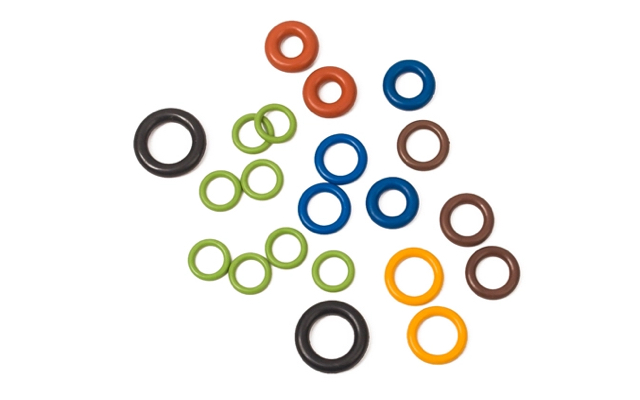
"FDA-grade" is not a universal standard; materials must specifically comply with FDA Title 21 CFR 177.2600 for rubber articles intended for repeated use.
While a silicone O-Ring is the industry standard for medical applications due to biocompatibility, EPDM or FKM may be required for abrasive or chemical-heavy food processing.
Medical device applications often require components to pass both FDA requirements and USP Class VI testing for systemic toxicity.
Reliable procurement demands batch traceability and material certification to verify that "food-grade" claims meet actual regulatory criteria.
Many engineers mistakenly treat "FDA-approved" as a blanket certification for finished parts. In reality, the FDA does not approve specific finished sealing rings. Instead, regulatory bodies evaluate the base elastomers and the specific compounding ingredients used during manufacturing. Materials must strictly comply with FDA Title 21 CFR 177.2600. This specific federal code governs rubber articles intended for repeated use in processing environments.
The regulation outlines permissible ingredients for manufacturing rubber components. It restricts the types of curing agents, plasticizers, and accelerators manufacturers can utilize. Furthermore, it establishes strict extraction limits. The compound must undergo rigorous testing using distilled water and N-hexane. These extraction tests ensure dangerous chemical compounds do not transfer into consumables under heavy operational stress.
You must distinguish between general sanitary requirements and strict medical specifications. A baseline food-grade designation focuses primarily on preventing chemical leaching. It ensures materials do not transfer harmful toxins, unwanted tastes, or distinct odors into food or beverages. The standard guarantees general consumer safety during ingestion.
Conversely, medical-grade components demand significantly higher safety thresholds. They mandate proven biological safety alongside basic chemical stability. Medical applications require materials to demonstrate complete biocompatibility. The component cannot trigger adverse immune responses, tissue inflammation, or cellular toxicity when interacting directly with human physiology or pharmaceutical fluid paths.
You will frequently encounter intersecting certifications during your component selection process. Engineers must verify adjacent standards depending on their specific application context. Relying on FDA compliance alone often leaves critical performance gaps in specialized systems.
USP Class VI: The United States Pharmacopeia Class VI standard evaluates systemic toxicity. It remains strictly required for medical device and pharmaceutical manufacturing seals. Testing involves in-vivo biological assessments to guarantee absolute non-toxicity.
3-A Sanitary Standards: The dairy and beverage industries heavily rely on this framework. It dictates highly specific equipment design rules. 3-A standards mandate exceptionally smooth material surface finishes to actively prevent bacterial colonization.
NSF 51: This standard applies to materials utilized in commercial food equipment. It certifies plastics and rubbers safe for specific applications, ranging from dry goods to acidic beverages.

A precision-molded silicone O-Ring represents the industry gold standard for many cleanroom and sanitary applications. Manufacturers heavily favor platinum-cured silicone variants over peroxide-cured options. Platinum curing leaves virtually no volatile byproducts, maximizing material purity.
Outcomes: It delivers superior thermal stability, operating comfortably up to 400°F (200°C). It offers exceptional biological purity and completely prevents odor or taste transfer.
Best for: Engineers specify silicone extensively for medical devices, dry food processing units, and high-purity pharmaceutical handling systems.
Limitations: The material exhibits notoriously poor resistance to direct steam environments. It also demonstrates weak tensile strength, making it highly susceptible to abrasive mechanical wear.
EPDM serves as a highly robust workhorse in modern liquid processing. The molecular structure inherently resists degradation from oxygen, ozone, and aqueous solutions. It handles aggressive sanitation procedures significantly better than standard silicone.
Outcomes: EPDM delivers excellent, long-term resistance to hot water, continuous steam, and highly polar solvents.
Best for: You will find EPDM predominantly in beverage processing and dairy facilities. It thrives in environments utilizing intense Clean-in-Place (CIP) or Sterilize-in-Place (SIP) automated washdowns.
Limitations: EPDM swells massively when exposed to petroleum-based oils, mineral oils, or heavy animal fats.
FKM elastomers utilize a high fluorine content to shield the polymer backbone from chemical attacks. This unique chemistry provides exceptional survivability in highly destructive environments. It handles scenarios where standard rubbers fail rapidly.
Outcomes: This material provides extreme chemical resistance. It handles highly aggressive oils, concentrated acids, and sustained high temperatures effortlessly.
Best for: Specify FKM for heavy meat processing plants, intensive flavor extraction machinery, and systems utilizing harsh sanitizing chemicals.
Limitations: FKM typically carries a significantly higher procurement price. It also exhibits poor flexibility in extreme sub-zero freezing applications.
Buna-N remains the most prevalent sealing elastomer in general industrial applications. It balances reliable mechanical performance with accessible material pricing. Engineers frequently leverage it for standard processing lines.
Outcomes: Nitrile remains highly versatile and widely available. It shows strong natural resistance to animal fats, vegetable oils, and common greases.
Best for: Standard food-processing applications experiencing moderate temperature requirements. It excels in bakery dough handling and basic agricultural processing.
Limitations: Buna-N breaks down rapidly under ozone exposure. It cannot survive continuous extreme high temperatures above 250°F (121°C).
Material Type | Max Temperature Rating | Oil & Fat Resistance | Steam Resistance | Primary Weakness |
|---|---|---|---|---|
Silicone (VMQ) | 400°F (200°C) | Poor | Poor | Abrasion and tearing |
EPDM | 300°F (150°C) | Extremely Poor | Excellent | Petroleum and lipid exposure |
FKM (Fluorocarbon) | 400°F+ (200°C+) | Excellent | Moderate to Good | Cold temperature flexibility |
Buna-N (Nitrile) | 250°F (121°C) | Excellent | Poor | Ozone and high heat |
Selecting the ideal elastomer requires a comprehensive system evaluation. You must evaluate how the material handles your facility's exact sterilization method. Different sterilization protocols attack polymer chains in entirely different ways. Standard autoclave steam quickly degrades certain elastomers through intense heat and moisture. Gamma radiation actively breaks down polymer bonds, causing rapid embrittlement. Ethylene Oxide (EtO) gas requires materials capable of releasing absorbed gases quickly after the sterilization cycle. Continuous thermal expansion and contraction during these cycles rapidly destroys poorly specified seals.
Investigate the seal's long-term resistance to specific product media. You must account for acidic fruit juices, raw animal fats, and thick, aggressive syrups. However, evaluating product media alone represents a dangerous oversight. You must evaluate all facility cleaning agents simultaneously.
Modern CIP sequences subject seals to immense stress. A standard wash might involve an alkaline wash, an intermediate rinse, a severe acid wash, and a highly concentrated sanitization phase. Caustic soda and peracetic acid frequently destroy otherwise compatible elastomers. Cross-reference robust chemical compatibility charts against every fluid entering your pipeline.
Analyze the physical hardness (measured in Shore A) alongside overall tensile strength. You must match these physical traits precisely to your operational pressure limits. Consider the physical friction generated inside the specific equipment architecture.
Dynamic applications, such as rotary valves or reciprocating pump shafts, demand much higher abrasion resistance. Static applications, like standard pipe flanges, focus more on maintaining continuous compression without extrusion. Choosing a durometer that is too soft leads to immediate gap extrusion under pressure. Selecting a material that is too hard prevents the seal from conforming to microscopic hardware imperfections, causing slow fluid leaks.

Even premium sanitary seals fail when improperly specified for their operating environment. Engineers must recognize common failure modes to proactively prevent systemic contamination. Using the wrong compound in heavy fat or oil environments causes immediate material swelling. When an elastomer absorbs surrounding fluids, its total volume expands dramatically.
Expanded rubber leads to catastrophic seal extrusion out of the hardware gland. The material shreds against the metal casing. Worse, this physical breakdown actively leaches harmful chemical compounds directly into consumer products. This immediately compromises the entire production batch and violates federal compliance guidelines.
Continuous high-temperature exposure frequently causes standard elastomers to lose their elastic memory. Industry professionals call this phenomenon "compression set." When compressed tightly between two metal flanges at high temperatures, the polymer cross-links permanently deform.
This happens regularly in commercial bakery equipment and high-heat sterilization chambers. The rubber flattens permanently into an oval shape. When the system cools and metal parts shift microscopically, the seal fails to push back against the gap. This structural failure creates microscopic leak paths, inviting external bacterial contamination into sterile pipelines.
Aggressive automated washdown protocols easily destroy standard-grade sealing materials. Specifying a basic FDA O-Ring instead of a high-performance chemical compound invites rapid degradation. Alternating phases of extreme heat, harsh alkaline cleaners, and strong acids break down polymer chains rapidly. The seal surface becomes heavily pitted, brittle, and cracked. These microscopic surface cracks become ideal breeding grounds for dangerous pathogens, entirely defeating the purpose of the sanitation cycle.
We strongly advise specifying highly detectable elastomeric materials for critical production nodes. Consider deploying metal-detectable or X-ray-detectable sealing components. Manufacturers compound these specialized rubbers utilizing dense ferrite additives or unique dense particles.
These engineered compounds allow automated inline sensors to catch broken rubber fragments instantly. If a dynamic seal shears under intense mechanical stress, the sorting equipment identifies the fragment. You can easily isolate mechanical failures and reject the specific package before contaminated products ever leave your facility.
Your ongoing system performance heavily depends on reliable supply chain partners. Vetting your vendor rigorously ensures continuous regulatory compliance and consistent material quality. You must insist on full lot and batch traceability for every single order.
Require a formal Certificate of Conformance (CoC) before accepting any inbound shipments. This critical documentation verifies essential FDA and USP regulatory compliance definitively. A proper CoC lists the exact compound name, the specific manufacturing batch number, the official cure date, and the specific regulatory standards met. This protects your facility during surprise regulatory audits.
Scrutinize the actual production facility carefully, especially for high-end applications. For sensitive medical devices and premium pharmaceutical components, verify cleanroom operational certifications. Ensure your chosen supplier manufactures components strictly inside a certified ISO Class 7 or Class 8 cleanroom.
This highly controlled environment actively prevents dangerous particulate contamination during the molding and curing phases. Dust, ambient dirt, or airborne fibers embedded in a medical seal can easily compromise an entire biological system.
Partner exclusively with suppliers prioritizing highly transparent testing protocols. Demand comprehensive material test reports alongside official compound data sheets. Do not rely entirely on generic, marketing-driven product descriptions found on vendor websites.
High-quality vendors gladly supply empirical data validating their sanitary claims. Request data detailing Extractables and Leachables (E&L) testing. Ask for historical performance metrics regarding compression set and volume swell percentages. Suppliers demonstrating high technical competency significantly reduce your internal engineering risks.
Selecting the correct sealing component requires moving well beyond generic marketing labels. You must carefully match specific elastomer capabilities to your exact system parameters. Evaluate the unique thermal, chemical, and biological demands driving your process. Prioritize materials capable of surviving your harshest CIP protocols without losing structural integrity or shedding particulates.
We advise engineers to take immediate action on their procurement strategies. Request detailed material data sheets from your current vendors today. Cross-reference robust chemical compatibility charts specifically against your daily facility cleaning fluids. Establish a firm traceability requirement for all future incoming shipments. Finally, request sample component batches to conduct rigorous operational testing inside your facility before authorizing mass procurement.
A: No. While the base polymer is inherently pure, not all finished compounds qualify. The specific compounding agents and curing processes must meet strict standards. Platinum-cured variants typically perform better and leave fewer byproducts than peroxide-cured options. Furthermore, the manufacturing environment must strictly adhere to FDA 21 CFR 177.2600. Without these tightly controlled variables, the component cannot be certified legally for consumable contact.
A: FDA compliance primarily ensures the material will not leach harmful chemical contaminants. It protects general food and drugs during brief or repeated contact. USP Class VI represents a significantly more rigorous medical testing standard. It requires extensive in-vivo testing to evaluate systemic toxicity and biological response. This ensures the material remains entirely non-toxic and biocompatible inside the human body.
A: Replacement intervals depend entirely on your unique chemical exposure and operational parameters. Temperature extremes and fluctuating chemical pressures drastically shorten expected lifespans. We recommend establishing a predictive maintenance schedule based on routine physical inspections. Operators should check frequently for visible hardening, surface cracking, or abnormal swelling. Replace components proactively before microscopic leaks ever develop.


