
Views: 0 Author: Site Editor Publish Time: 2026-08-24 Origin: Site


Seal failure in industrial fluid systems carries heavy operational costs. A single compromised seal triggers unplanned downtime, hazardous leaks, and severe machinery damage. These failures rarely stem from the elastomer reaching the end of its natural lifespan. Instead, they frequently originate from simple assembly errors that compromise the seal before the system ever pressurizes. FKM (fluorocarbon) elastomers are heavily specified across industries for their premium chemical compatibility and exceptional high-temperature resistance. However, these advanced material formulations present specific mechanical limitations. Compared to other common elastomers, FKM exhibits lower tear resistance and stricter elongation limits. These physical traits make the material highly susceptible to structural damage during assembly. Technicians accustomed to handling more forgiving materials often apply excessive force, inadvertently destroying the fluorocarbon polymer chains. Moving away from ad-hoc assembly methods is an engineering necessity. Facilities must adopt a systematic approach to identify and eliminate common installation mistakes. By understanding the mechanical boundaries of the FKM O-Ring, maintenance teams ensure first-time sealing success.
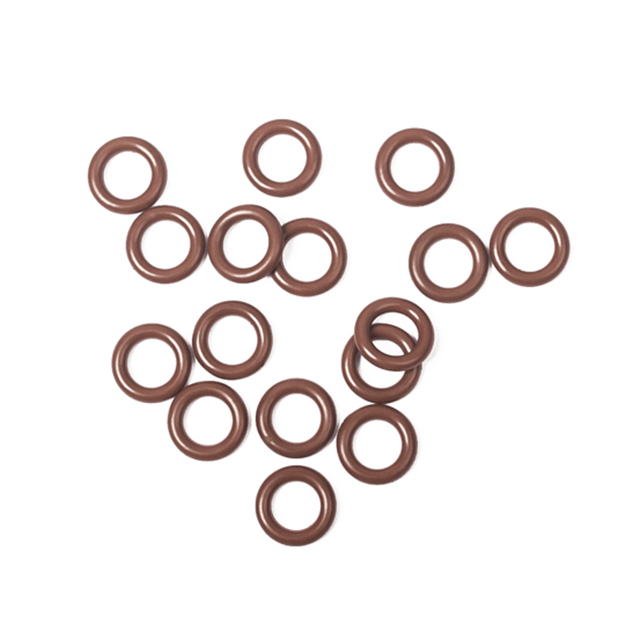
FKM’s unique material properties demand precise handling; excessive stretching and twisting are the primary catalysts for immediate mechanical failure and loss of sealing force.
Improper hardware preparation, including unmitigated burrs, sharp edges, and particulate contamination, accounts for a majority of sheared or nicked seals.
Visual assumptions lead to catastrophic failures; relying on color-coding rather than verified material data sheets often results in mixing up FKM with incompatible elastomers like EPDM.
Applying incompatible lubricants—or skipping lubrication entirely—drastically increases installation friction, leading to surface damage and potential chemical degradation.
Standardizing installation protocols with verified sizing, proper tooling (e.g., installation cones), and controlled heating mitigates adoption risks and ensures long-term performance, especially for specialized variants like Teflon-encapsulated FKM.
Table of Contents
Understanding the physical characteristics of FKM is the first step in preventing assembly damage. Fluorocarbon elastomers are engineered to survive environments that would instantly destroy standard rubber compounds. The heavy concentration of fluorine atoms within the polymer chain provides an impenetrable shield against aggressive acids, petroleum-based fluids, and extreme operating temperatures. However, this superior thermal and chemical resistance comes with distinct mechanical trade-offs. The very molecular structure that provides chemical inertness also reduces the flexibility of the polymer chains.
FKM possesses lower tensile strength and significantly lower elongation thresholds compared to materials like Polyurethane or Nitrile (NBR). While a Polyurethane seal might stretch over a large shaft and snap back into shape without issue, applying the same stretch to an FKM component will permanently deform or tear the material. The material simply lacks the mechanical memory to recover from extreme deformation. When technicians treat FKM like standard Nitrile, they apply forces that exceed the material's yield strength before the equipment is even bolted together.
The operational impact of ignoring these mechanical limits is severe. A compromised FKM seal in a high-temperature or aggressive chemical system creates an immediate vulnerability. Micro-tears introduced during assembly expand rapidly under system pressure. This leads to rapid extrusion, explosive decompression, or catastrophic fluid loss. The resulting equipment failure shuts down production lines and creates serious environmental and safety hazards. The labor and cleanup required after a blowout far exceed the effort required to install the seal correctly the first time.
A successful installation requires meeting strict criteria. The elastomer must achieve uniform compression across its entire cross-section. The surface must remain entirely free of defects, nicks, or micro-abrasions. The component must seat properly within the gland without any spiral tension or twisting. Finally, the material must be verified for absolute compatibility with both the system media and the assembly lubricants used. Meeting these criteria guarantees the seal will perform exactly as engineered.
Installing FKM seals into uncleaned glands guarantees premature failure. Hardware grooves often harbor residual debris from manufacturing or previous maintenance cycles. Metal chips, machining dust, rust, and degraded fragments of old seals create uneven surfaces. When a new seal compresses against these contaminants, the debris creates microscopic leak paths. Furthermore, sharp particles embed themselves into the elastomer, abrading the material during dynamic cycling or thermal expansion.
Sharp edges on the hardware present an even greater threat. Machining burrs, unchamfered edges, and exposed threads act like razor blades against the relatively low tear resistance of FKM. Pushing the elastomer past these hazards without proper shielding shears the outer layer of the seal. Even a microscopic nick reduces the cross-sectional integrity, providing a starting point for a massive rupture once the system reaches operating pressure.
To prevent hardware-induced damage, technicians should follow a strict preparation sequence:
Remove the old elastomer using a non-marring brass or plastic pick to avoid scratching the gland floor.
Wipe the entire groove and surrounding hardware with a lint-free cloth soaked in an approved, non-residue solvent.
Inspect the hardware visually using a high-lumen flashlight to identify any remaining particulate matter or rust.
Run a gloved finger along the leading edges and chamfers to feel for microscopic burrs or sharp transitions that could slice the new seal.
Eyeballing seal sizes is a dangerous practice that frequently leads to system leaks. Using an O-ring with an incorrect inner diameter (ID) or cross-section (CS) fundamentally alters the compression ratio. If the cross-section is too large, the seal overfills the gland. This leaves no room for thermal expansion or fluid swell. As the system heats up, the expanding elastomer has nowhere to go, causing it to extrude out of the groove and shear off against the mating hardware.
If the cross-section is too small, the seal lacks the necessary squeeze to maintain contact with the mating surfaces, resulting in an immediate leak path. Teams must establish a strict framework for verifying dimensions against gland design specifications before assembly begins. Technicians should use precision measuring tools, such as specialized sizing cones or digital calipers, to confirm the ID and CS. Comparing these measurements to the engineering drawings ensures the correct gland fill percentage and proper radial or axial squeeze.
The surface roughness of the mating hardware directly dictates the lifespan of the seal. Engineers measure this roughness using Ra (Roughness Average) values, typically expressed in micro-inches. If the hardware surface finish is too rough (e.g., above 32 Ra for dynamic applications), the peaks of the metal profile will continuously abrade the FKM material. This acts like sandpaper, slowly wearing away the elastomer until it loses sealing force.
Conversely, a surface finish that is too smooth causes different problems, particularly in dynamic applications. A mirror-like finish (below 8 Ra) prevents proper lubrication retention. Without microscopic valleys in the metal to hold the lubricant, the seal runs dry against the hardware. This drastically increases friction, leading to heat buildup, accelerated wear, and eventual stick-slip failure. Adhering to the specific surface finish recommendations provided by the seal manufacturer is non-negotiable for long-term reliability.
Assuming an elastomer type based solely on its color is a critical error. While some industries use green or brown to denote FKM, color coding is not standardized across all manufacturers globally. A green seal could easily be Nitrile, and a black seal could be FKM, EPDM, or Neoprene. Mistaking standard black FKM for EPDM or NBR happens frequently in busy maintenance shops where parts are dumped into shared bins.
Installing the wrong compound due to visual assumptions leads to rapid chemical degradation. For example, if a technician installs an EPDM seal into an application involving petroleum-based oils—believing it to be FKM—the EPDM will swell massively, lose its structural integrity, and dissolve into the system media. Teams must rely entirely on verified material data sheets, batch numbers, and proper inventory segregation rather than visual color cues.
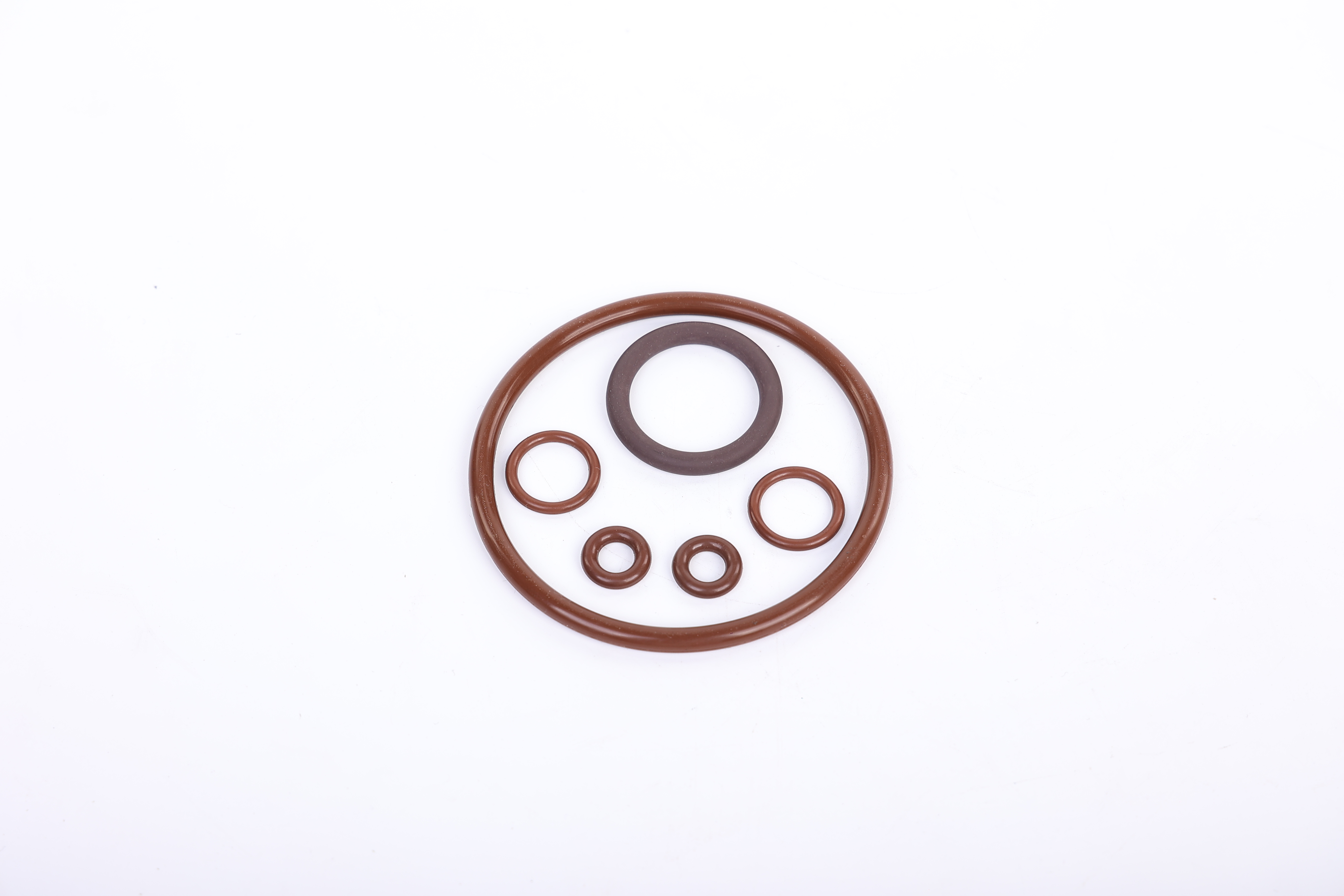
FKM compounds have strict maximum elongation limits during installation. Generally, technicians should avoid stretching an FKM seal beyond 20% to 50% of its original inner diameter, depending on the specific compound formulation and the overall diameter of the part. Pushing the material past this threshold physically breaks the polymer chains. The seal may appear intact to the naked eye, but its internal structure is permanently compromised, leading to a massive reduction in tensile strength.
Overstretching also triggers the Gough-Joule effect. When an elastomer is stretched and then subjected to heat, it attempts to contract rather than expand. If an overstretched seal is installed in a high-temperature application, this contraction creates immense internal stress. The material pulls tightly against the shaft, accelerating wear, reducing its ability to maintain radial sealing force, and ultimately causing the seal to snap under its own tension.
Rolling an O-ring down a shaft or forcing it into a groove with a circular motion introduces a twist into the material. This is a common error when technicians attempt to move a tight-fitting seal over a long distance without proper lubrication or tooling. A twisted seal does not seat uniformly within the gland, leaving sections of the cross-section exposed to uneven compression.
Introducing this twist creates severe, uneven stress concentrations. Once the system is pressurized or subjected to dynamic cycling, these stress points act as failure origins. The fluid pressure forces the twisted nodes to roll back and forth. The material attempts to return to its natural state while trapped under pressure, resulting in classic spiral failure. The seal develops deep, 45-degree spiral-patterned cuts and completely loses its ability to block fluid flow.
The final closure of flanges or hardware assemblies requires precision. Unevenly torquing bolts pulls the mating surfaces together at an angle. This asymmetrical compression pinches the elastomer between the metal faces before the groove fully encloses the seal. The localized pressure crushes the polymer, causing "nibbling" or tearing.
By the time the technician finishes tightening the remaining bolts, the seal is already destroyed. Implementing a standardized star-pattern torque sequence and tightening bolts in gradual increments prevents this asymmetrical crushing. This ensures the seal compresses evenly into its designed void, maintaining a uniform footprint against the mating hardware.
Many technicians reach for whatever tool is closest when struggling with a tight fit. Using screwdrivers, metal picks, pocket knives, or other sharp instruments to force the elastomer into place is highly destructive. FKM's lower tear resistance makes it incredibly vulnerable to point loads from hard metal edges.
These improper tools easily nick, cut, or puncture the material. A scratch that is barely visible creates a massive stress riser. When the system pressurizes, the pressure forces the elastomer into the extrusion gap, and the small nick tears wide open. Technicians must only use tools specifically designed for elastomer handling, such as brass or heavy-duty plastic picks, to prevent this immediate failure point.
Ambient temperature significantly affects the pliability of fluorocarbon elastomers. In lower temperatures, FKM becomes rigid and loses its flexibility. Attempting to stretch or manipulate a cold seal requires excessive force, which dramatically increases the risk of tearing or snapping the component. The material simply cannot yield fast enough to accommodate the stretch.
Forcing a cold installation is a common mistake in unheated facilities or outdoor maintenance environments. To safely increase temporary elasticity, technicians should utilize controlled heating methods. Submerging the seals in a warm water bath or using specialized, temperature-controlled ovens softens the polymer just enough to allow safe stretching over hardware. Direct heat sources like heat guns or open flames must be strictly avoided, as they will melt or chemically alter the surface.
Extreme chemical applications often require FEP or PFA encapsulated FKM seals. These components feature a resilient FKM core surrounded by a thin, rigid Teflon jacket. This combination provides the chemical inertness of Teflon with the mechanical memory of FKM. However, the rigid outer jacket introduces specific handling vulnerabilities that do not exist with standard solid elastomers.
Technicians cannot treat encapsulated seals like standard rubber. Bending, sharply folding, or heavily stretching these seals will kink the Teflon jacket. Once the FEP or PFA layer kinks, it permanently creases. This crease destroys the seal's integrity, creating an immediate leak path regardless of the condition of the FKM core underneath. Installation requires slow, deliberate movements and specialized sizing cones to prevent jacket deformation.
Attempting a "dry install" is one of the fastest ways to destroy an elastomer. Pushing dry rubber against dry metal exponentially increases the coefficient of friction. The force required to seat the component multiplies, making assembly physically difficult and highly hazardous to the material. The seal resists sliding into the groove and instead binds against the metal.
High friction leads directly to the seal catching on microscopic metal peaks. As the technician pushes, the caught section stretches while the rest of the seal remains stationary. This causes twisting, rolling, and shearing against the hardware surfaces. Proper lubrication creates a thin fluid film that allows the elastomer to slide smoothly into the gland without binding or tearing.
Selecting the wrong lubricant is just as dangerous as skipping it entirely. Lubricant selection requires careful evaluation of chemical compatibility. A primary rule is to avoid using lubricants that share the same base polymer as the system media or the seal itself. For example, using a fluorinated grease on certain fluorocarbon compounds can cause unwanted swelling and softening of the material.
Using greases or oils that chemically degrade FKM destroys the seal before the machine even starts. Petroleum-based lubricants might be safe for standard FKM, but if the system is a food-grade or semiconductor application, the wrong grease will contaminate the entire process fluid. Teams must cross-reference the lubricant's chemical makeup with both the FKM material data sheet and the process media requirements.
Lubricant Base Type | Compatibility with FKM | Primary Application Risks & Notes |
|---|---|---|
Silicone Grease | Generally Excellent | Provides excellent slip. May migrate; avoid in paint or coating facilities where silicone causes adhesion failure. |
Petroleum Based (Mineral Oils) | Good | Safe for the elastomer, but can contaminate sensitive process fluids in pharmaceutical or food applications. |
Fluorinated (PFPE) | Variable / Caution | Can cause swelling in specific FKM formulations due to similar polymer structures. Always test before use. |
Ester-Based | Poor | Causes rapid swelling, softening, and complete degradation of FKM polymer chains. Strictly avoid. |
PTFE Dry Film | Excellent | Good for cleanroom environments where wet lubricants attract dust or contaminate the media. |
Once the assembly is together, but before the system is pressurized, technicians must execute a strict visual inspection. Establishing a checklist for post-assembly evaluation catches errors before they cause catastrophic leaks. Technicians should use flashlights and magnification tools to inspect the visible portions of the gland and the parting lines of the hardware.
The inspection must look for specific failure indicators. Spotting micro-tears along the parting line, uneven seating within the groove, or pinched elastomer protruding from the flange faces indicates a failed installation. If any signs of extrusion or cutting are visible, the assembly must be torn down immediately. The damaged seal must be discarded and replaced, as FKM cannot be repaired once the surface is breached.
Validating seal integrity requires safe, controlled testing methods. Hitting a newly assembled system with full operating pressure immediately is dangerous. If the seal is compromised, full pressure will cause a blowout, potentially injuring personnel and damaging surrounding equipment. The sudden spike in pressure forces any weakened elastomer through the extrusion gaps instantly.
Step-pressure testing is the preferred method for identifying slow leaks caused by minor installation damage. Technicians should pressurize the system to a fraction of its operating pressure (e.g., 10%) and hold it there while monitoring for pressure drops. Gradually increasing the pressure in stages (50%, 75%, 100%) allows teams to identify compromised seals safely, without risking a catastrophic blowout or fluid spill.
Relying on tribal knowledge for equipment assembly guarantees inconsistent results. Facilities must mandate the strict documentation of installation steps. Developing comprehensive Standard Operating Procedures (SOPs) reduces human error across different shifts, assembly lines, and maintenance teams. When every technician follows the exact same verified steps, failure rates plummet.
These SOPs must include rigid guidelines for material verification. Before any installation begins, technicians must verify material batch numbers, cure dates, and compound certifications. Cross-referencing the physical part with the engineering bill of materials prevents the material mix-ups that lead to rapid chemical degradation. The SOP should explicitly ban the practice of identifying seals by color alone.
Providing the right tools is a minimal investment that yields massive returns in component longevity. Facilities must equip their teams with specific, non-marring installation tools. Brass or plastic picks allow technicians to manipulate seals without scratching the metal hardware or cutting the elastomer. Sizing cones and bullet tools are essential for safely passing seals over exposed threads or splines without shearing the inner diameter.
The return on investment for training assembly technicians cannot be overstated. Training programs should focus specifically on the handling characteristics of fluorocarbon elastomers and encapsulated variants. When technicians understand why FKM behaves differently than Nitrile or Polyurethane, they naturally adjust their handling techniques. They stop forcing cold seals, they stop using screwdrivers, and they drastically reduce the incidence of torn or twisted components.
Audit your current assembly procedures immediately to identify where technicians might be using improper tools, eyeballing dimensions, or executing dry installations.
Upgrade your facility's installation kits to include non-marring brass picks, sizing cones, and controlled heating equipment like water baths.
Implement a strict material verification protocol that relies entirely on batch numbers and material data sheets rather than visual color-coding.
Consult with a sealing engineer to optimize your gland designs, verify surface finish requirements, and ensure absolute chemical compatibility for your specific fluid applications.
For businesses seeking reliable sealing solutions for demanding industrial applications, Cixi Lixu Rubber Products Co., Ltd specializes in rubber sealing products for a wide range of operating environments. With experience in sealing product manufacturing and application requirements, the company supports customers in selecting dependable sealing components for stable, long-term performance.
A: Technicians should avoid stretching FKM beyond 20% to 50% of its original inner diameter. The exact limit depends on the specific compound and cross-section. Exceeding this limit breaks polymer chains, permanently weakening the material and reducing its radial sealing force.
A: Yes, controlled heating safely increases temporary elasticity, especially in cold environments. Submerging the seal in a warm water bath or using a specialized oven makes it more pliable. Never use direct heat sources like open flames or heat guns, as they will damage the polymer.
A: Silicone-based and petroleum-based greases are typically excellent for standard FKM compounds. However, you must verify that the lubricant does not share a base polymer with the seal and will not contaminate your specific system media. Always consult a compatibility chart before application.
A: Prevent twisting by applying generous, compatible lubrication and avoiding the practice of rolling the seal down a shaft. Use installation cones or bullet tools to slide the seal into place evenly, pushing it linearly rather than rolling it.
A: FKM has lower tear resistance compared to materials like Polyurethane. Exposed threads act like sharp blades against the elastomer. Pushing the seal over threads without a protective sleeve or bullet tool will easily slice the inner diameter, causing immediate failure.
A: The groove must be immaculately clean. Any residual machining dust, metal chips, rust, or remnants of old seals will create microscopic leak paths. Debris can also embed into the new elastomer, causing abrasion and premature wear during operation.


