
Views: 0 Author: Site Editor Publish Time: 2025-12-10 Origin: Site


Choosing the right seal can feel confusing, and a small mistake may cause leaks or failures. A Silicone O Ring must match your real conditions to stay reliable. Many problems come from wrong material, poor fit, or chemical mismatch. In this post, you’ll learn how silicone works in extreme temperatures and why it lasts longer in many applications. You'll also see how to avoid sizing and compatibility errors for a better seal.
Choosing a Silicone O Ring starts by understanding how the seal will work inside your system. Every application behaves differently, so the ring must match the motion, temperature, chemicals, and pressure it will face. The points below help you narrow down the right choice.
A static seal stays in one place, and silicone works well here because it compresses easily and maintains its shape over time. A dynamic seal moves, and the ring slides against metal or plastic surfaces. This creates friction, so silicone may need help from low-friction coatings or special formulas. It keeps flexibility, but it may wear faster under constant motion.
Seal Type | What Happens | Silicone Advantage | Notes |
Static | No movement | Soft compression, stable fit | Great durability |
Dynamic | Sliding or rotation | Flexible under motion | Needs low-friction support |
Silicone stays flexible in extreme cold or heat, even near –155°F or 400°F (based on typical silicone behavior). It handles fast temperature swings, but constant heat may reduce life. Intermittent peaks usually cause less damage, while long exposure at maximum temperatures can increase compression set.
Silicone resists oxidizing agents, some acids, ammonia, and alcohol. These chemicals do not break down the polymer quickly, so the seal stays stable. It does not perform well in fuels, oils, or solvents unless the material changes to fluorosilicone. That version tolerates hydrocarbons much better and avoids swelling.
Chemical Type | Suitability | Notes |
Oxidizers, mild acids | Good | Stable and reliable |
Alcohol, ammonia | Good | Minimal swelling |
Fuel, oil | Poor | Use fluorosilicone instead |
Outdoor systems expose seals to UV, ozone, moisture, or steam. Silicone handles these stresses well, and it ages slowly under sunlight. It also resists cracking when exposed to ozone or water. These traits make it useful in devices that operate outside for long periods.
Pressure changes how much the ring compresses. Silicone is soft, so it seals well under moderate loads. High pressure may deform the ring, and this increases the risk of extrusion. A proper groove design helps protect the ring. Compression set also matters, since a flattened ring loses sealing force.
Some projects need materials that meet strict health or cleanliness rules. Silicone comes in grades suitable for food, medical, or laboratory systems. In these cases, the ring must meet safety standards, which means it stays non-toxic and stable during sterilization.
A silicone seal lasts longer when the system stays within normal temperatures and clean environments. The material resists aging and stays elastic over time, which reduces how often the ring must be replaced. Systems that run continuously or face strong chemicals will need checks more often.
Selecting the right Silicone O Ring depends on understanding how each silicone type behaves under heat, chemicals, and motion. Each grade offers unique strengths, so choosing the correct one improves sealing reliability in demanding systems.
VMQ is the most common silicone base. It keeps flexibility in wide temperature ranges, and it performs well in static sealing. It resists aging and environmental stress, so it works in electronics, household devices, and many medical tools. It does not handle oils or fuels, but it remains stable in light chemicals and clean environments. The material feels soft, and it seals easily under low pressure.
PVMQ adds phenyl groups into the silicone structure, and this improves cold resistance. It stays flexible at temperatures far below freezing, so it performs well in aerospace sensors or outdoor instruments. It helps reduce brittleness when systems cycle between cold and warm conditions. It handles similar media as VMQ, but its advantage appears when temperatures drop rapidly.
FVMQ handles fluids that VMQ and PVMQ cannot tolerate. It resists fuels, oils, and solvents, and it maintains stability in automotive or aerospace fuel lines. It stays elastic across a wide temperature range, though it may have slightly lower tear strength compared to standard silicone. Many systems use this grade when hydrocarbon exposure is unavoidable.
Silicone O Rings come in two main forms: High Consistency Rubber (HCR) and Liquid Silicone Rubber (LSR). HCR feels firmer, and manufacturers shape it through compression or transfer molding. LSR flows easily, and it suits injection molding for high-volume production. Each form affects tolerance control, surface finish, and consistency. LSR often provides clean, precise parts for medical or electronic components, while HCR offers durability in mechanical assemblies.
Material / Form | Key Strengths | Typical Uses | Limitations |
VMQ | General performance, wide temperature range | Consumer devices, gaskets, medical parts | Poor fuel/oil resistance |
PVMQ | Excellent low-temperature behavior | Aerospace, outdoor sensors | Higher cost |
FVMQ | Strong fuel and solvent resistance | Automotive, aviation, chemical fluid lines | Lower tear strength |
HCR | Durable, good for larger parts | Industrial seals, machinery | Less precise molding |
LSR | High purity, clean molding | Medical, electronics | Needs specialized equipment |
A Silicone O Ring performs well only when its size matches the hardware. The seal depends on accurate measurements, proper groove design, and controlled compression. Small errors create leaks or extrusion, so each dimension matters during selection.
The inner diameter defines how the ring fits over a shaft or inside a housing. The outer diameter helps determine the full footprint once the ring sits in the groove. The cross-section controls how much material compresses under load. It helps to use calipers for precise readings, and it prevents uneven pressure on the ring. A small measuring mistake may reduce sealing force quickly.
The groove must give the ring enough room, and it also must squeeze the material just enough. A compression ratio around 10–30% helps create reliable sealing in static systems. Too much compression may deform the ring, and too little may allow fluid escape. Groove depth, width, and surface finish all influence how the ring settles under pressure.
Component | Ideal Range | Notes |
Compression | 10–30% | Helps build sealing force |
Groove Fill | 70–85% | Avoids excessive squeeze |
Stretch | 1–5% | Prevents distortion |
A ring that is too small stretches beyond safe limits, and it may thin out under pressure. A ring that is too large buckles inside the groove. Incorrect tolerances also change how the ring reacts when temperatures rise or fall. Large gaps push material into open spaces, and this increases extrusion risk. Tight control keeps the ring stable during temperature swings.
Some assemblies need dimensions that standard sizes cannot provide. Custom rings help when equipment uses non-standard grooves, unusual pressures, or unique sealing surfaces. They solve issues where precision matters, such as medical pumps or compact electronics. A custom size also helps when users need specific compression or stretch values for long-term durability.
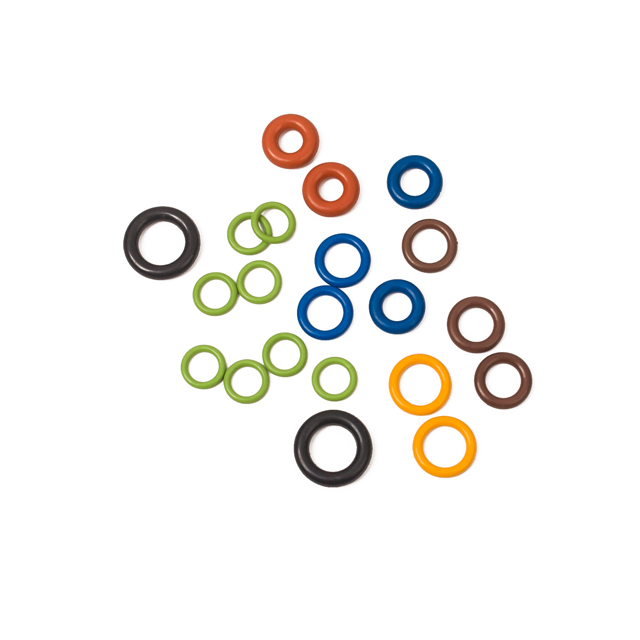
A Silicone O Ring delivers strong sealing performance when the environment stays within its material limits. Each system places different stresses on the ring, so understanding how silicone behaves under temperature swings, pressure loads, and chemical exposure helps prevent early failure.
Silicone keeps flexibility over an unusually wide temperature range, and it resists hardening when systems switch quickly between hot and cold. It handles very low temperatures without cracking, and it manages high heat while staying elastic. These traits work well in medical tools, electronics, and aerospace devices. The polymer structure slows down aging, so it maintains shape even after long thermal cycles.
Silicone is softer than many elastomers. It seals easily under light or moderate loads, but high pressure may push material into gaps. Designers add backup rings, adjust groove clearance, or increase durometer when pressure rises. These changes keep the ring stable during pressure spikes. It also helps to control stretch and compression so the ring resists extrusion or deformation.
Pressure Level | Silicone Behavior | Helpful Adjustments |
Low | Easy sealing, minimal stress | Standard groove |
Moderate | Maintains shape | Higher durometer |
High | Risk of extrusion | Backup rings or tighter gaps |
Silicone tolerates many oxidizing agents, some acids, alcohol, and ammonia. It stays stable in these environments, and it does not swell quickly. It avoids fuels, oils, and strong solvents because they penetrate the polymer. Fluorosilicone works better when hydrocarbons appear in the system. Choosing the right grade prevents cracking, softening, or loss of elasticity.
Chemical Media | Suitability | Notes |
Oxidizers | Good | Minimal degradation |
Mild acids | Good | Stable behavior |
Alcohol, ammonia | Good | Low swelling |
Fuel, oil | Poor | Use fluorosilicone |
Strong solvents | Poor | Avoid silicone |
Silicone resists steam and moisture, and it remains stable in humid environments. The material handles repeated sterilization cycles in medical devices, and it tolerates autoclave heat. Moisture absorption stays low, so dimensional changes remain small. Systems that use high-pressure steam may require reinforced grades, and this helps protect the ring during continuous exposure. The polymer’s resistance to ozone and weathering also supports outdoor sealing applications, especially when devices operate for long periods without maintenance.
A Silicone O Ring performs differently in each industry because every system places unique demands on the material. Temperature, chemicals, cleanliness, and motion all change how the ring behaves. Selecting a grade that matches the industry environment helps avoid failures and supports long-term sealing performance.
Medical devices require materials that stay safe for human contact, and silicone meets this need through its biocompatibility. It remains stable during steam sterilization, and it does not release harmful compounds. The material handles repeated autoclave cycles, so it works well in pumps, valves, sensors, and implant-adjacent components. It absorbs little moisture, and this keeps its dimensions predictable during procedures. Many miniature medical parts use silicone because it stays flexible in extreme temperatures and resists aging over time.
Food systems rely on seals that remain clean, odor-free, and non-toxic. Silicone provides these properties, and it resists steam, hot water, and cleaning chemicals. It helps prevent contamination because it does not react easily when exposed to food ingredients. FDA-grade silicone offers high purity, and it keeps its elasticity when bakery, dairy, or beverage equipment heats or cools rapidly. It also performs well in continuous wash-down environments, so hygiene standards remain stable.
Automotive systems expose seals to oils, fuels, additives, and high temperatures. Standard silicone cannot handle fuel or oil, so fluorosilicone becomes the better choice. It resists hydrocarbons and stays flexible across wide temperature ranges. It performs well in fuel vapor systems, turbocharger components, air handling units, and under-hood electronics. When vibration increases, engineers may combine fluorosilicone O-rings with backup rings for better stability. The material’s chemical resistance helps prevent swelling or softening that leads to leakage.
Electronics depend on seals that insulate components and protect them from dust or moisture. Silicone provides excellent dielectric strength, and it holds shape when temperatures rise inside circuits or lighting modules. It does not break down easily when exposed to heat from processors or compact motors. It also remains flexible in cold conditions, so outdoor sensors and LED housings maintain reliable sealing. The low compression set helps the ring stay effective even after long-term heat cycling.
Industry | Key Requirements | Suitable Silicone Grade | Notes |
Medical & Biotech | Biocompatibility, sterilization | Medical-grade VMQ or LSR | Works in pumps, valves |
Food & Beverage | FDA compliance, purity | FDA VMQ or LSR | Handles steam, cleaning agents |
Automotive | Fuel and oil resistance | FVMQ | Better for hydrocarbon contact |
Electronics | Insulation, heat stability | VMQ or LSR | Good for outdoor sensors |
Tip: Each environment influences material choice, and the correct grade ensures the O-ring keeps sealing under stress.
A Silicone O Ring can be tailored to match unique system demands. Different industries rely on specific hardness levels, colors, electrical properties, and chemical profiles. Customizing these features helps the ring perform better in harsh or unusual environments, especially when standard grades cannot meet the requirements.
Hardness affects how the ring compresses under load, and it changes sealing behavior in static or dynamic systems. Softer durometers seal well at low pressure, and they fit devices that need gentle compression. Harder durometers resist extrusion when pressure rises, and they keep shape in high-vibration assemblies. Adjusting durometer helps engineers control sealing force, friction, and long-term stability. It also lets the ring match groove dimensions more precisely.
Silicone accepts pigments easily, and it can appear in almost any color. Color coding helps technicians identify parts quickly, and it reduces mistakes during maintenance. Translucent versions work well in medical tools or devices that need visual inspection. Glow-in-the-dark options help locate components in low-light areas. The material stays stable even when colored, and it maintains flexibility during thermal cycles. These visual features support safety, organization, and branding needs.
Silicone can be formulated to conduct electricity or block it, depending on application needs. Insulating grades protect sensitive circuits, and they resist electrical leakage in sensors or lighting systems. Conductive grades help dissipate static or support EMI shielding. Adding special fillers changes the polymer’s electrical behavior, and it allows the ring to function in advanced electronics, medical devices, or laboratory instruments. Each option adjusts resistance levels so the seal works safely near electrical components.
Custom compounding allows engineers to adjust chemical resistance, thermal stability, elasticity, and hardness. It helps the O-ring survive conditions that standard materials cannot handle. Additives improve tear strength or extend life in demanding applications. Other compounds enhance low-temperature flexibility, or they increase resistance to steam, ozone, or specific chemicals. Each formulation changes how the ring reacts under stress, and it aligns performance with unique system requirements.
Choosing the right Silicone O Ring depends on matching the material, size, and performance needs to your application. Each environment demands the correct grade for safe and reliable sealing. When uncertain, request samples or consult engineers for support. LIXU provides high-quality silicone sealing solutions that improve durability and efficiency.
A: Select a silicone O-ring designed for extreme heat, and ensure the material grade matches your operating range.
A: Measure ID, OD, and cross-section accurately so the silicone O-ring fits the groove and maintains proper compression.
A: Use fluorosilicone when your system handles fuel or oils, because a standard silicone O-ring cannot resist hydrocarbons well.
A: Ensure correct groove dimensions, avoid overstretching, and verify the silicone O-ring matches temperature and pressure needs.


