
Views: 0 Author: Site Editor Publish Time: 2026-08-24 Origin: Site


Seal failure in food and beverage processing carries severe operational stakes. A compromised elastomer leads directly to batch contamination, forcing unplanned downtime and triggering product recalls that damage brand reputation. Engineers face a distinct challenge here. You must balance strict regulatory compliance against aggressive operational realities. Processing lines endure extreme temperatures, high system pressures, and caustic Clean-in-Place (CIP) or Steam-in-Place (SIP) protocols daily. Relying solely on basic material safety certificates leaves equipment vulnerable to mechanical failure. This technical evaluation framework helps engineering and procurement teams specify the correct FDA O-Ring based on material science and application constraints. You will learn how to match elastomers to specific media, prevent cross-batch contamination, and optimize maintenance cycles for maximum production uptime.
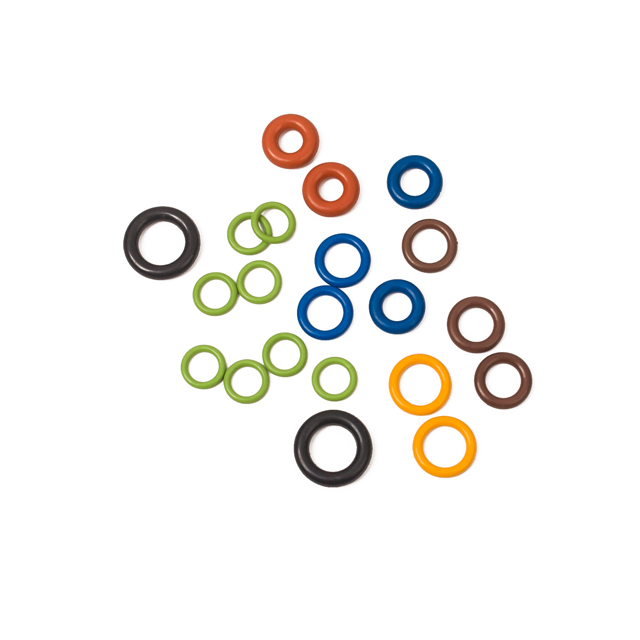
Compliance is a Baseline, Not a Specification: An FDA O-ring certification (CFR 21.177.2600) only dictates material safety; it does not guarantee mechanical suitability for specific pressures, temperatures, or chemicals.
Media Dictates Material: The chemical makeup of the food product (e.g., fatty oils vs. aqueous liquids) must directly dictate the base elastomer (e.g., Nitrile for fats, EPDM for water/steam).
Cleaning Protocols Accelerate Wear: CIP and SIP environments often subject seals to harsher conditions than the food processing itself, requiring high chemical and thermal resistance.
Sizing, Stretch, and Hardware Matter: Even the optimal material will fail if the inside diameter, cross-section, installation stretch, and gland finish are not precisely matched to the equipment hardware.
Table of Contents
Specifying elastomers for food contact requires navigating specific regulatory frameworks. FDA Title 21 CFR 177.2600 governs rubber articles intended for repeated use. This regulation lists permitted base elastomers, vulcanization agents, and accelerators. It also dictates strict extraction limits. Manufacturers test these materials using distilled water for aqueous foods and n-hexane for fatty foods. Passing these extraction tests ensures the polymer compounds do not migrate into the food supply at unsafe levels.
You must differentiate between standard FDA compliance, 3-A Sanitary Standards, and NSF/ANSI 51 certifications.
FDA compliance focuses strictly on material chemistry and extraction limits.
3-A Sanitary Standards govern the hygienic design of the equipment itself, ensuring the seal and gland design allow for thorough cleaning without dismantling.
NSF/ANSI 51 evaluates materials specifically for commercial food equipment construction.
Furthermore, strict traceability remains non-negotiable. Always require Certificates of Conformance (CoC) from your supplier. This documentation tracks the specific batch of polymer back to its raw material origin, ensuring accountability.
Flavor and odor transfer occur through two primary mechanisms: leaching and absorption. Leaching happens when volatile compounds within the elastomer migrate into the process media. Absorption occurs when the polymer matrix takes in fluids from the food product. The elastomer swells and retains these flavor profiles. This creates severe problems in multi-product processing lines. Imagine a bottling facility switching its line from a strong citrus energy drink to a clear cola. Retained citrus oils in the elastomer will contaminate the cola batch.
Preventing cross-batch contamination requires highly specific material selection. You must establish criteria for non-porous, non-toxic materials. The chosen food industry seal must not alter the organoleptic properties of the food batch. Organoleptic properties include taste, color, odor, and texture. Highly cross-linked polymers with dense molecular structures resist absorption. This prevents flavor ghosting and ensures product consistency across different production runs.
Modern processing facilities rely on automated cleaning cycles. Clean-in-Place (CIP) protocols subject elastomers to aggressive chemical attacks. A standard CIP cycle includes a pre-rinse, a caustic wash, an intermediate rinse, an acid wash, and a final sanitizing rinse.
Caustic soda (sodium hydroxide) breaks down fats and proteins but attacks fluorocarbons if formulated incorrectly.
Nitric acid removes mineral scale but causes severe oxidation in standard Nitrile.
Peracetic acid acts as a powerful sanitizer but degrades incompatible polymers rapidly.
Steam-in-Place (SIP) protocols introduce extreme thermal stress. Facilities use high-pressure steam to sterilize internal lines. Temperatures routinely exceed 250°F (121°C). The baseline requirement for any processing seal is surviving these combined cycles. Incompatible materials suffer from embrittlement. They become hard and crack under pressure. Others experience chemical corrosion or excessive swelling. Swelling reduces the clearance gap, leading to friction and eventual destruction of the elastomer.
Engineers must specify the correct form factor for the hardware. Standard O-rings feature a circular cross-section. You specify them for machined glands inside pumps, valves, and internal equipment components. They handle dynamic and static sealing effectively. Tri-Clamp sanitary gaskets serve a different purpose. You use these flat, flanged gaskets specifically for sanitary pipe connections. They create a flush, crevice-free joint between two ferruled pipe ends. Choose standard O-rings for internal machinery sealing. Choose sanitary gaskets for modular pipework assembly.
EPDM stands as the most popular and widely used food-grade elastomer for general applications. Its highly saturated polymer backbone provides exceptional resistance to oxidation and ozone. EPDM exhibits outstanding resistance to hot water, steam, and aggressive CIP chemicals. It handles broad temperature ranges effectively. However, EPDM has a critical limitation. It is highly vulnerable to degradation from animal fats, vegetable oils, and petroleum-based lubricants. Exposure to lipids causes rapid swelling and mechanical failure. EPDM works best for beverage production, non-fat dairy processing, brewing operations, and dedicated steam lines.
Nitrile, a copolymer of butadiene and acrylonitrile, offers excellent mechanical properties. It features high tensile strength and abrasion resistance. Its primary strength lies in its chemical compatibility with lipids. Nitrile provides excellent resistance to animal fats, vegetable oils, and greases. This makes it the direct counterpart to EPDM. Nitrile does possess limitations. It has a lower maximum operating temperature, typically capping around 212°F (100°C). It also exhibits poor resistance to ozone and certain strong acids used in aggressive CIP cycles. Nitrile serves as the optimal choice for meat processing, high-fat dairy applications, and oil dispensing equipment.
Silicone elastomers utilize a siloxane backbone rather than a carbon backbone. This unique chemistry provides extreme temperature flexibility. Silicone operates reliably from sub-zero freezing temperatures up to 446°F (230°C). It remains highly inert and non-toxic. Silicone exhibits zero flavor transfer, making it perfect for sensitive organoleptic applications. The trade-off is mechanical strength. Silicone has poor abrasion and tear resistance. It easily shreds under friction. Therefore, you must not use it in dynamic applications like pump shafts. Silicone excels as a static seal in high-heat baking ovens, cryogenic freezing tunnels, and dry food processing equipment.
FKM represents a premium class of fluorinated elastomers. It offers superior resistance to high temperatures and highly aggressive chemicals. FKM easily withstands harsh CIP acids and high-heat sterilization cycles that would destroy Nitrile or EPDM. It maintains its mechanical properties in extreme environments. Standard FKM performs poorly in low-temperature environments, becoming rigid and losing its sealing force. FKM is best suited for aggressive chemical processing, flavor concentrate handling, and high-heat sterilization lines.
PTFE provides near-universal chemical compatibility. It resists almost all industrial chemicals and solvents. It also features an extremely low coefficient of friction. However, pure PTFE has zero elasticity. It does not stretch or compress like rubber. It is also susceptible to cold flow, meaning it permanently deforms under continuous pressure. To solve this, engineers use encapsulated O-rings. These feature a resilient Silicone or FKM core surrounded by a thin PTFE jacket. This combines chemical resistance with mechanical memory. Use these for highly corrosive environments, static pipe joints, and applications requiring frequent, aggressive washdowns.
Material | Fat & Oil Resistance | Steam & Water Resistance | Max Operating Temp | Primary F&B Applications |
|---|---|---|---|---|
EPDM | Poor | Excellent | 300°F (150°C) | Brewing, Water, Non-Fat Dairy |
Nitrile (Buna-N) | Excellent | Good | 212°F (100°C) | Meat Processing, High-Fat Dairy |
Silicone | Fair | Good | 446°F (230°C) | Baking Ovens, Cryogenics |
FKM | Excellent | Good | 400°F (204°C) | Flavor Concentrates, Harsh CIP |
PTFE Encapsulated | Excellent | Excellent | 400°F (204°C) | Aggressive Washdowns, Static Joints |
Evaluating temperature requirements goes beyond checking the maximum rating. You must evaluate continuous operating temperatures versus intermittent temperature spikes. A system might process food at 180°F continuously but face 250°F steam spikes during SIP. Elastomers react poorly to thermal shock. High temperatures accelerate cross-linking breakdown. This leads to compression set. Compression set occurs when the elastomer permanently loses its elasticity and fails to return to its original circular cross-section. Once compression set happens, the sealing force drops to zero. Conversely, low temperatures cause embrittlement. The polymer becomes glass-like and shatters under pressure. Always specify a material whose continuous rating exceeds your highest intermittent spike.
Fluid pressure directly impacts seal performance. High pressure forces the elastomer toward the low-pressure side of the gland. It pushes the material into the microscopic clearance gap between the metal hardware components. If the pressure exceeds the material's strength, extrusion occurs. The metal edges nibble away at the elastomer, destroying the cross-section. High-pressure homogenization or heavy-duty pumping applications require specific mitigation.
Evaluate the clearance gap between mating metal surfaces. Tighter tolerances reduce extrusion risk.
Specify higher durometer materials. A standard 70 Shore A durometer might extrude under high pressure. Upgrading to an 80 or 90 Shore A durometer provides higher extrusion resistance.
Design the gland to accommodate rigid backup rings. Backup rings block the clearance gap and protect the primary elastomer from extruding.
Durometer measures the hardness of the elastomer. The Shore A scale is the standard measurement for rubber materials. Selecting the correct durometer directly impacts sealing efficiency and extrusion resistance. A 70 Shore A durometer serves as the industry standard for most general applications. It provides an optimal balance of flexibility and sealing force. It conforms easily to microscopic hardware imperfections, ensuring a tight seal under low pressure.
High-pressure applications demand harder materials. When system pressures exceed 1500 PSI, a 70 durometer material will likely extrude into the clearance gap. Upgrading to an 80 or 90 Shore A durometer increases the material's resistance to extrusion. However, harder materials require greater compressive force to create the initial seal. They also struggle to conform to rough surface finishes. Low-pressure systems might require a softer 50 or 60 Shore A durometer. Softer materials require less compressive force, making them ideal for fragile plastic or glass hardware components. Always match the durometer to your specific system pressure and hardware capabilities.
Chemical compatibility requires a dual-axis evaluation. You must cross-reference the seal material against both the process media and the cleaning media. A material might perfectly handle the food product but fail catastrophically during the washdown. For example, Nitrile handles animal fats flawlessly during production. However, if the CIP cycle uses high concentrations of peracetic acid, the Nitrile will degrade. You must consult comprehensive chemical compatibility charts. Map out every single chemical the elastomer will touch. Prevent chemical corrosion by selecting a polymer backbone that remains inert against the entire spectrum of exposure.
Precision sizing prevents mechanical failure. You must define critical measurements accurately. The Inside Diameter (ID) and the Cross-Section (CS) dictate the fit. Gland fill represents the percentage of the groove volume occupied by the elastomer. Target a gland fill between 75% and 85%. You must never reach 100% gland fill. Elastomers act like incompressible fluids. They change shape but not volume. You must allow empty space in the gland for thermal expansion. Materials like Silicone and PTFE expand significantly when heated. If the gland is overfilled, the expanding material will rupture the metal hardware. Additionally, respect maximum allowable stretch limits. Never stretch the ID more than 5% during installation. Excessive stretch reduces the cross-section. This creates immediate leak paths and increases internal material stress.
Engineering decisions require balancing initial material selection against long-term reliability. Specifying premium materials like FKM or Encapsulated PTFE extends the mean time between failures. These materials resist harsh chemicals and extreme temperatures much longer than standard Nitrile. Relying on lower-tier materials in aggressive environments guarantees frequent replacement. Frequent replacement demands more labor hours. More importantly, premature failure causes unplanned downtime. A ruptured seal halts an entire bottling line. The operational impact of lost production hours far outweighs the effort of sourcing a superior elastomer.
Procurement teams often prefer inventory consolidation. Standardizing on one versatile material simplifies purchasing and reduces warehouse SKUs. EPDM frequently serves as this universal standard for aqueous facilities. However, standardizing creates operational risks. A universal material will underperform in specialized applications. You face a direct trade-off between simplicity and optimization. Standardizing simplifies logistics but risks failure if a line handles incompatible media. Stocking multiple specific elastomers optimizes performance for every machine. You use Nitrile strictly for the fat line. You use EPDM strictly for the water line. This requires stricter inventory management to prevent installation mix-ups, but it maximizes equipment reliability.
Recognizing failure modes allows you to correct underlying system issues.
Failure Mode | Visual Indicator | Root Cause | Mitigation Strategy |
|---|---|---|---|
Swelling | Increased volume, soft texture | Chemical incompatibility absorbing into polymer | Change base elastomer to a compatible compound |
Cracking | Deep surface fissures | Ozone exposure, UV light, or thermal shock | Shield equipment or select saturated polymers like EPDM |
Extrusion | Nibbled or torn edges on the low-pressure side | Excessive pressure or large clearance gaps | Reduce clearance gap or increase material durometer |
Human error during installation destroys perfect materials. Mechanics often cut or twist elastomers when forcing them over threaded shafts or sharp hardware edges. A twisted cross-section causes spiral failure during dynamic cycling. Always use proper installation tools, such as brass picks and installation cones. Furthermore, hardware surface finish directly dictates seal lifespan. Metal glands in sanitary applications require specific surface roughness averages (Ra). Target an Ra of 16 to 32 microinches for dynamic applications. A rough surface acts like sandpaper, causing rapid abrasive wear on the elastomer. Conversely, a surface that is too smooth prevents lubrication retention. Proper surface finish ensures a reliable seal and eliminates microscopic bacterial harborage points.
Improper lubrication during installation causes immediate damage. Installing elastomers dry increases friction against the metal hardware. This friction twists the cross-section or tears the surface. Always apply a thin film of compatible lubricant before installation. The lubricant must match the base elastomer and comply with food safety regulations. For example, never use a silicone-based lubricant on a Silicone elastomer, as it will cause the material to swell and degrade. Use food-grade mineral oil or specialized synthetic lubricants designed specifically for sanitary environments.
The industrial supply chain contains significant risks regarding counterfeit or non-compliant materials. Counterfeit elastomers look identical to genuine compounds but lack the required chemical resistance. Non-compliant materials may leach toxic accelerators into the food supply. You must establish strict vendor requirements. Demand current FDA documentation for every shipment. Verify batch traceability. A reputable manufacturer will provide a Certificate of Conformance detailing the cure date, batch number, and compound specifications. Never install an elastomer of unknown origin into a food processing environment. Strict supply chain auditing prevents catastrophic contamination events.
Audit your current maintenance logs to identify specific processing machines with high seal failure rates.
Request material samples and comprehensive chemical compatibility charts from a reputable manufacturer to verify your current specifications.
Measure your hardware clearance gaps to confirm your current durometer specifications adequately prevent extrusion under peak system pressure.
Consult an application engineer to evaluate and redesign any complex dynamic sealing challenges currently causing unplanned downtime in your facility.
For food and beverage manufacturers looking for reliable sealing solutions, Cixi Lixu Rubber Products Co., Ltd. provides rubber sealing products and O-ring solutions for a wide range of industrial applications. By working with an experienced sealing product manufacturer, buyers can better match O-ring materials, dimensions, and performance requirements to specific food processing equipment and operating conditions.
A: FDA compliance means the material meets the requirements of Title 21 CFR 177.2600. This regulation specifies which base elastomers, vulcanization agents, and compounding chemicals are safe for repeated food contact. The material must also pass strict extraction tests using distilled water and n-hexane to prove that toxic compounds will not leach into the food supply.
A: No. While EPDM is the most popular choice for water, steam, and non-fat applications, it degrades rapidly when exposed to animal fats and vegetable oils. The lipids cause the EPDM polymer to swell, soften, and lose its mechanical strength. Nitrile (Buna-N) is the preferred alternative for high-fat dairy and meat processing.
A: Replacement schedules depend entirely on operating conditions. Preventative maintenance should be based on CIP/SIP frequency, operating hours, and historical material degradation rates. High-heat and aggressive chemical environments may require monthly replacements. Track your failure modes and establish a replacement schedule that swaps the elastomer just before its expected mechanical breakdown.
A: Food-grade materials comply with FDA CFR 21.177.2600 for repeated food contact and ingestion safety. Medical-grade materials must meet much more stringent standards, such as USP Class VI. These standards require extensive biocompatibility testing, including systemic toxicity and intracutaneous reactivity, ensuring the material is safe for direct contact with human tissue and bodily fluids.
A: Caustic cleaning chemicals and high-pressure steam accelerate polymer degradation. Harsh chemicals attack the polymer backbone, causing swelling or embrittlement. Extreme heat from steam sterilization breaks down cross-links, leading to compression set. Once compression set occurs, the elastomer loses its elasticity and can no longer maintain a leak-free barrier.
A: Silicone is the optimal choice for high-temperature baking environments. Its unique siloxane backbone provides extreme thermal stability, allowing it to operate continuously at temperatures up to 446°F (230°C). It remains highly inert and will not transfer odors or flavors to baked goods. However, it should only be used in static applications due to poor tear resistance.


